People go where people are.
Project Concept
Form Finding
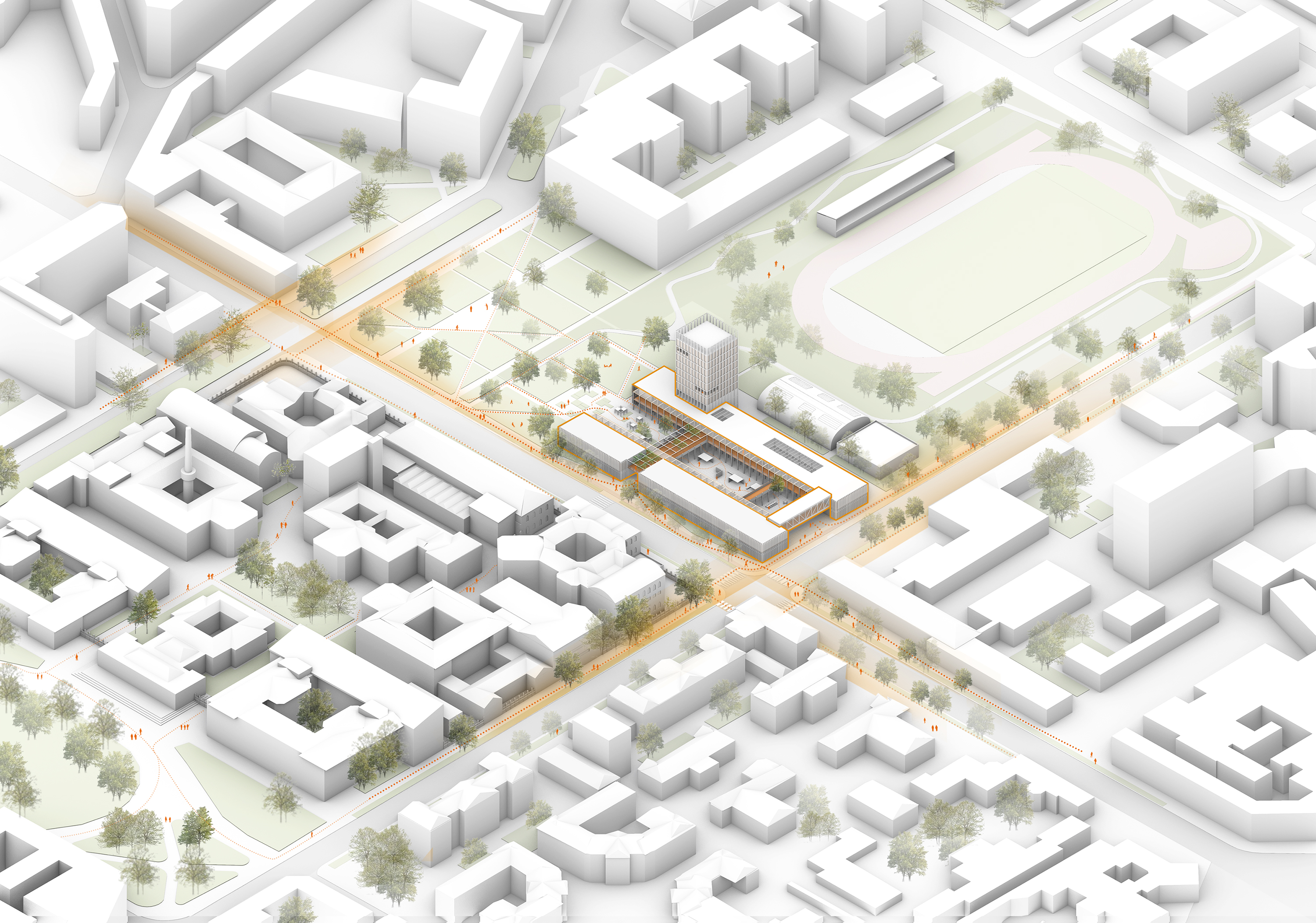
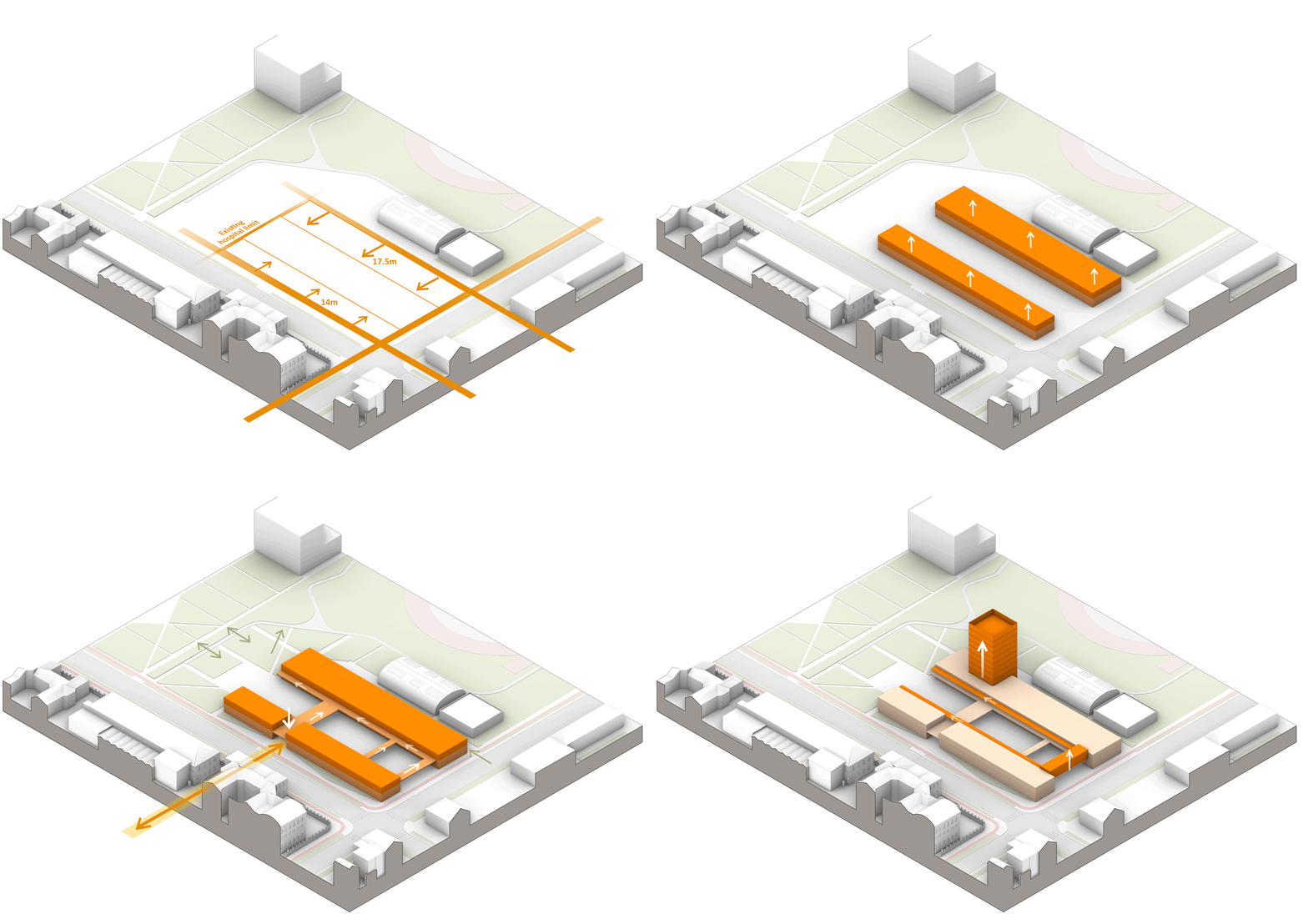
Four sequential moves translate site analysis into built form:
Extract Axes
Street alignments, plot boundaries, and campus geometry are read as a diagram. These become the guiding lines for the project's orientation and layout.
Extrude Volumes
Site proportions are pulled into elongated horizontal bars that frame movement and public activity rather than simply occupying ground.
Subtract and Open
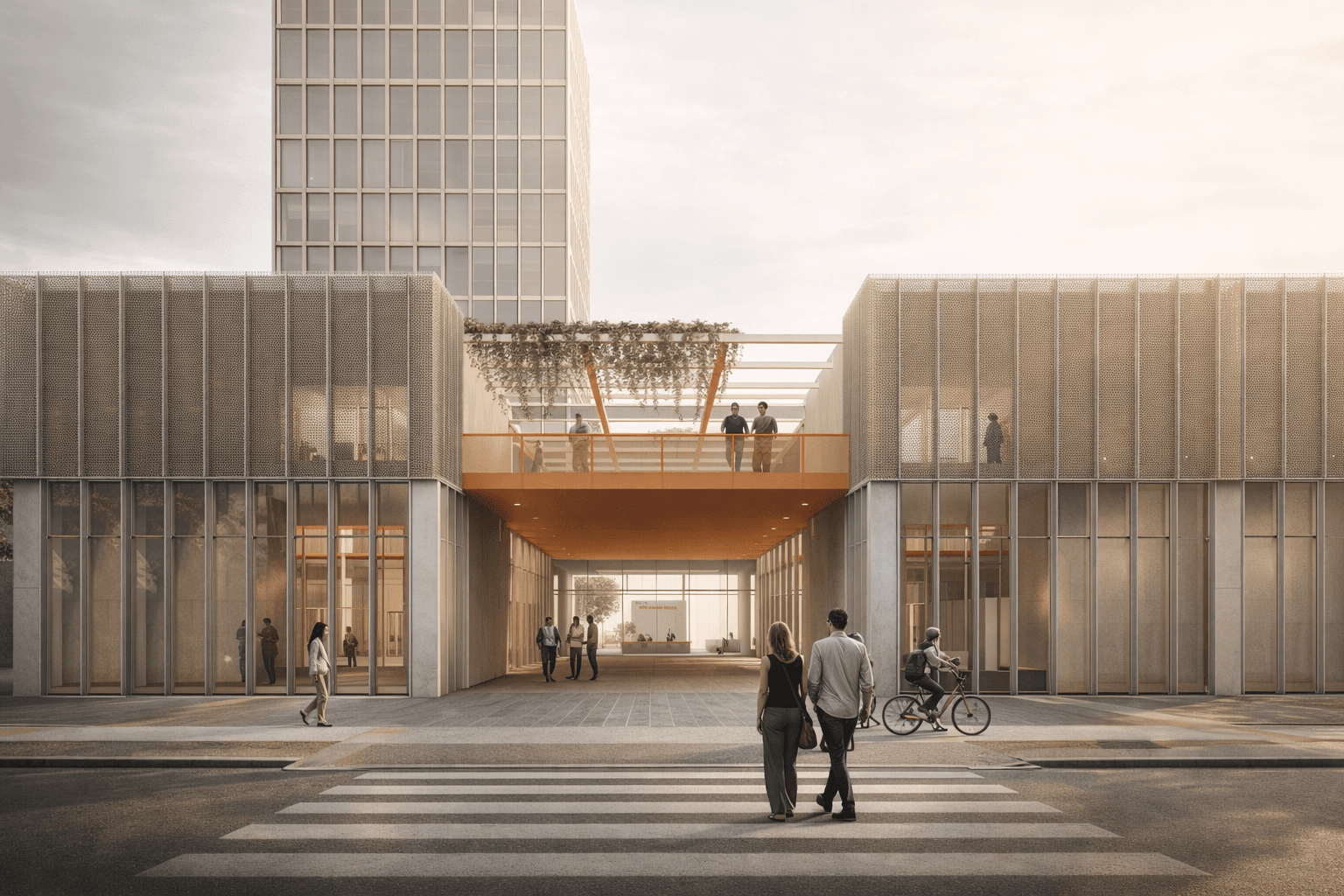
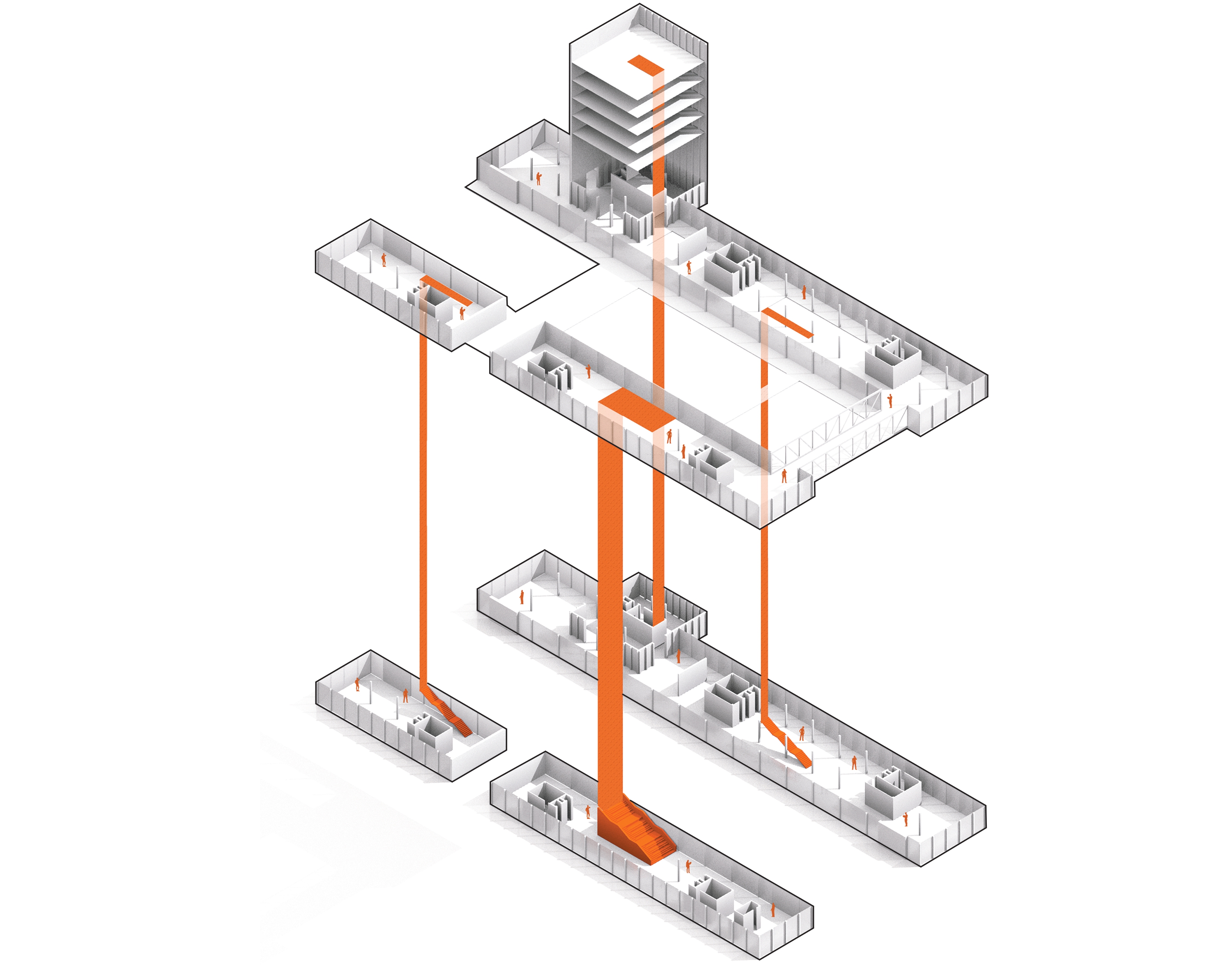
Voids carved from the massing form canopies, circulation paths, and the central piazza. A covered promenade beneath bridges and balconies takes shape.
Anchor the Tower
Horizontal volumes are connected and the tower extruded vertically. The bars are open and communal; the tower becomes the landmark and reference point.
The main piazza settles at the centre, becoming the spatial and social focus of the development.
Programme
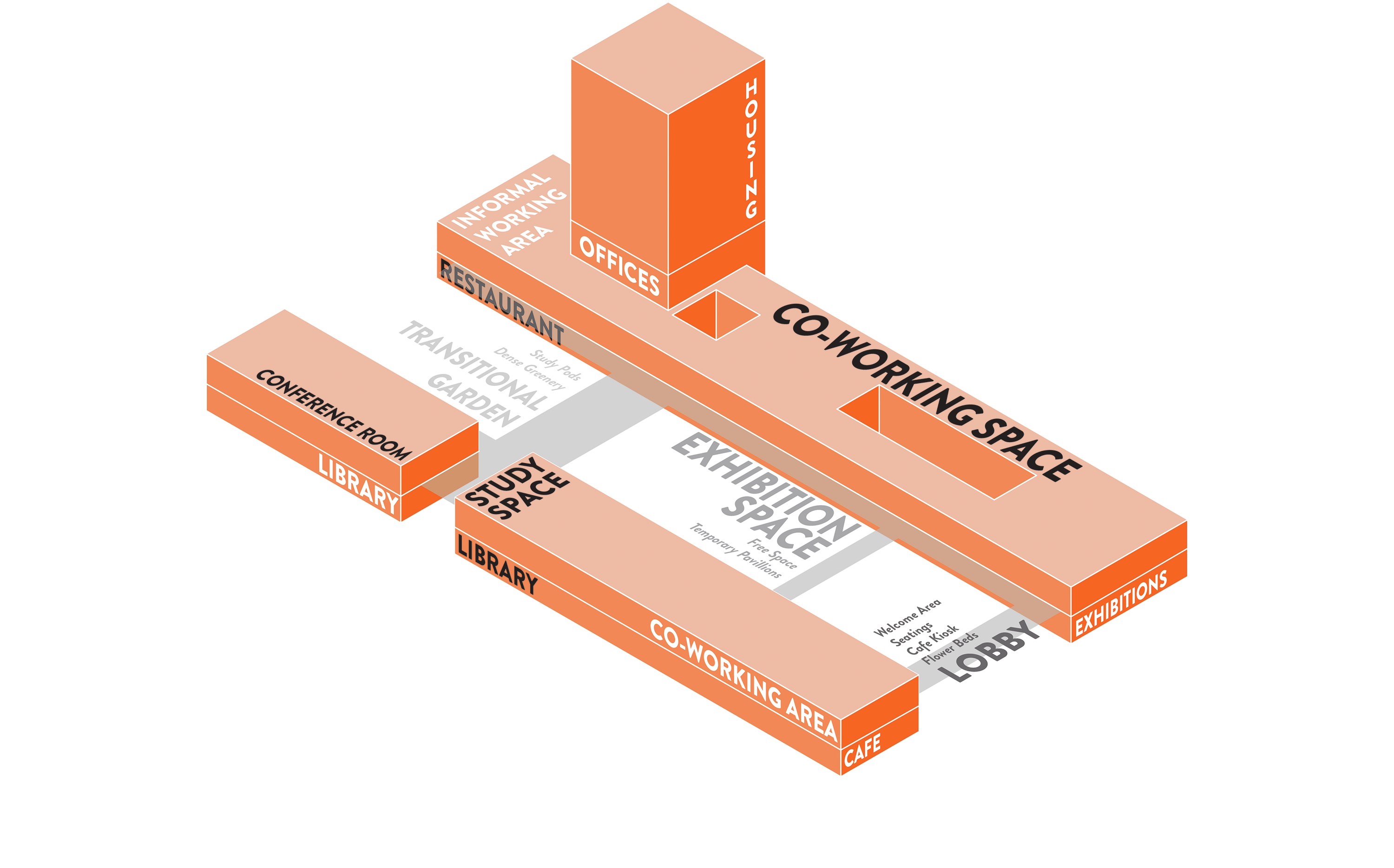
Four overlapping layers allow users to find the environment they need at any given moment:
Work and Study
Co-working spaces, offices, study rooms, and conference halls across multiple scales of focus and collaboration.
Culture and Exchange
Exhibition galleries, libraries, and workshop spaces open the ground level to the city, inviting curiosity and encounter.
Community and Dining
Cafes and restaurants anchor daily rhythm, drawing people together across disciplines and routines.
Living
Short-stay rooms for visiting delegations, integrated vertically into the tower, complete the idea of a self-sufficient urban neighbourhood.
Transitional gardens and shared threshold spaces connect the layers, making movement between functions feel natural rather than planned.
Project Development and Spatial Design
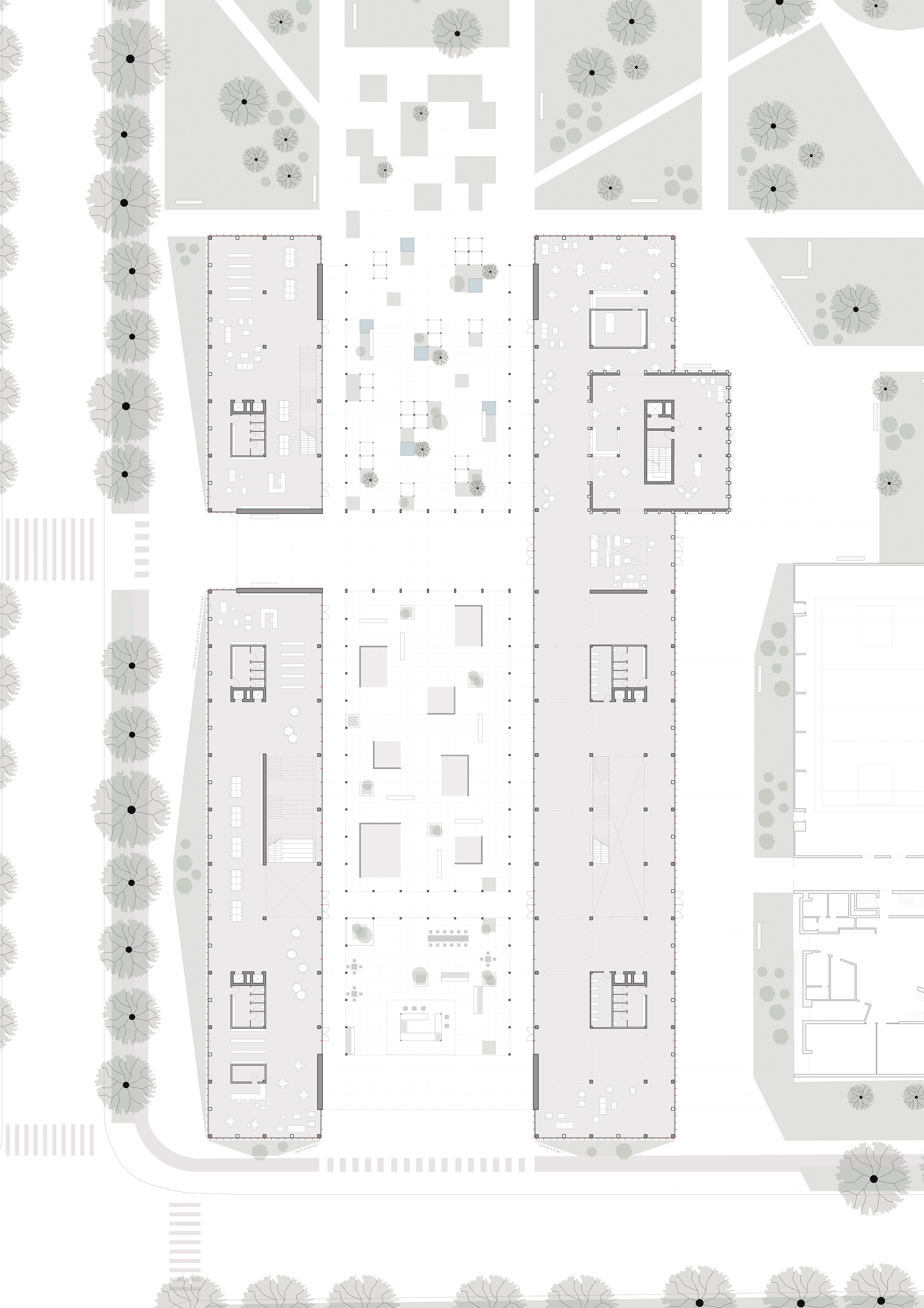
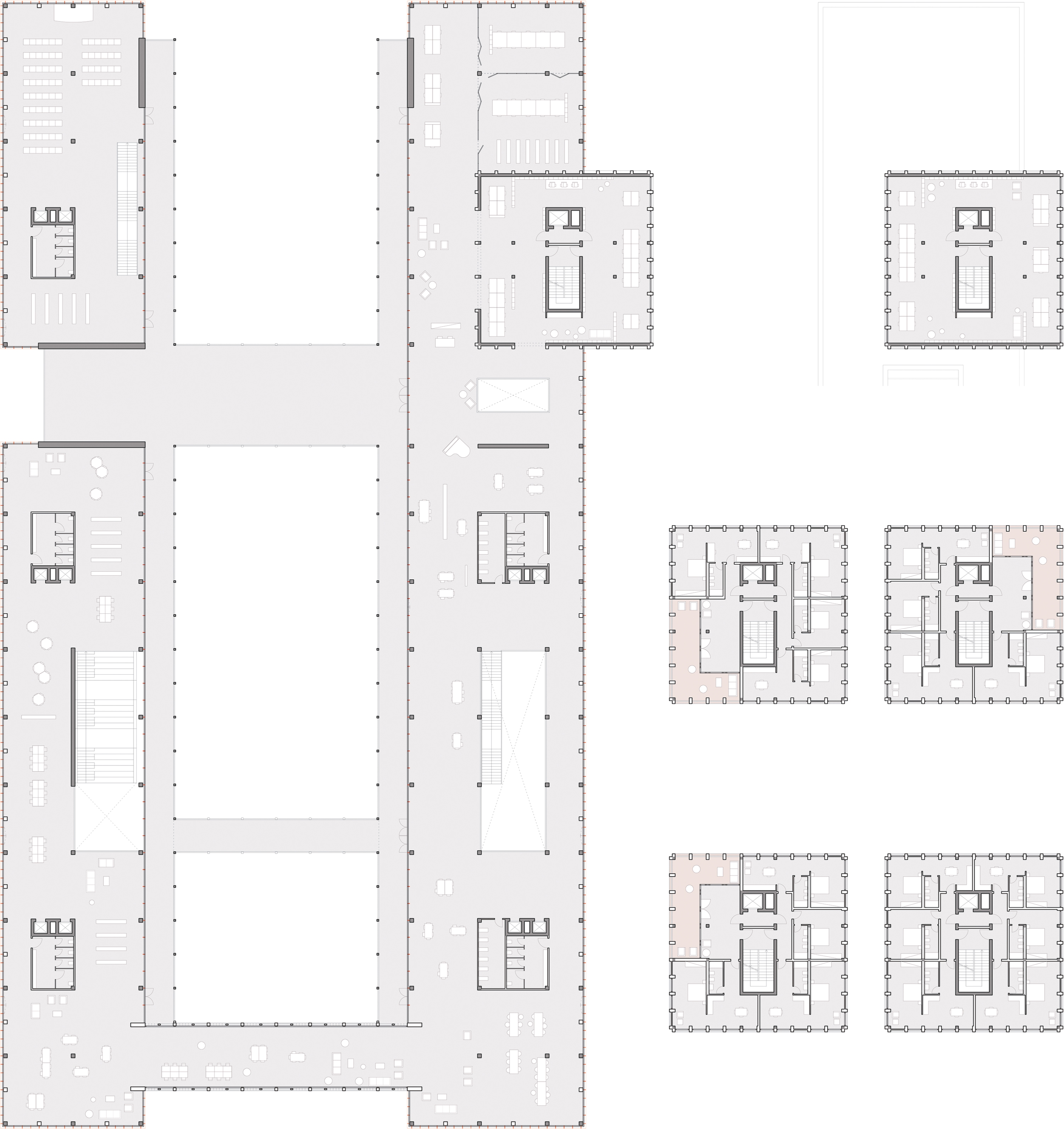
The project resists separating functions into zones. Different users and different routines overlap, with threshold spaces creating room for pause and exchange between programmes. The structural system makes this possible — three module scales define the entire architectural language, each calibrated to a specific spatial condition:
Small Module · 1.75 × 1.75 m
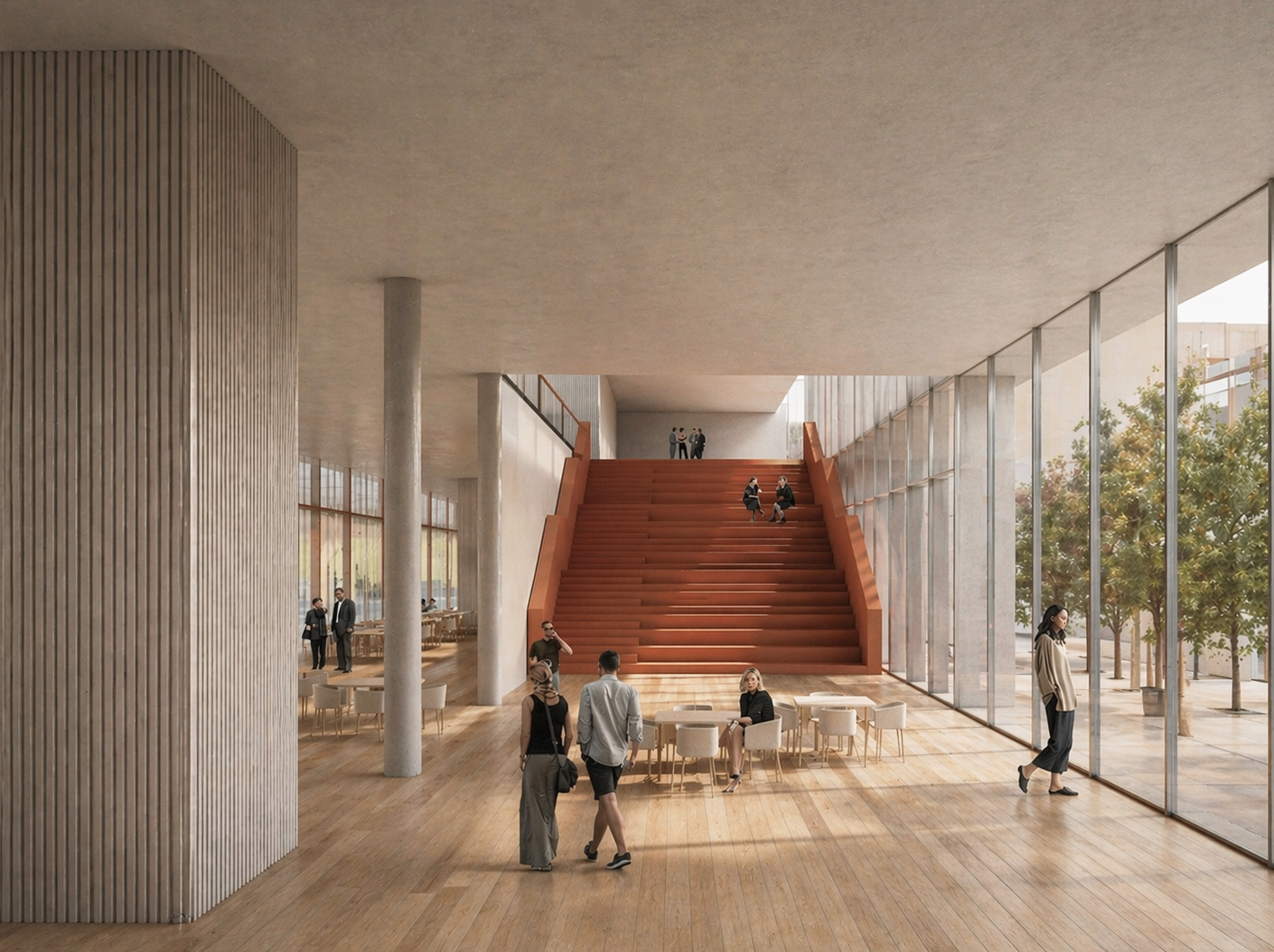
The grain of the promenade. Open, permeable, and scaled for walking, pause, and informal gathering at the ground level.
Medium Module · 3.5 × 3.5 m
The scale of bridges and tower floors. Stable enough to carry structure, flexible enough to accommodate housing and circulation.
Large Module · 7 × 7 m
The bay of the collective buildings. Wide enough for co-working, exhibition, and library at the civic scale of the horizontal bars.
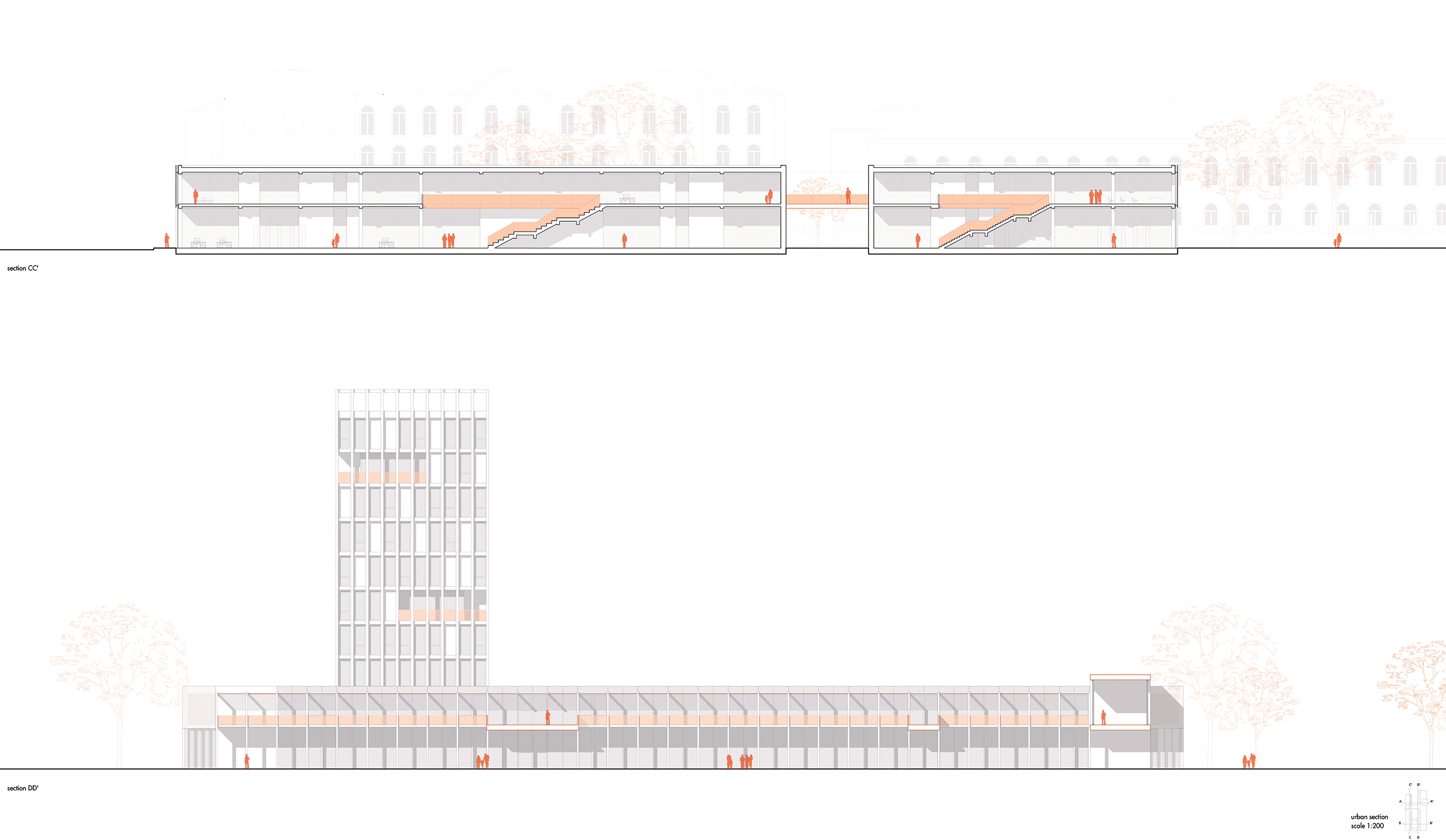
The tower grows from the same proportional logic as the horizontal bars. Vertical and horizontal elements read as a single integrated system, and belonging comes from use rather than designation.
Facade Composition and Materials
Two distinct facade systems each respond to their context, one facing the city, one opening to the shared interior piazza:
External Facade
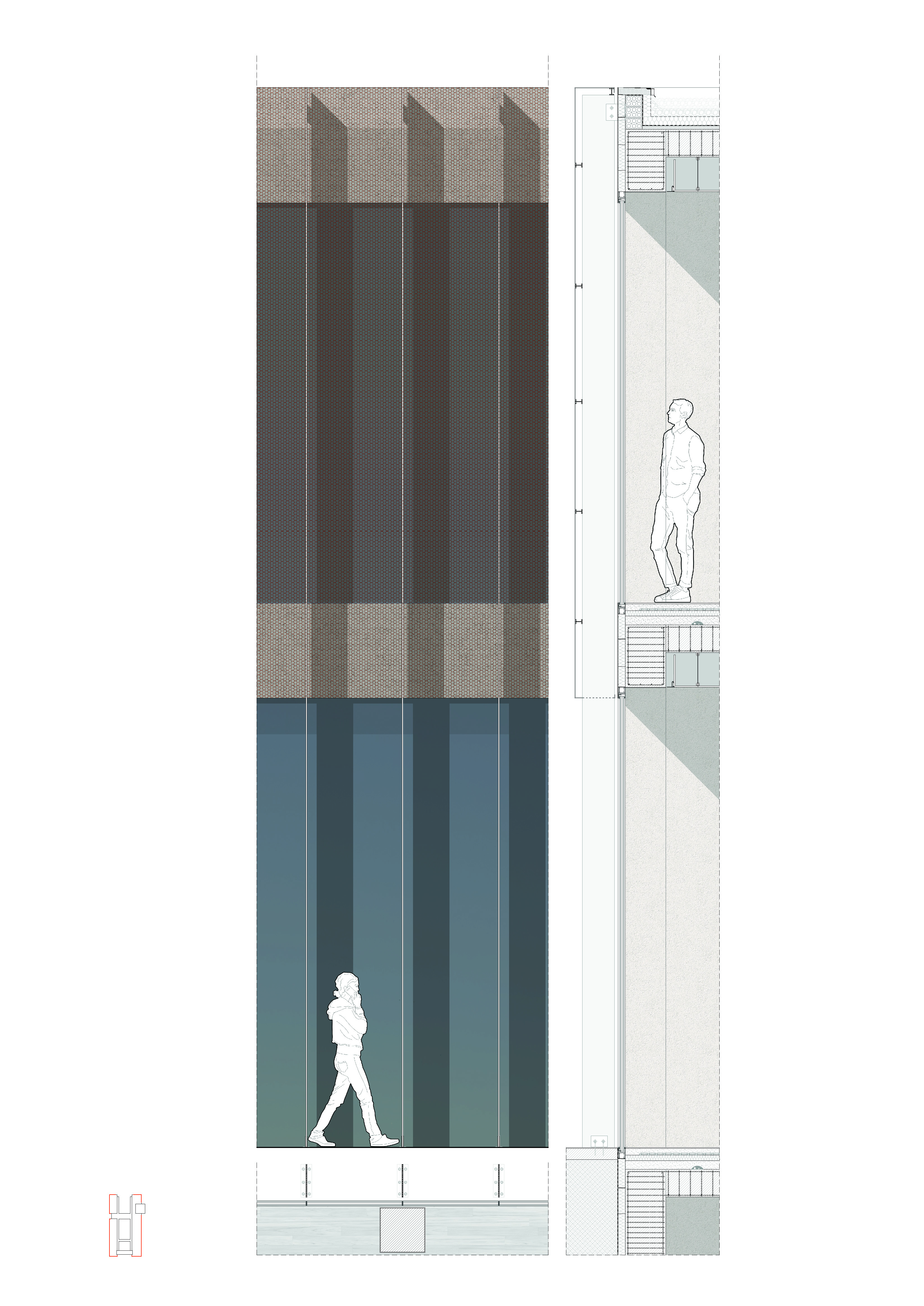
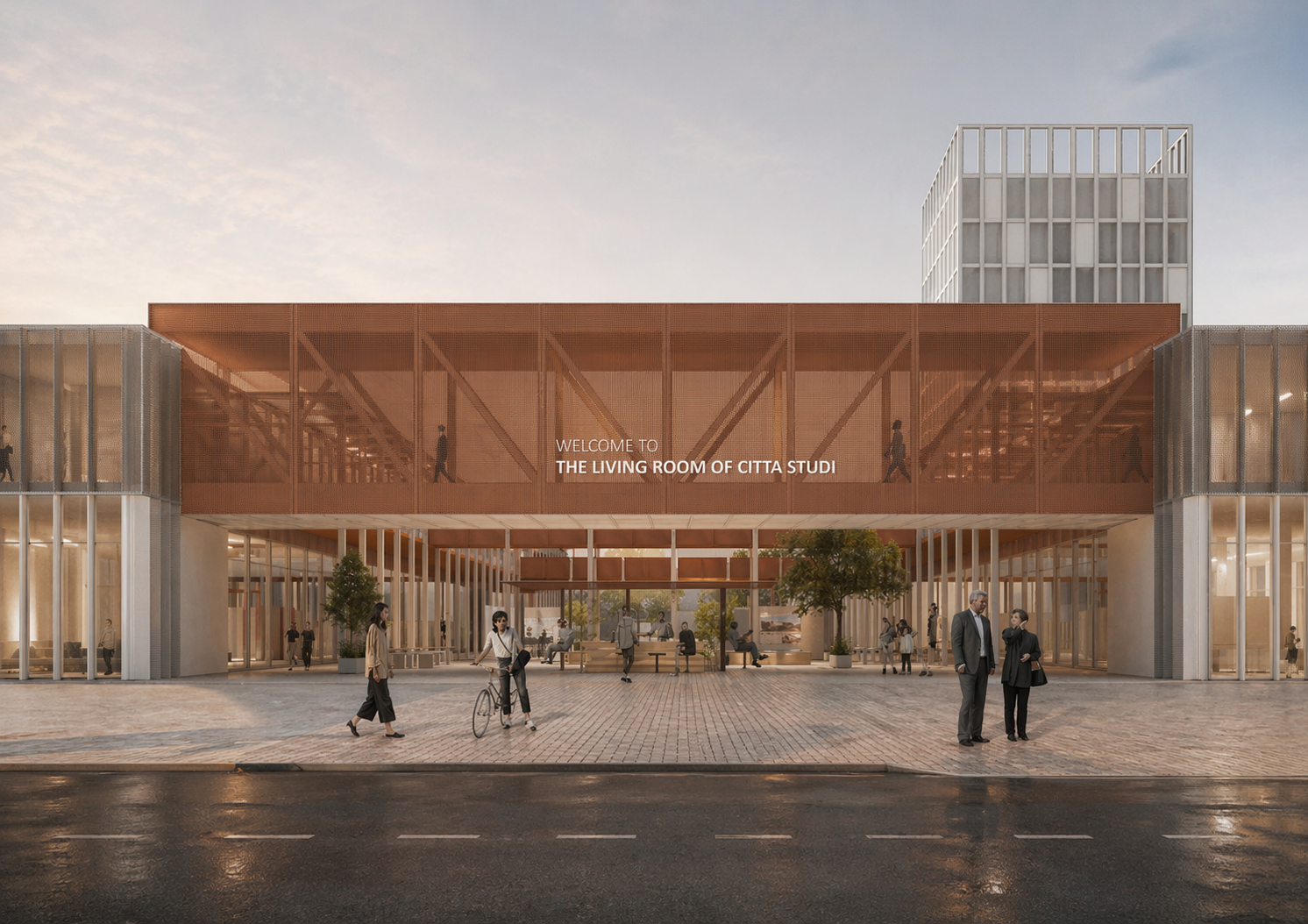
Exposed concrete columns and vertical metal mullions define the street rhythm. A perforated bronze-orange mesh filters the second floor, providing privacy while maintaining visual permeability.
Internal Piazza Facade
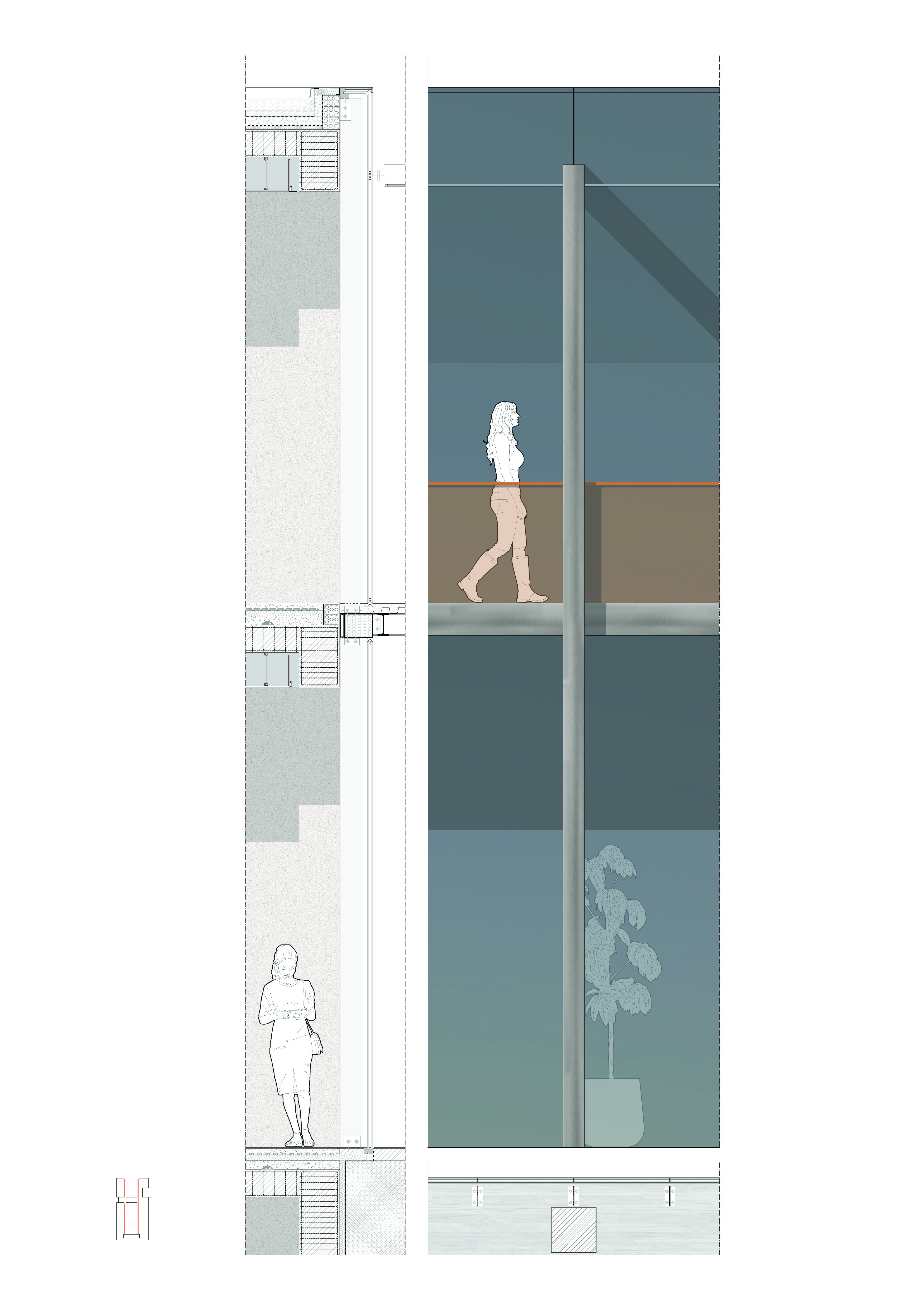
A flush glass plane opens continuously toward the shared courtyard. Canopies, balconies, and bridges provide shade and definition, reinforcing the covered promenade below.
Tower Facade
Exposed concrete frames each opening, giving the tower weight and permanence. A deliberate contrast to the lightness of the horizontal community volumes.
Larger modules in the horizontal bars express collective programme through scale. The finer grid of the tower reflects the more intimate dimension of housing above.