MAYAROUFAIL.
Architecture · Urban Design · Milano
Maya Roufail.
Re-Activating Inujima

Urban Design

Re-Activating Inujima

Inujima, Japan  ·  2023

Scroll
← All Projects
Urban Design

Develop an implementation plan for revitalizing the island of Inujima without erasing its fragile identity.

IslandRevitalizationHeritage
LocationInujima, Japan
Year2023
Project Sections
01
Section

Concept & Strategy

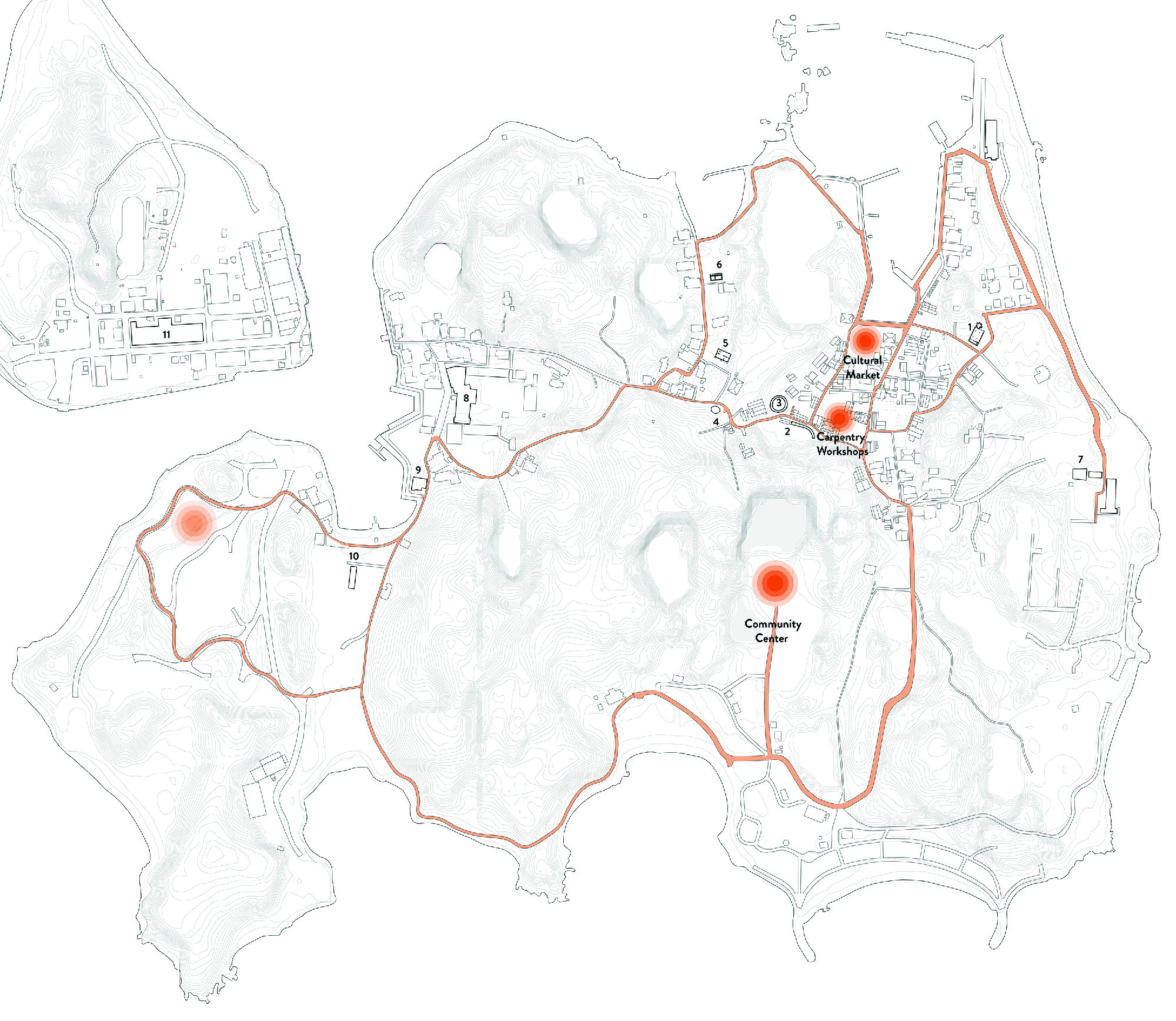
Inujima is a near-abandoned island off the coast of Okayama — once a copper refinery, now home to fewer than fifty people and a quietly extraordinary landscape of ruins, water, and silence.
The strategy does not impose a new order. Instead, three activation nodes are identified along a continuous circuit: the Port Welcome Market at the arrival point, the Carpentry Workshop and Gallery in the village fabric, and the Community Center in the southern landscape. An orange path connects them — a new rhythm of movement that makes the island legible without making it loud.
The founding principle is restraint: activate only where the island already holds potential, and let that energy radiate outward.
Image 1
02
Section

Masterplan

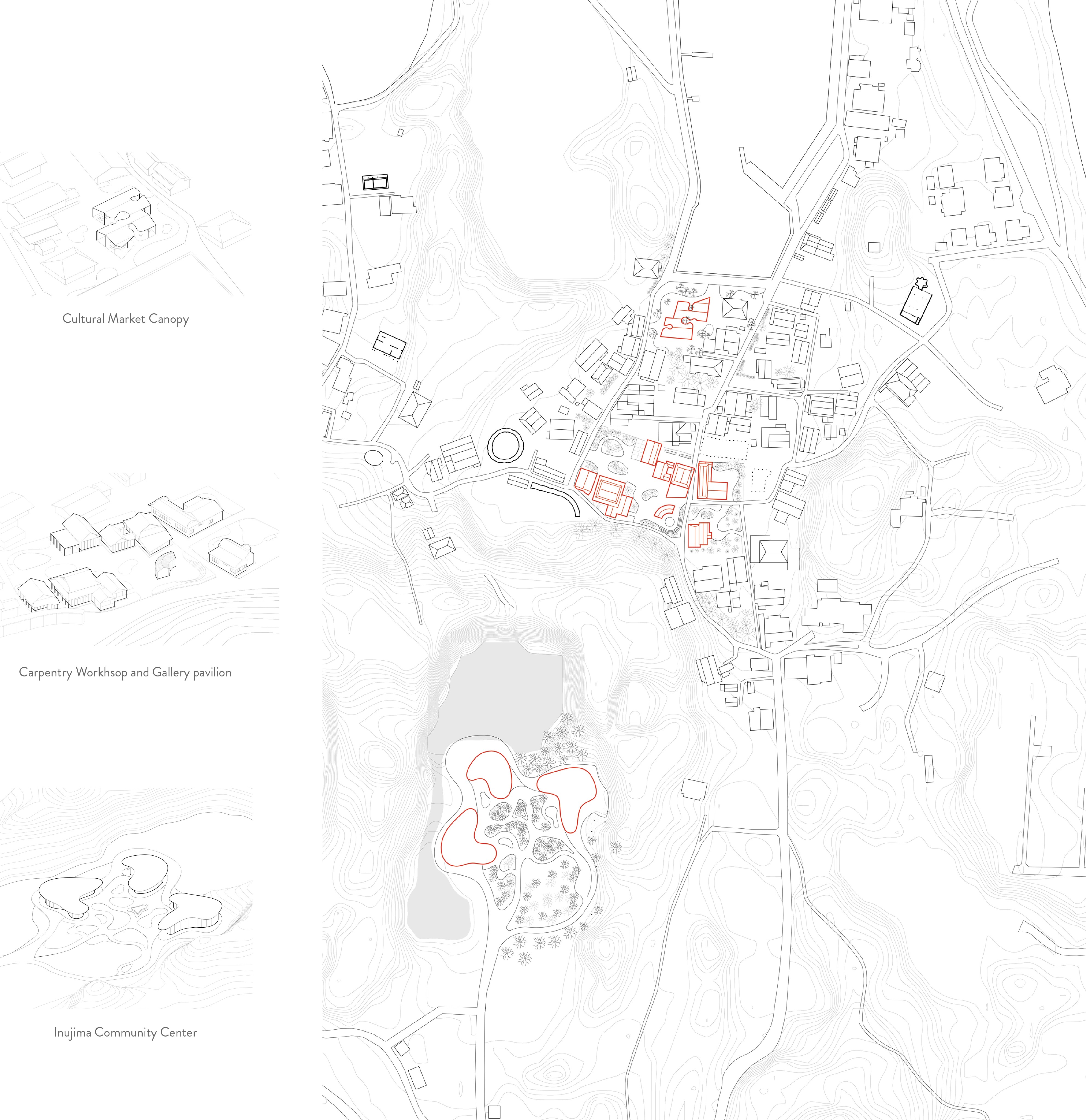
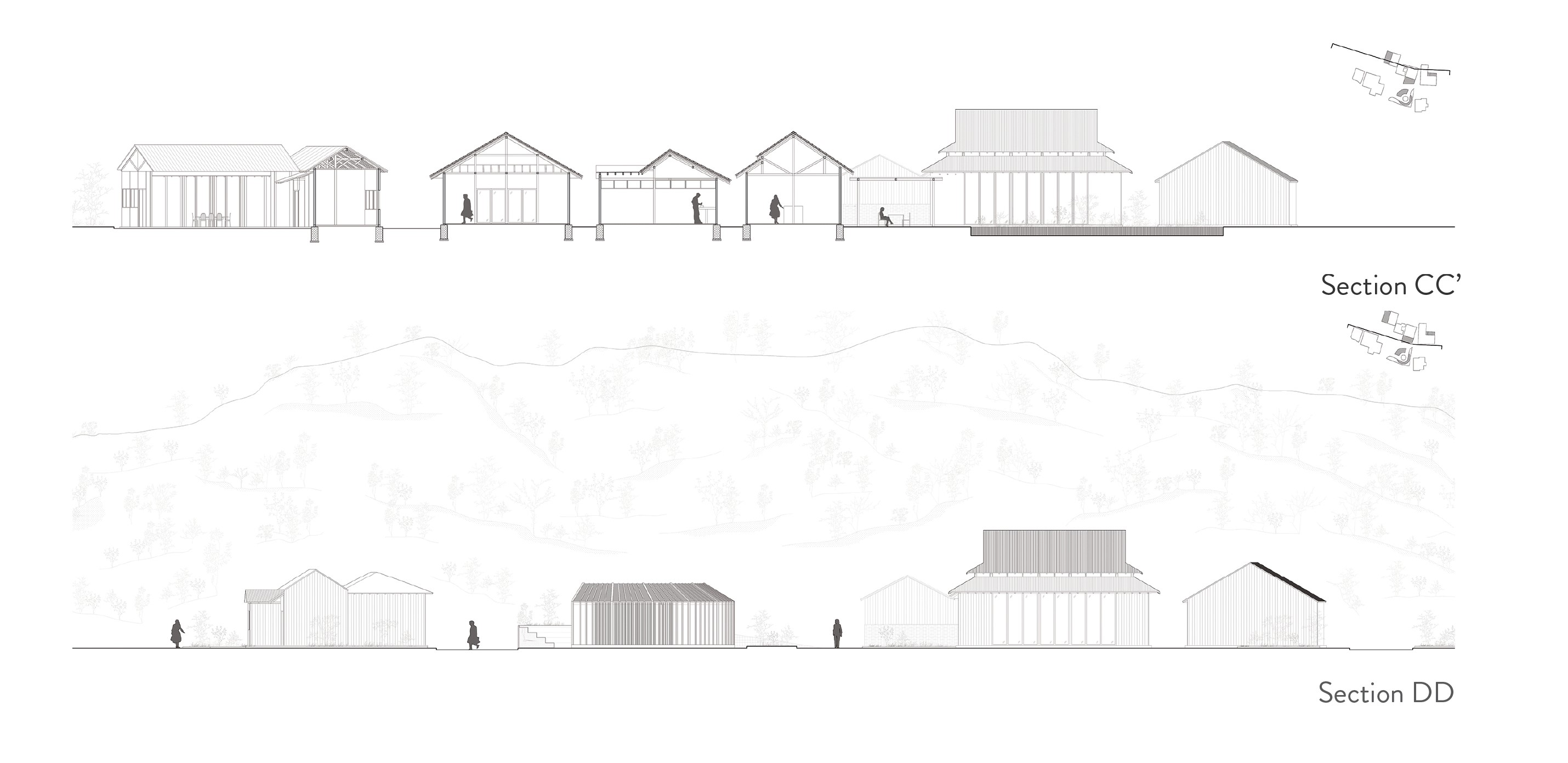
The masterplan works at the scale of the village — three distinct facility clusters positioned within the existing fabric rather than beside it.
The Cultural Market Canopy sits at the port, the first space arrivals encounter. The Carpentry Workshop and Gallery pavilion occupies the historic centre, weaving production and culture into the residential grain. The Community Center settles at the southern edge beside the pond, embedded in landscape.
Each facility is calibrated to its context: the market open and porous, the workshop dense and productive, the Community Center organic and rooted in the ground.
Image 2
03
Section

Port Welcome Market Facility

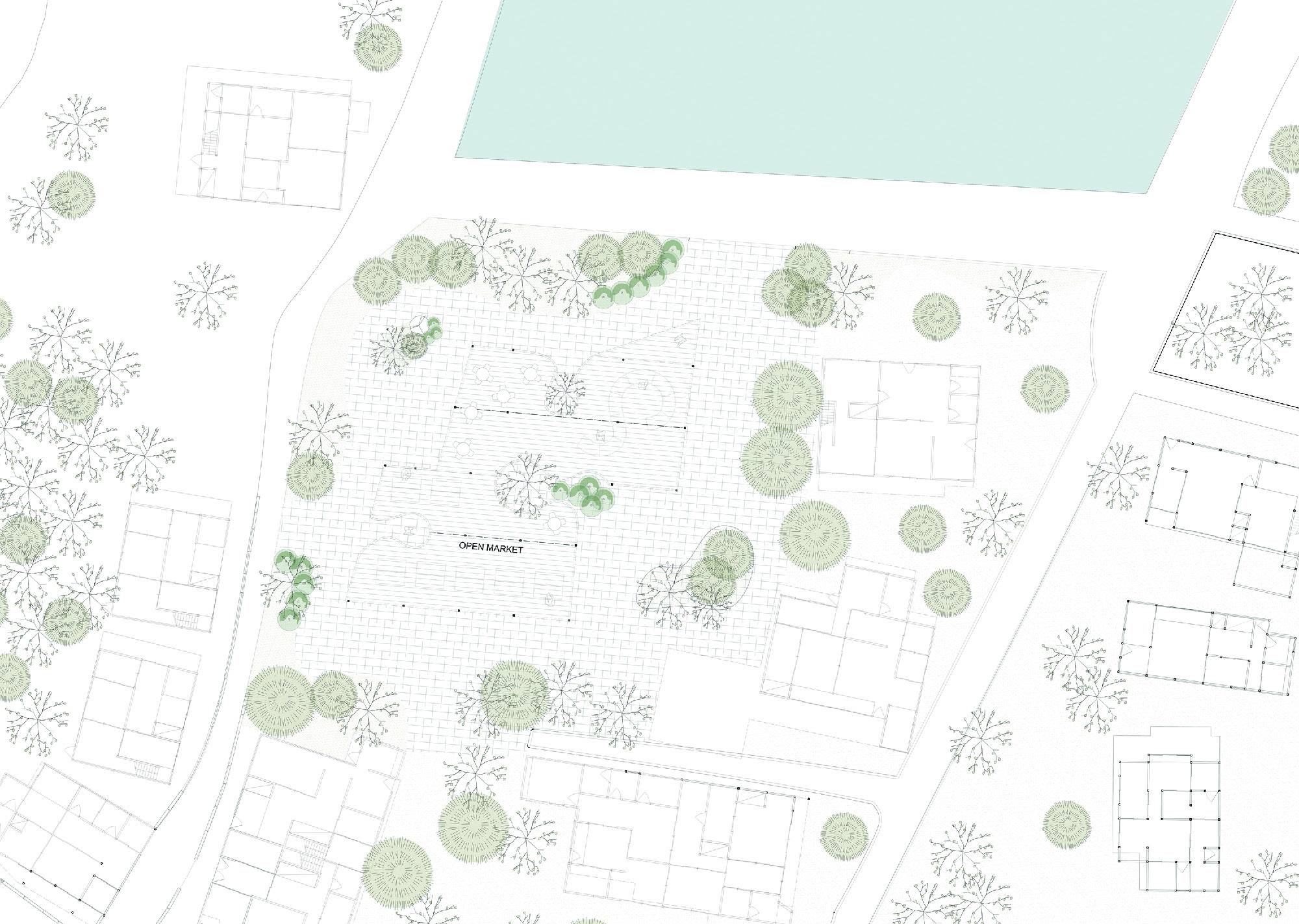
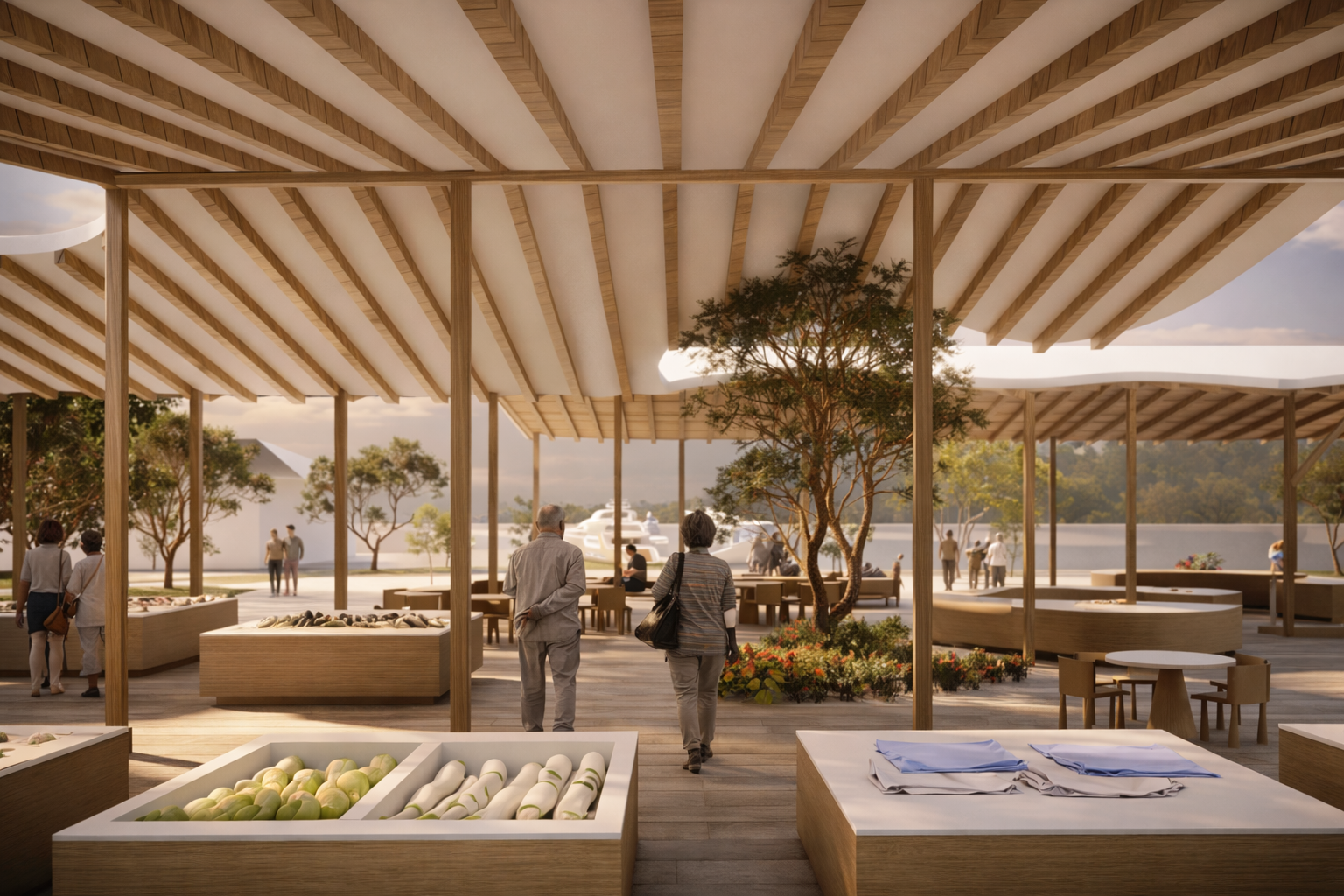
The first building visitors encounter on the island — a lightweight timber canopy structure at the port that frames arrival and activates the waterfront:

Market Canopy

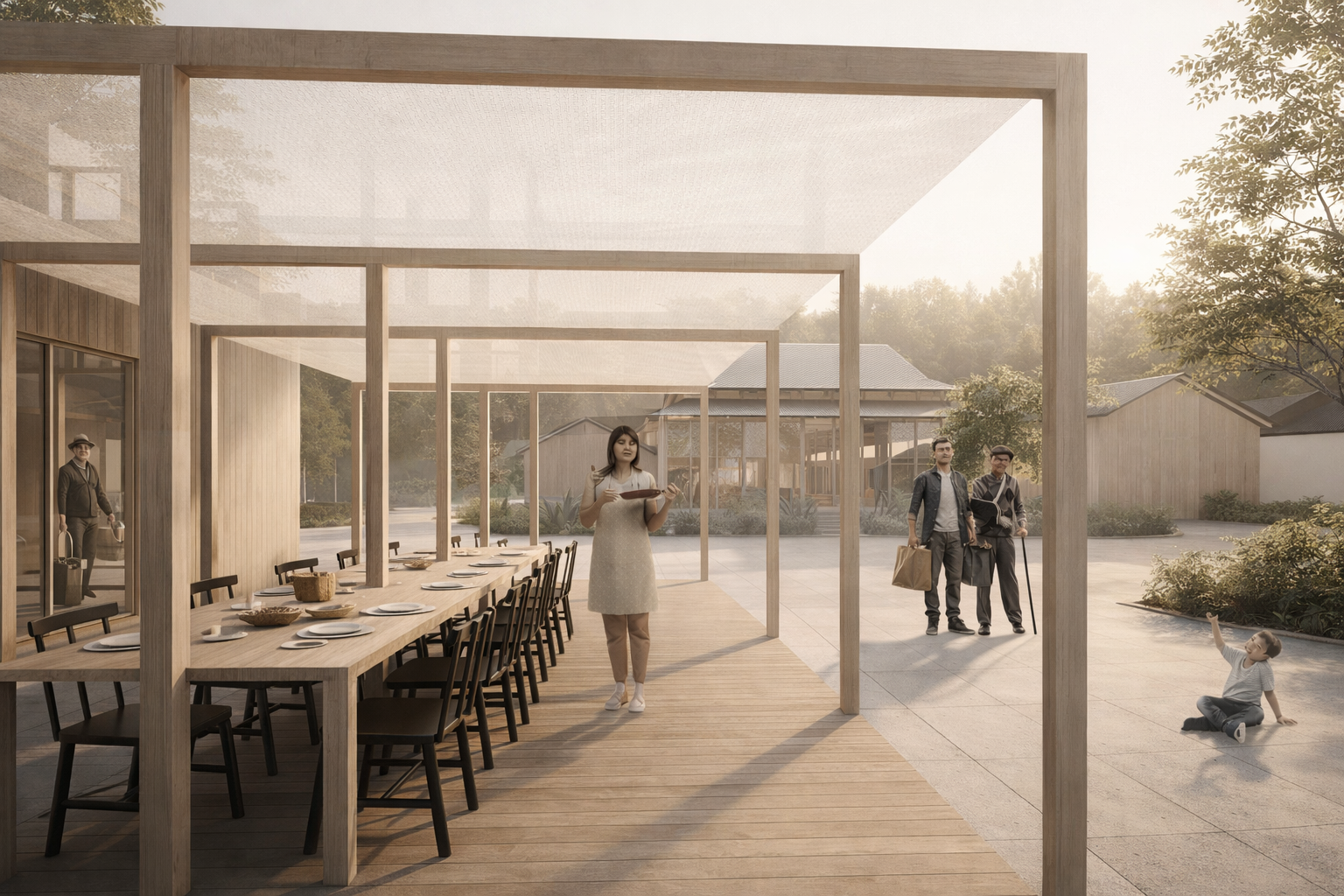
A series of raised timber roof structures filter light and frame views of the water, creating a covered market environment that is open, breezy, and rooted in the material language of the island.

timber structurefiltered lightwater views

Cultural Programme

Stalls, dining areas, and gathering spaces activate the canopy throughout the day — from morning arrivals to evening gatherings — making the market a destination, not just a threshold.

local producecultural exchangedaily rhythm

Port Connection

The facility directly frames the ferry arrival, orienting visitors into the island's circuit from the moment they step ashore — the market is both welcome and orientation.

arrival experiencewayfindingcommunity interface

Light enough to belong. Active enough to matter.
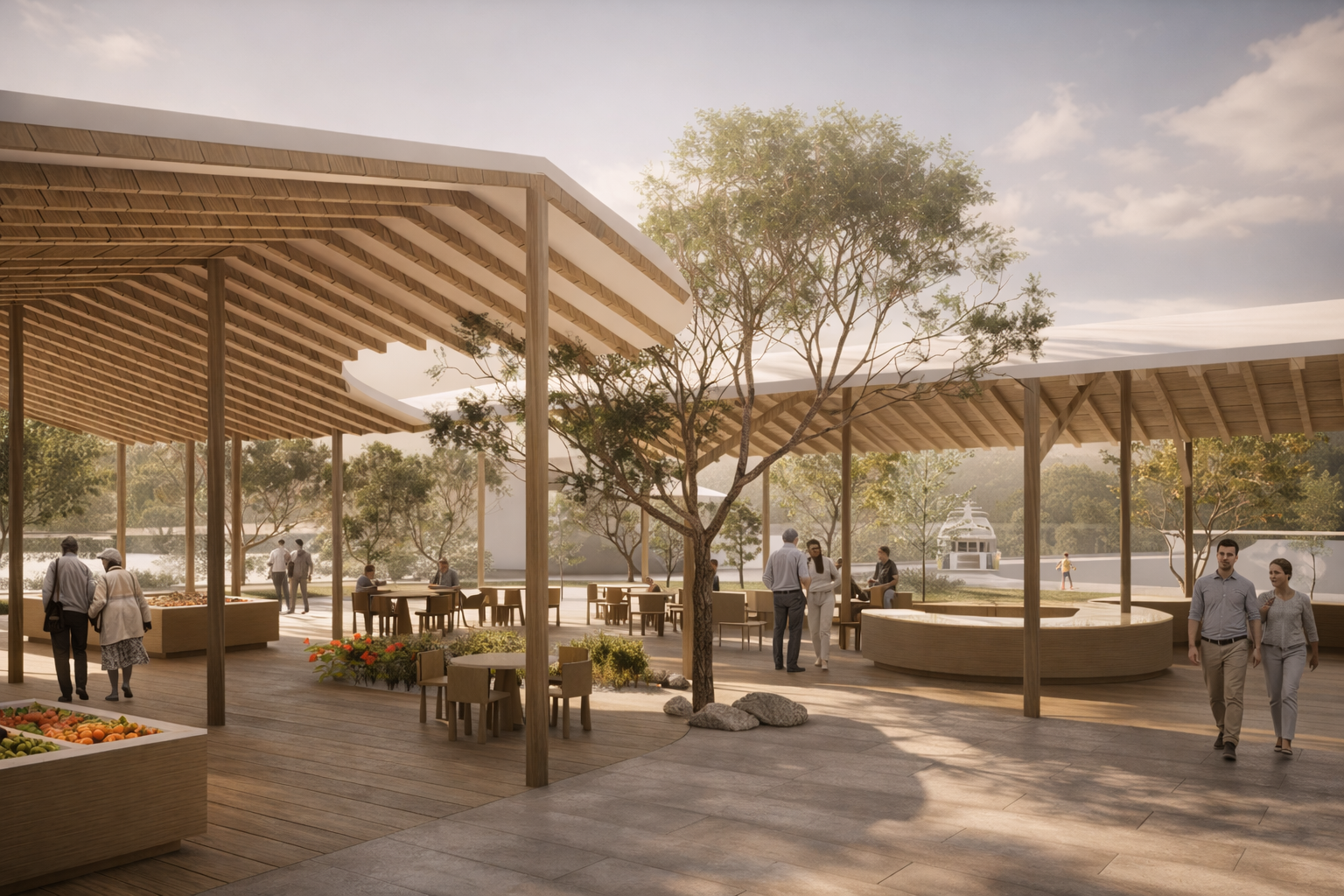
Image 13
Image 14
Image 15
04
Section

Carpentry Workshop Facility

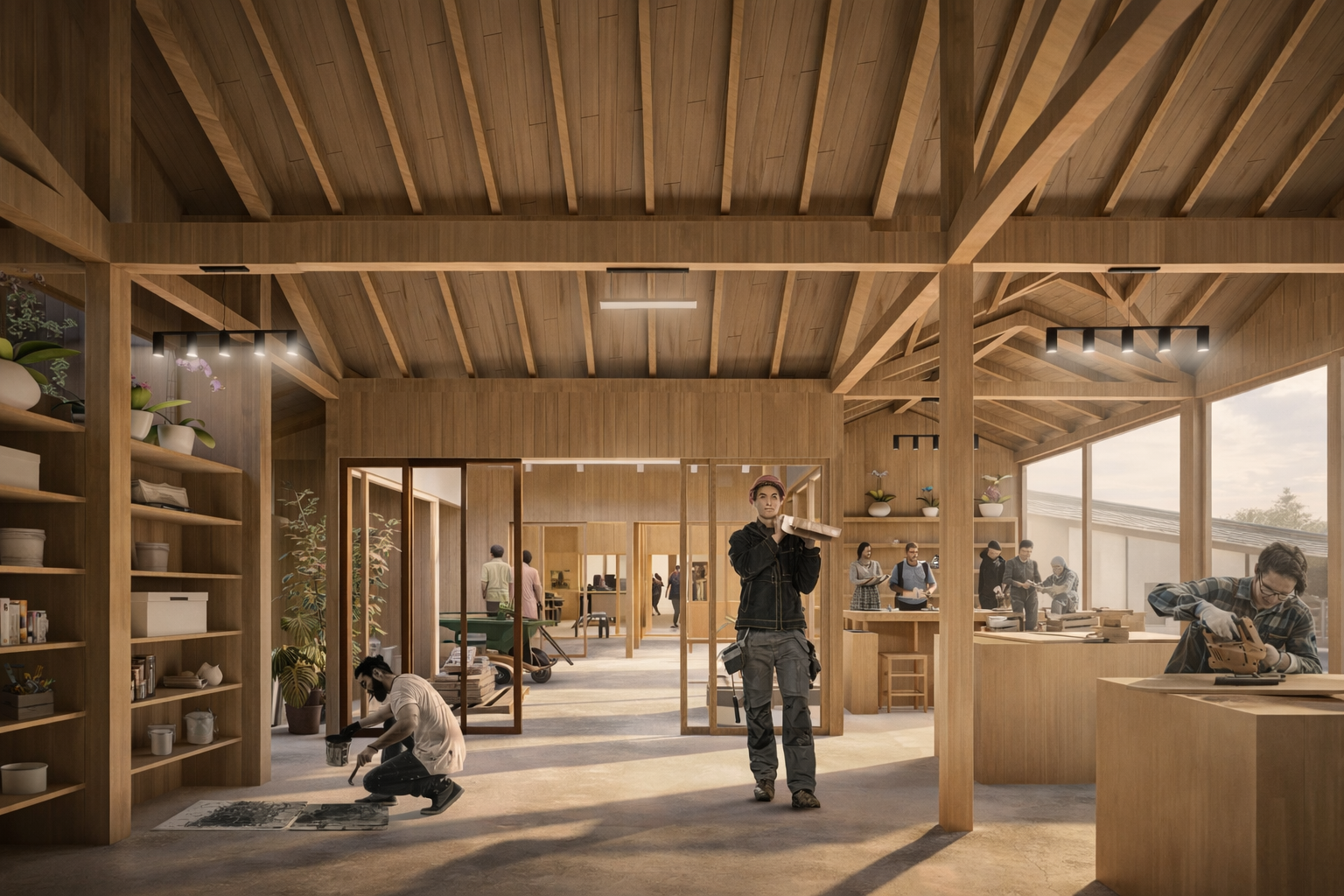
A working complex of craft, production, and display — reconnecting the island to its material heritage through a facility that is simultaneously a workshop, a gallery, and a place to stay:

Workshop Complex

Assembly, carpentry, finishing, and drying spaces form a productive cluster — a place where timber is worked, knowledge is shared, and the island's craft tradition is kept alive and visible.

carpentryassemblycraft production

Gallery Pavilion

A curved gallery pavilion opens the workshop to the public — displaying finished work, hosting cultural events, and creating a gentle threshold between production and reception.

exhibitionpublic interfacecultural display

Guest Houses

Two guest houses adjacent to the complex offer accommodation for visiting craftspeople, researchers, and artists — anchoring longer stays and deeper engagement with the island.

residencylong-staycommunity bonds

The workshop does not perform craft — it practises it.
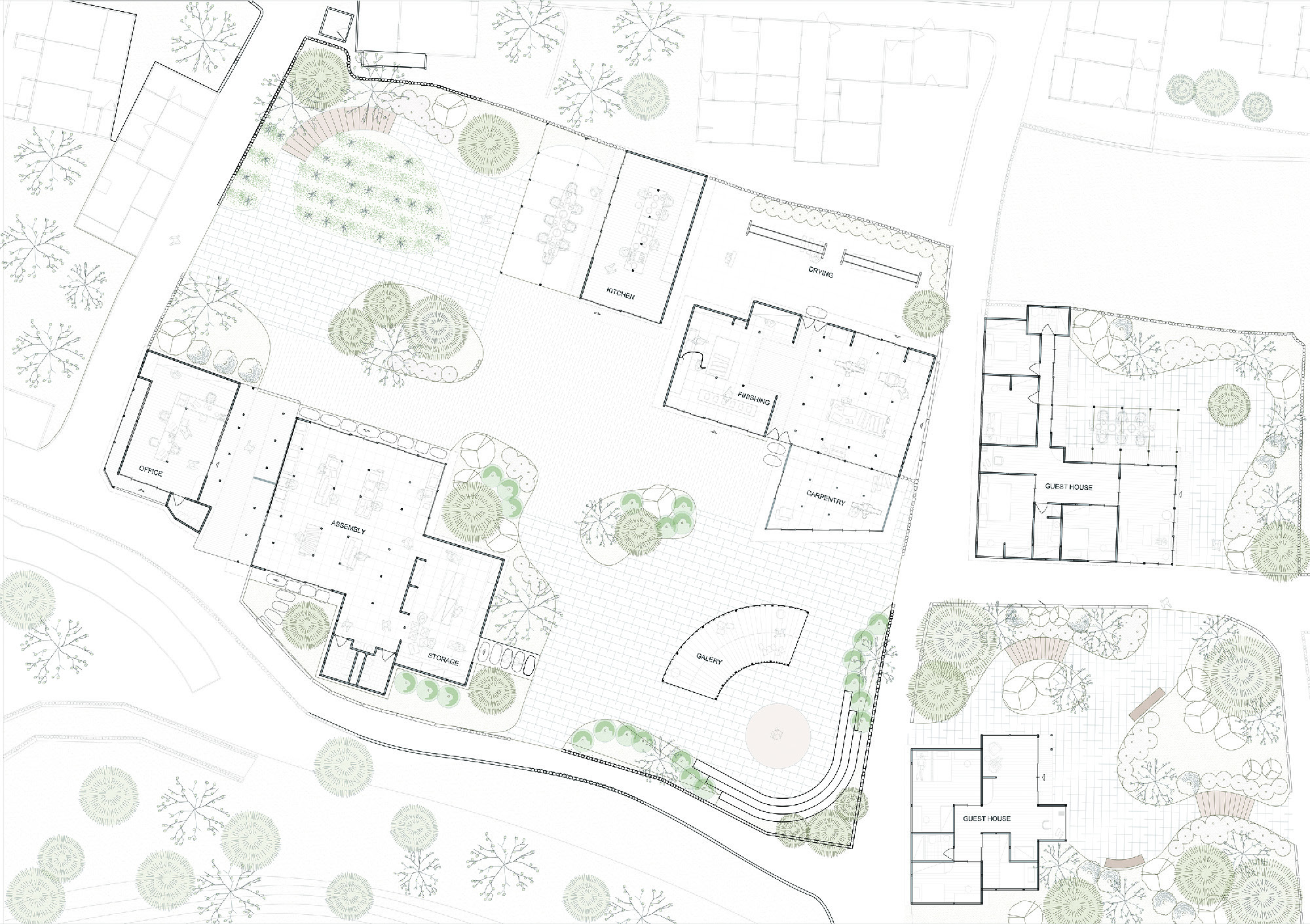
Image 8
Image 9
Image 10
Image 11
Image 12
05
Section

Community Center Facility

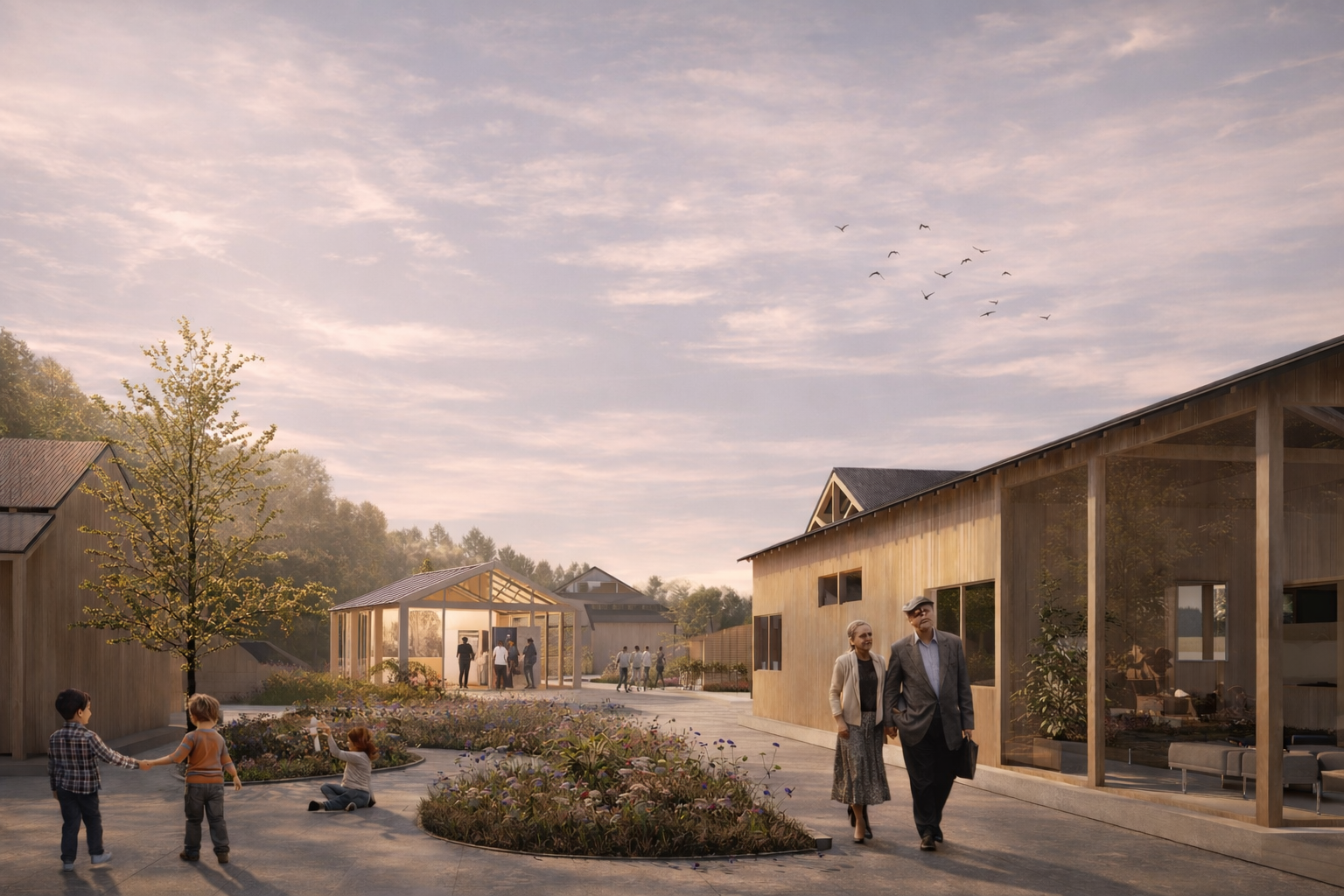
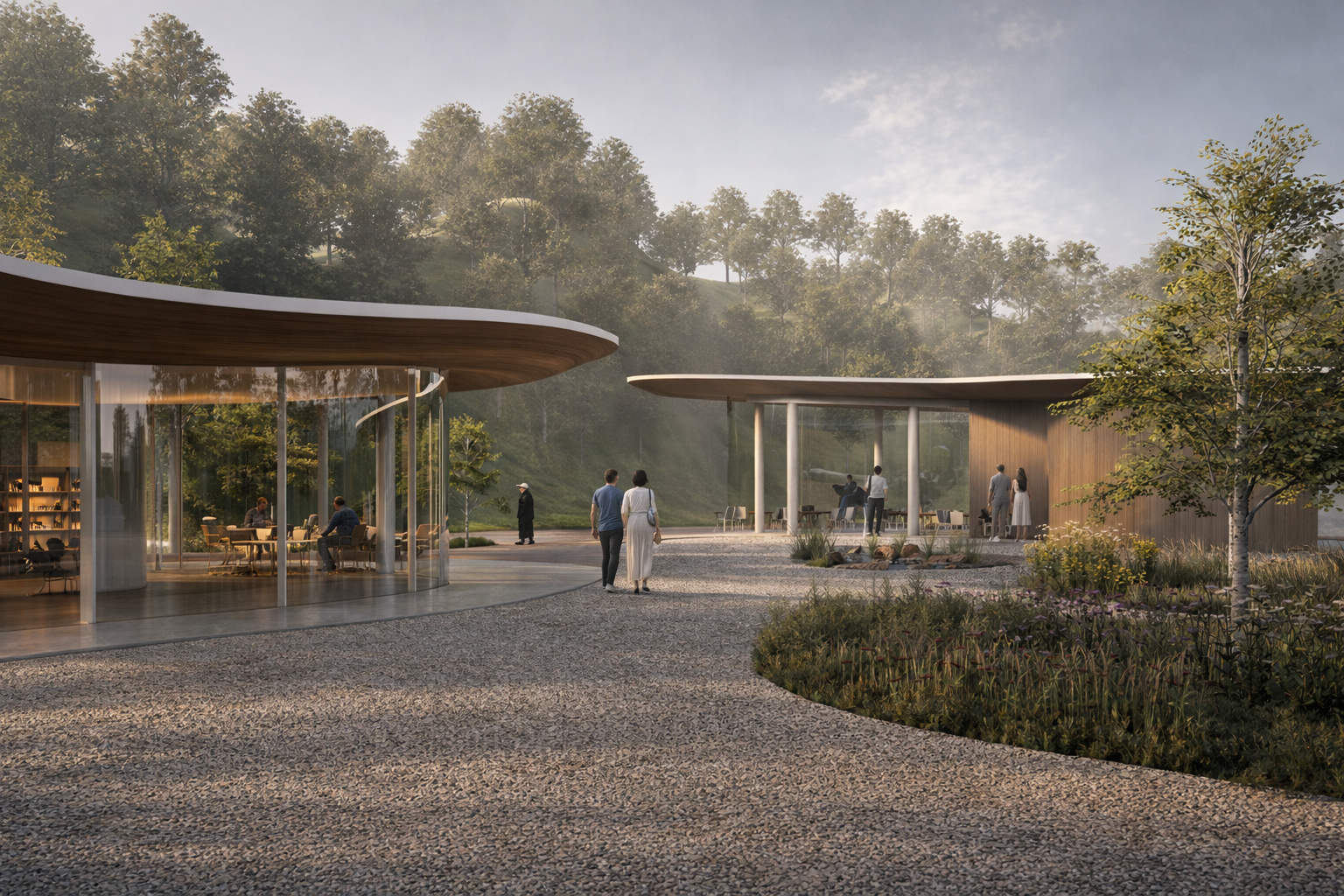
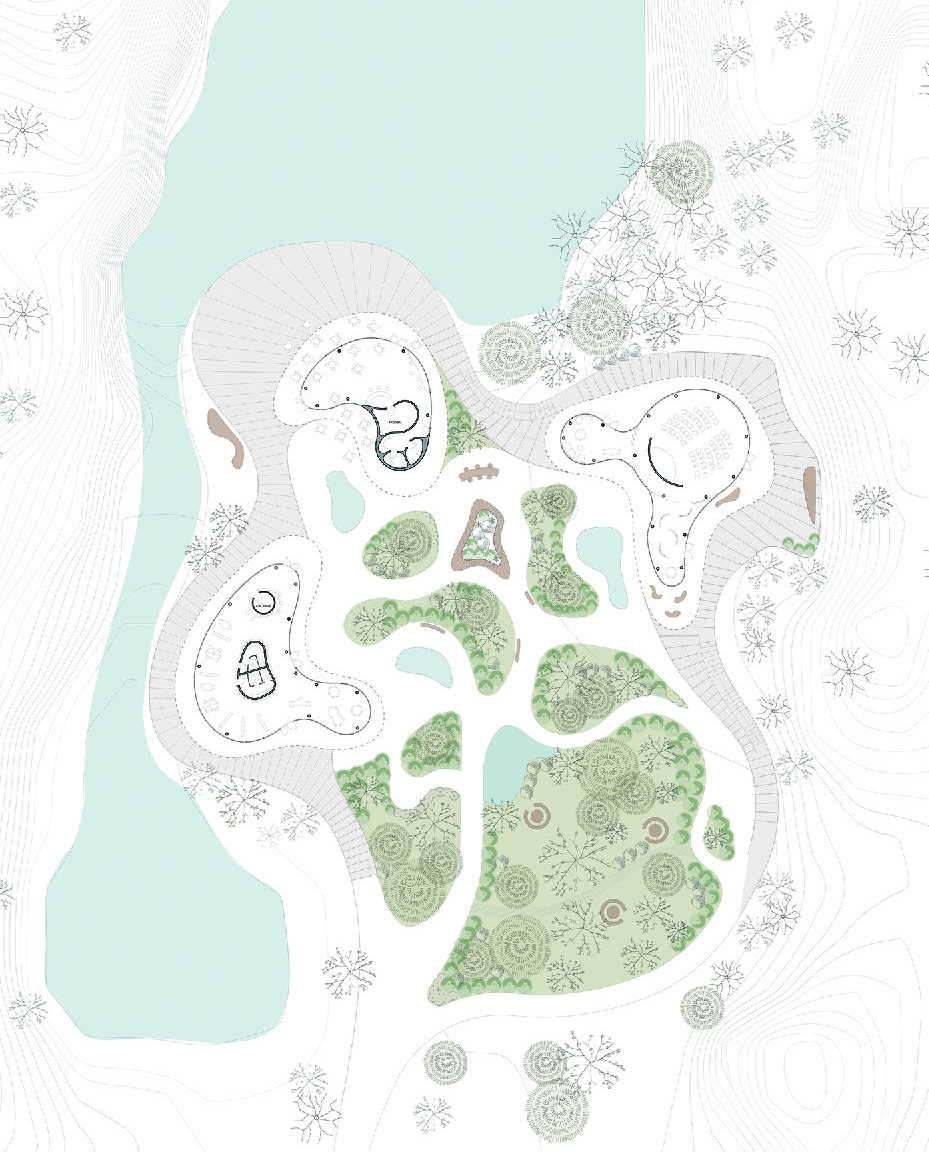
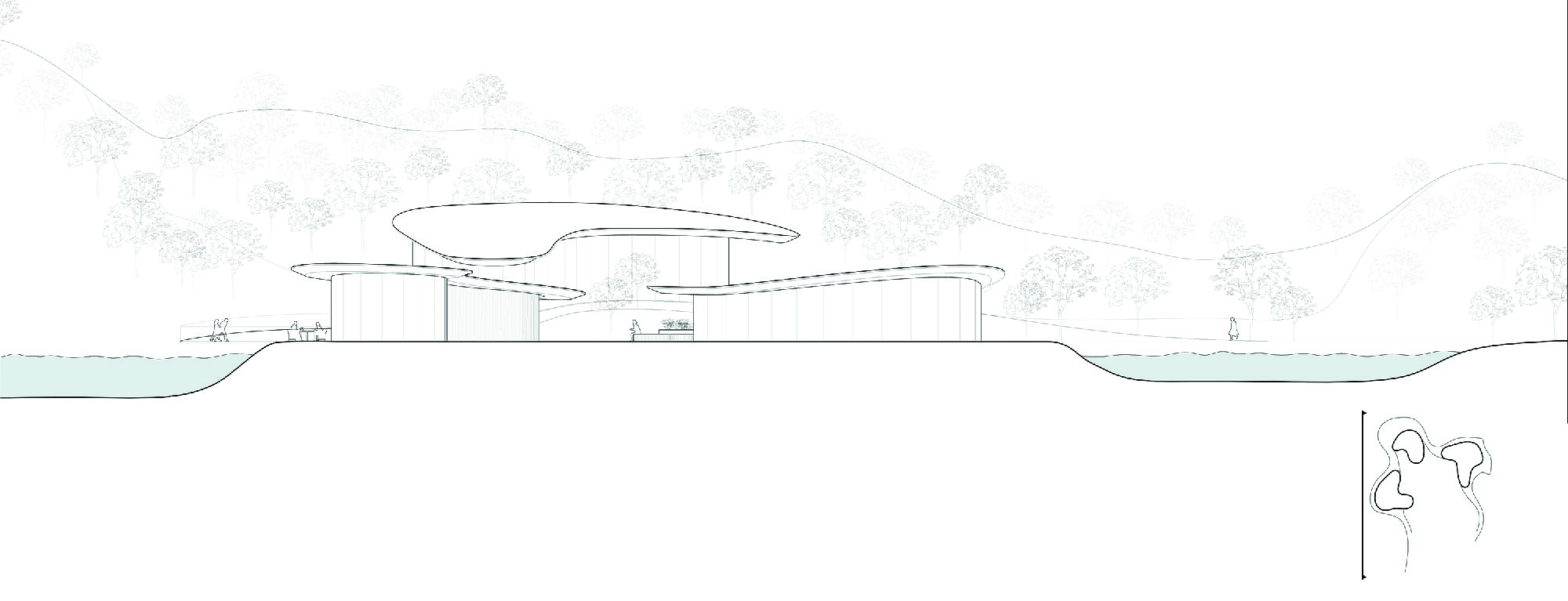
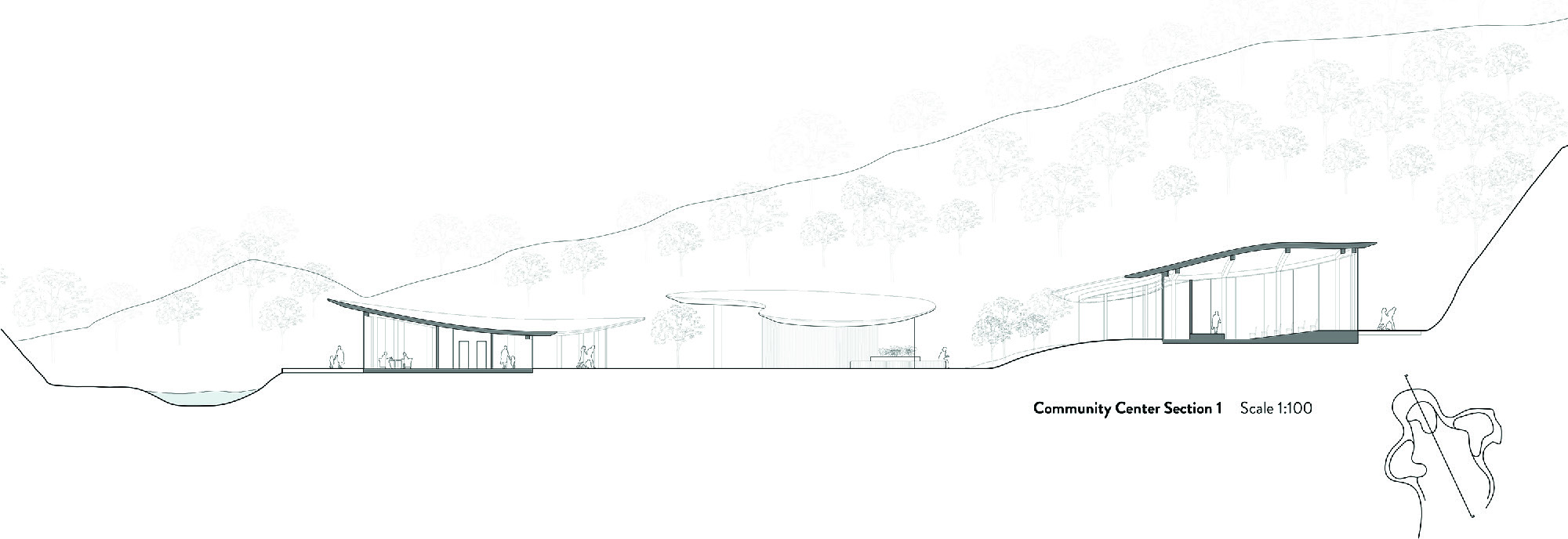
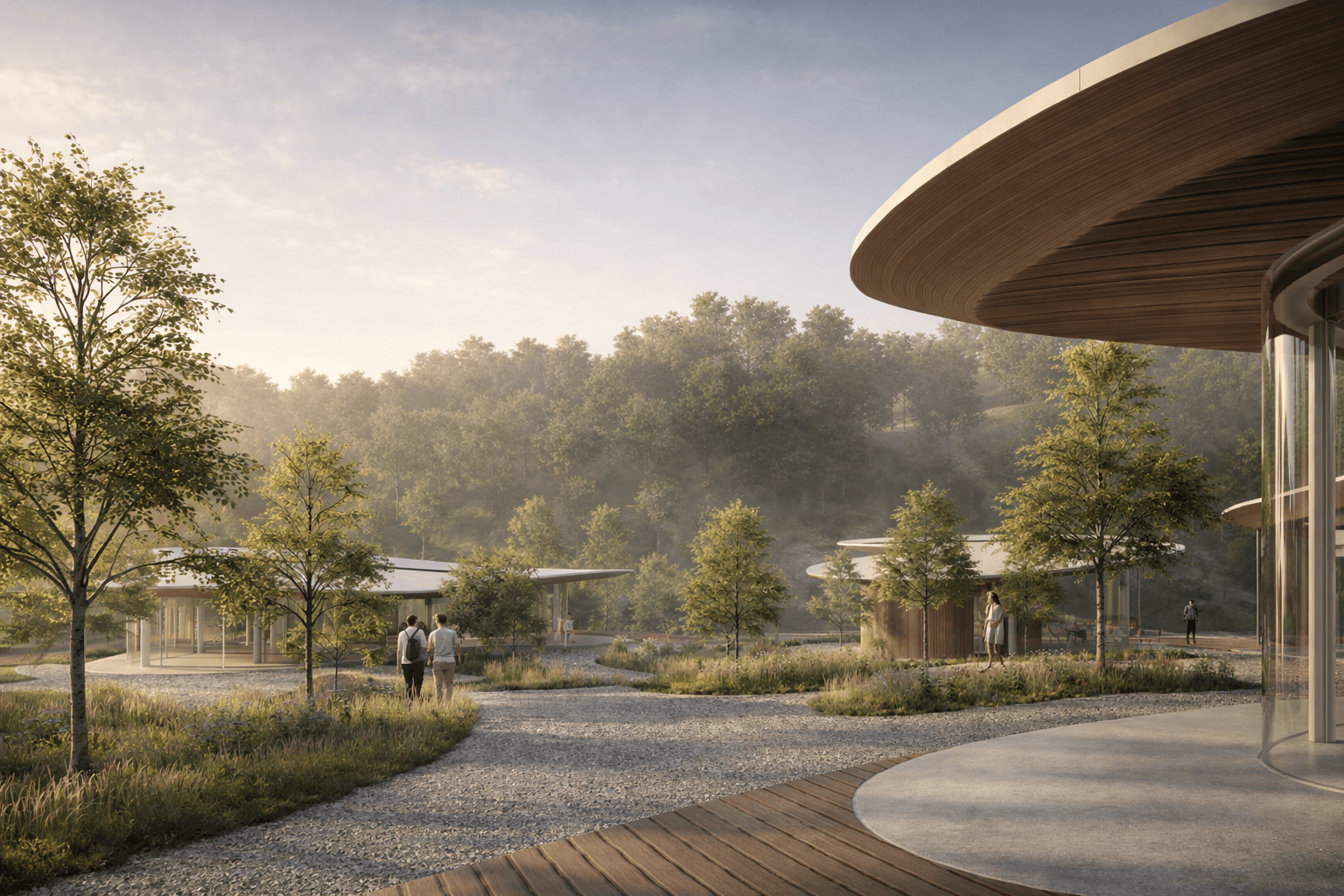
The community Center settles into the southern landscape beside the pond — a cluster of curved, organically shaped glass pavilions under generous timber rooflines.
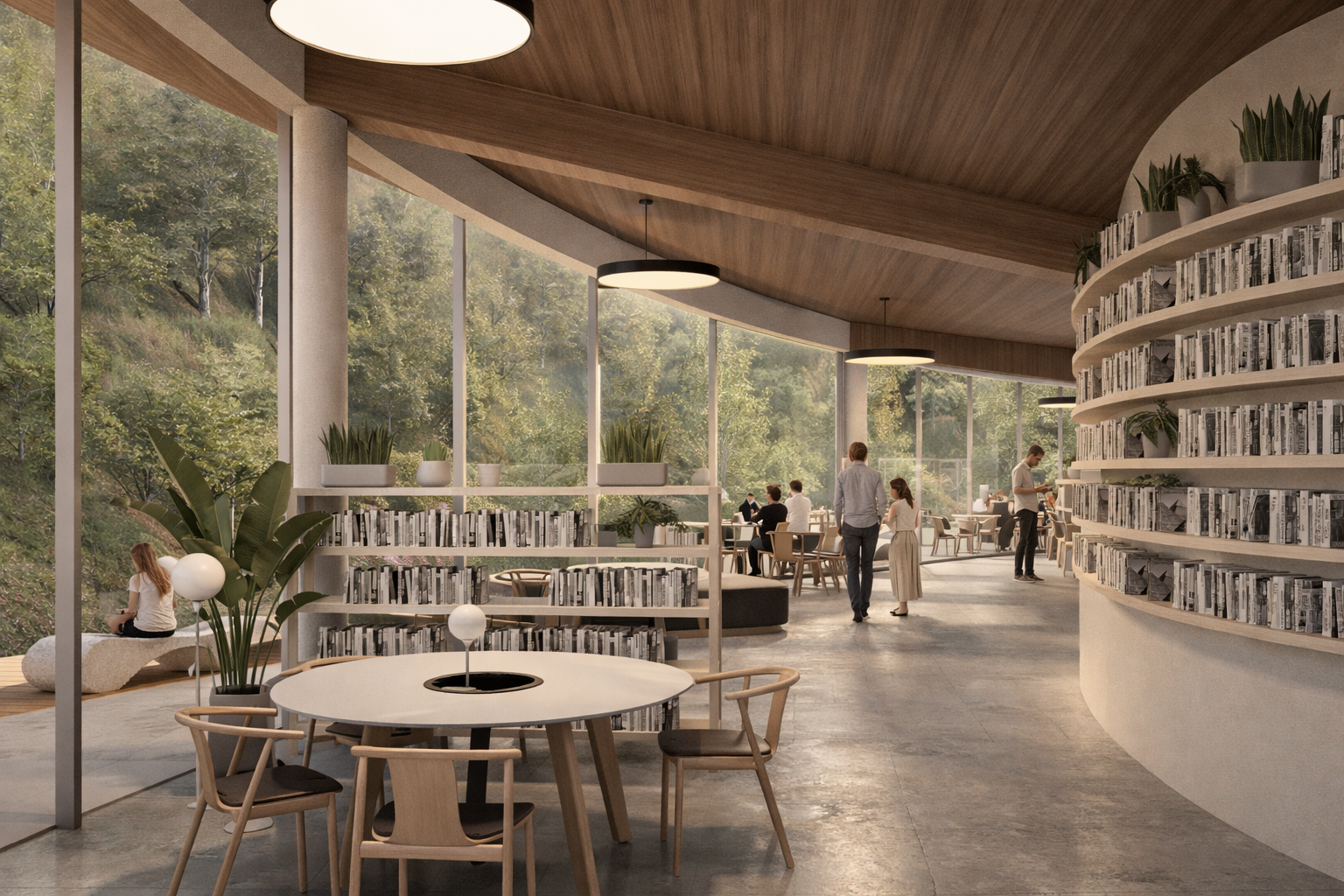
The forms are drawn from the contours of the land rather than imposed upon it. Gravel paths wind between pavilions and planted beds; inside, reading spaces, gathering rooms, and quiet alcoves open onto the landscape through continuous glazing.
The building does not announce itself. It simply makes itself available — a place for the island's fifty residents and its slow-traveller visitors to meet, pause, and remain.
Image 3
Image 4
Image 5
Image 6
Image 7