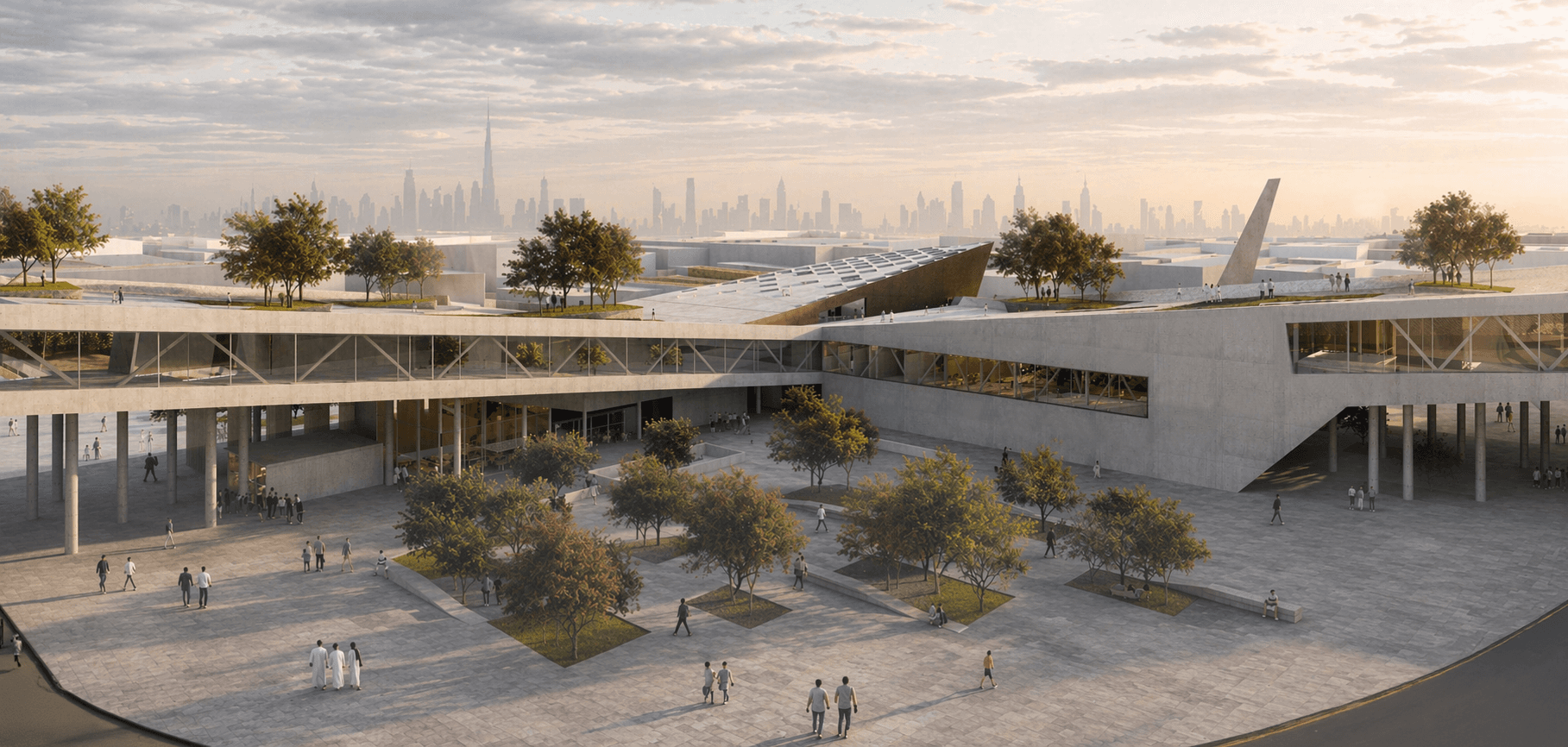
Design a community hub that integrates and empowers a labor community.
Context
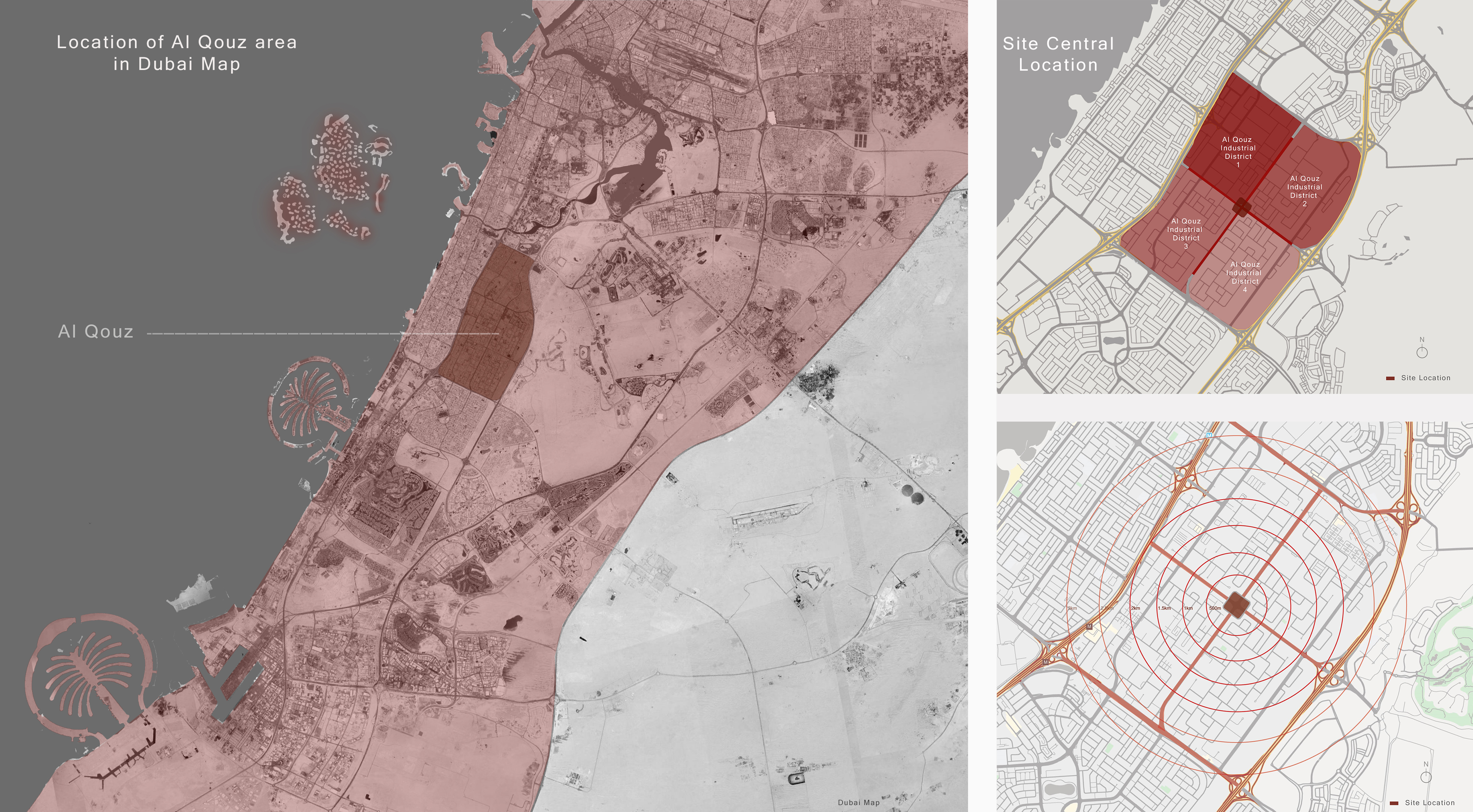
Site & Location
Design Process
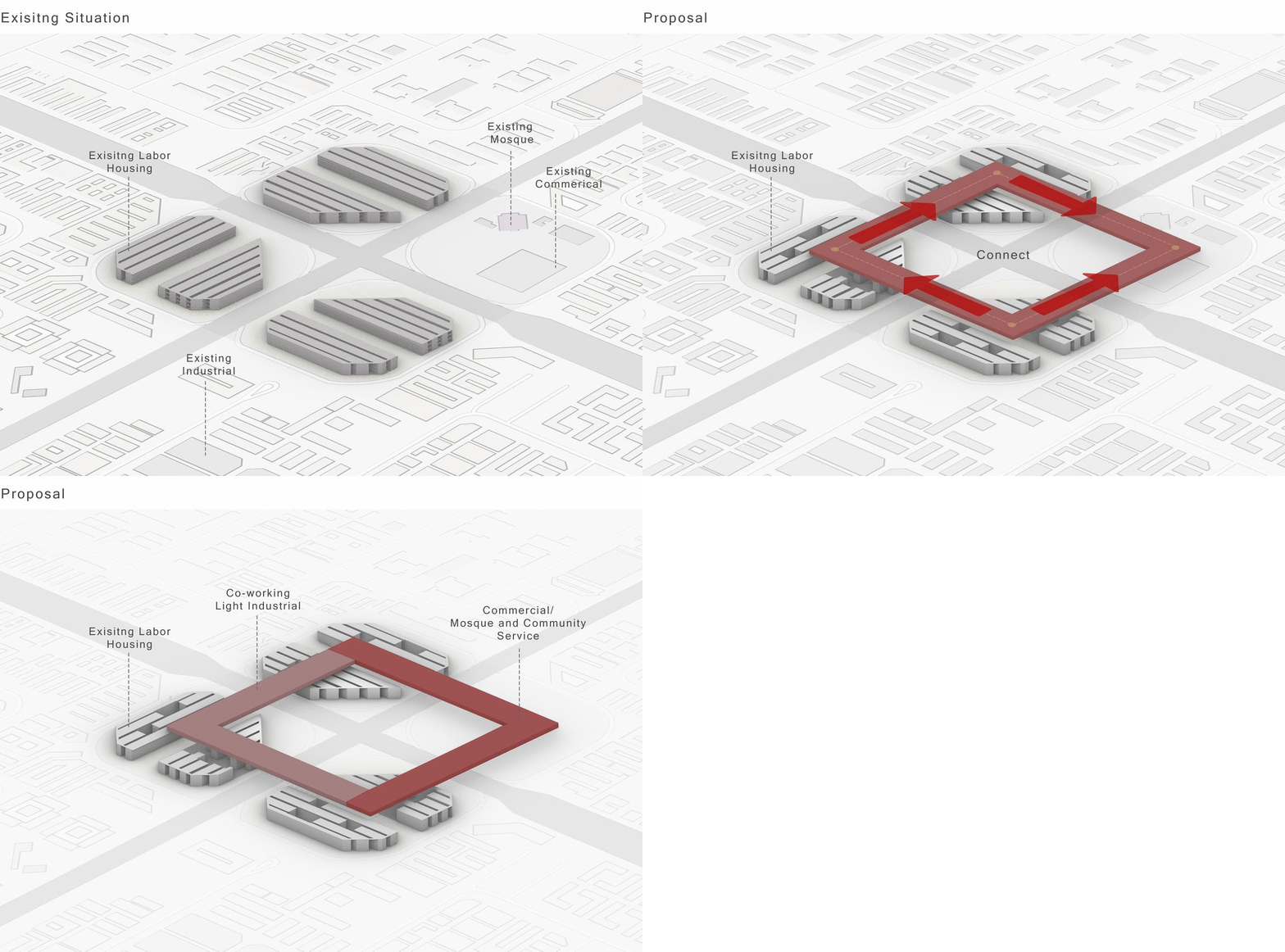
The architectural form responds to functionality, daylighting, ventilation, scale, and urban fabric through sequential design stages:
Porosity & Courtyards
Courtyard spaces and porosity are introduced within dense existing buildings to reduce density and bring light, air, and community gathering to interior spaces.
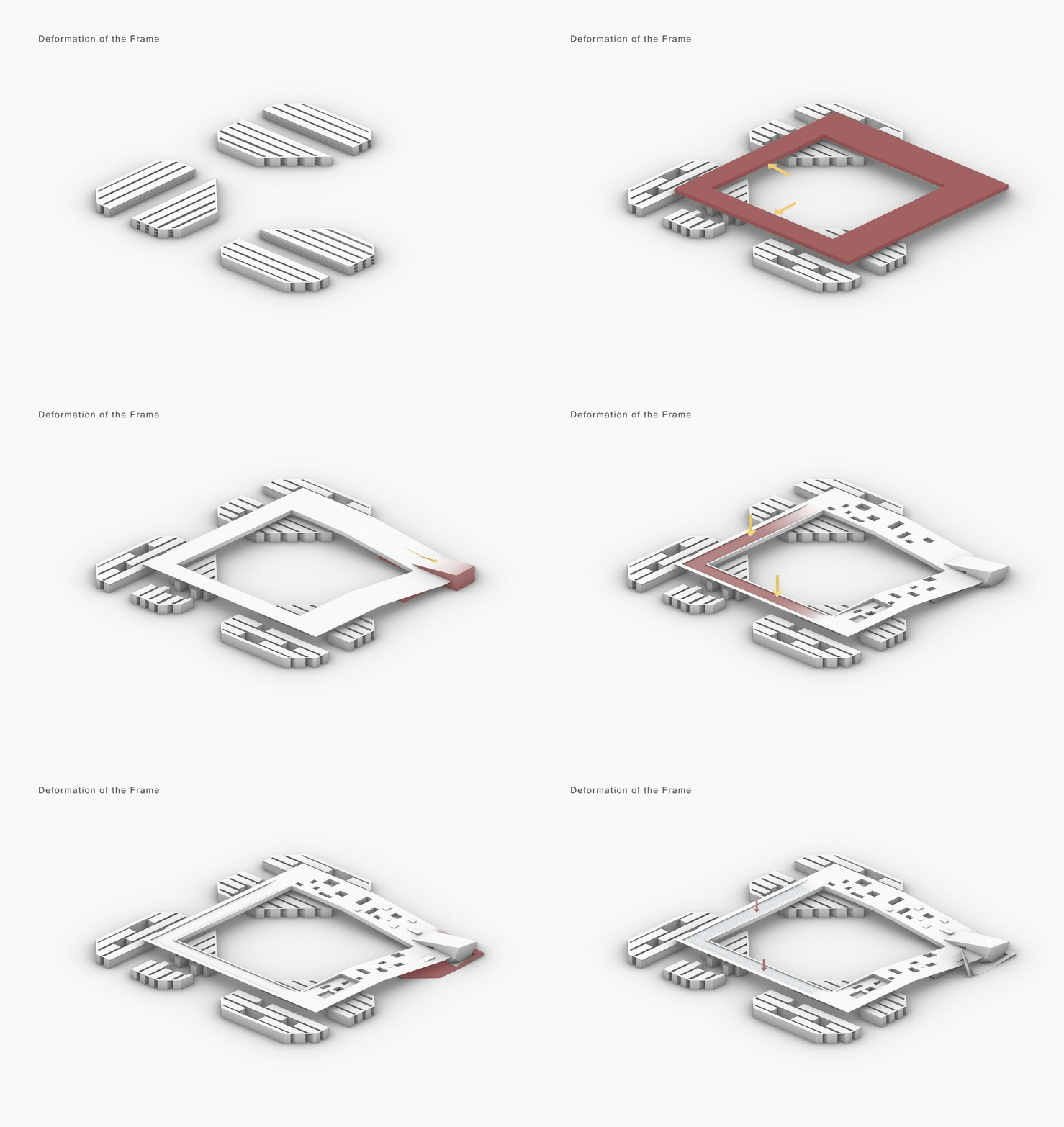
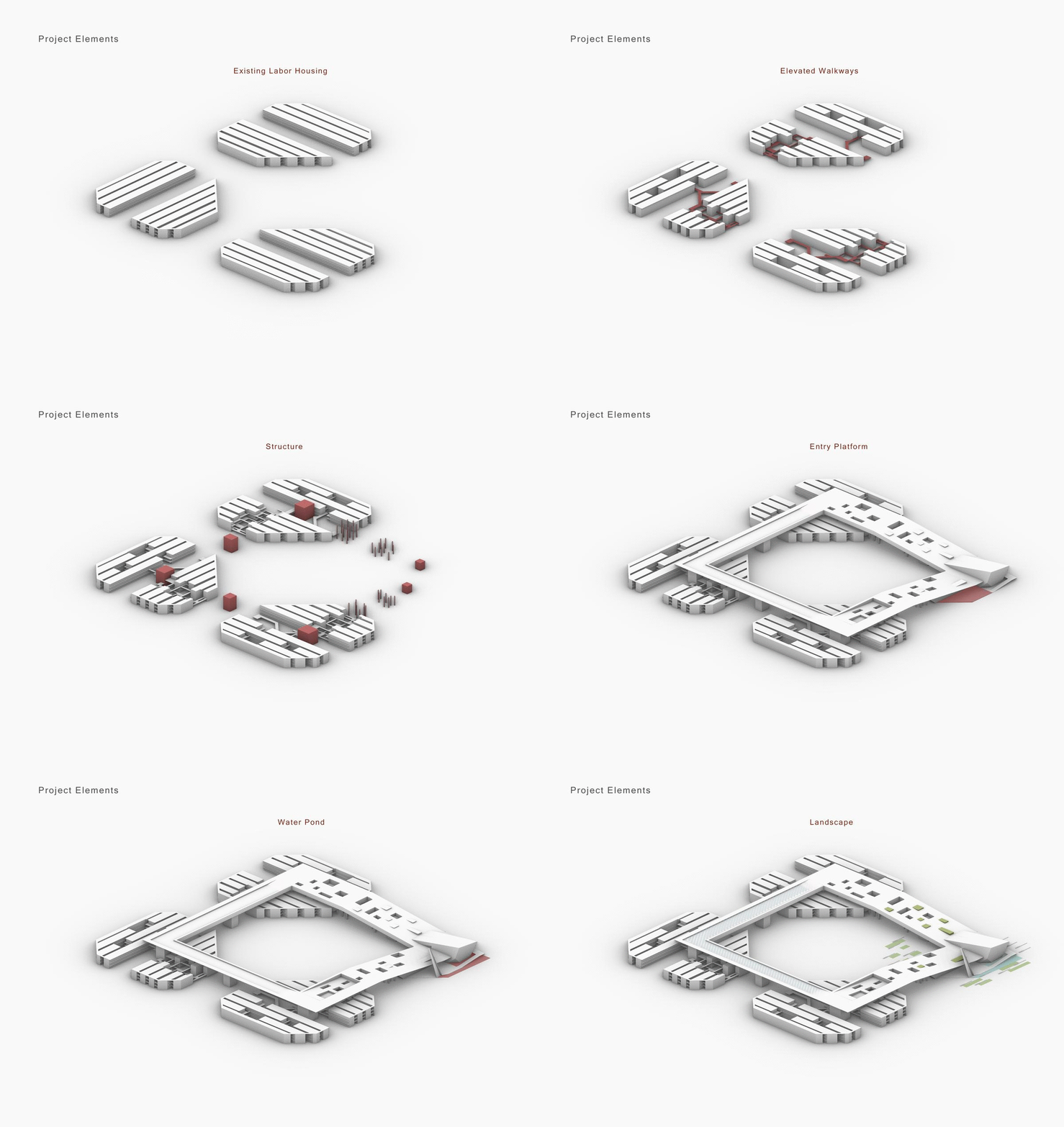
The Floating Frame
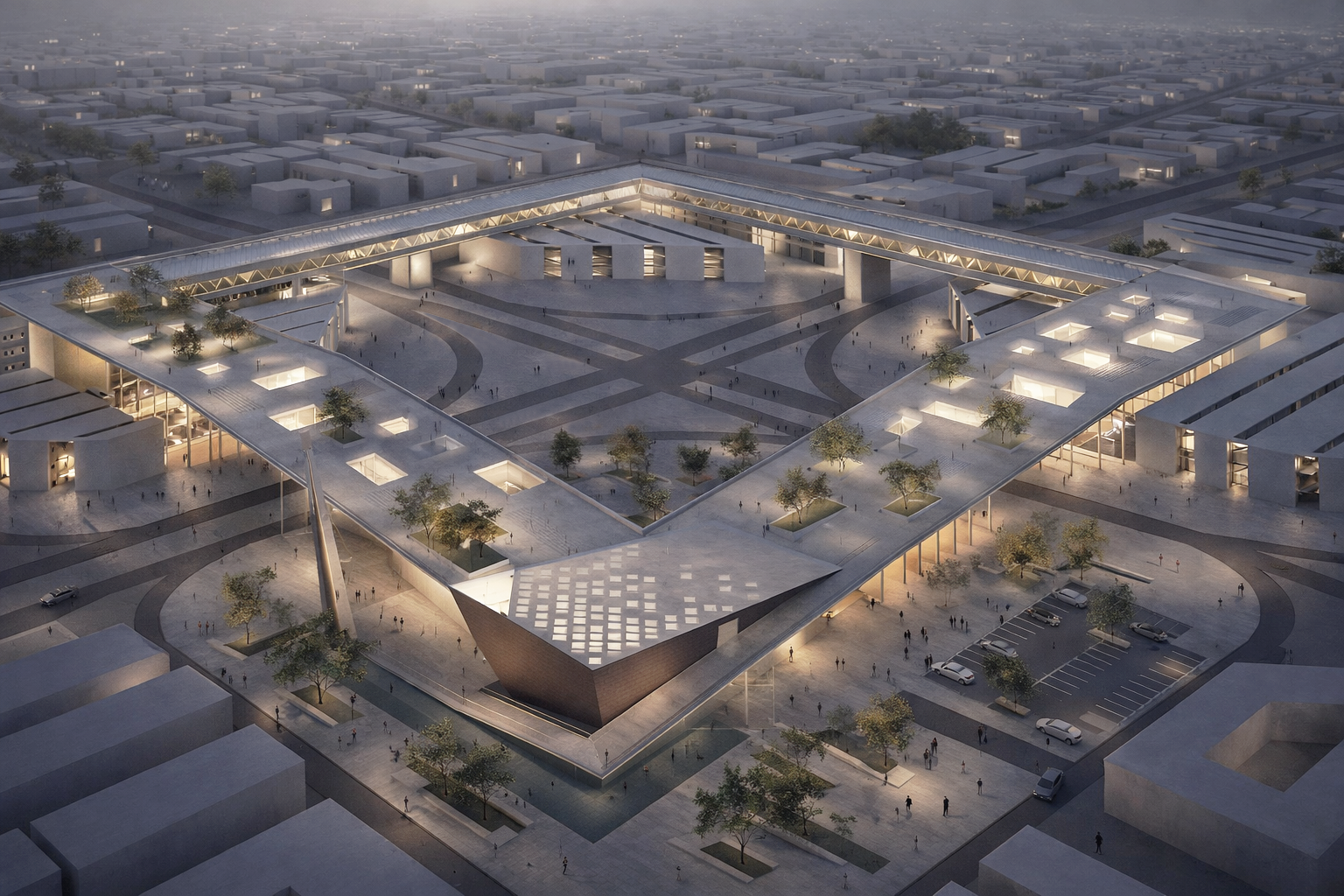
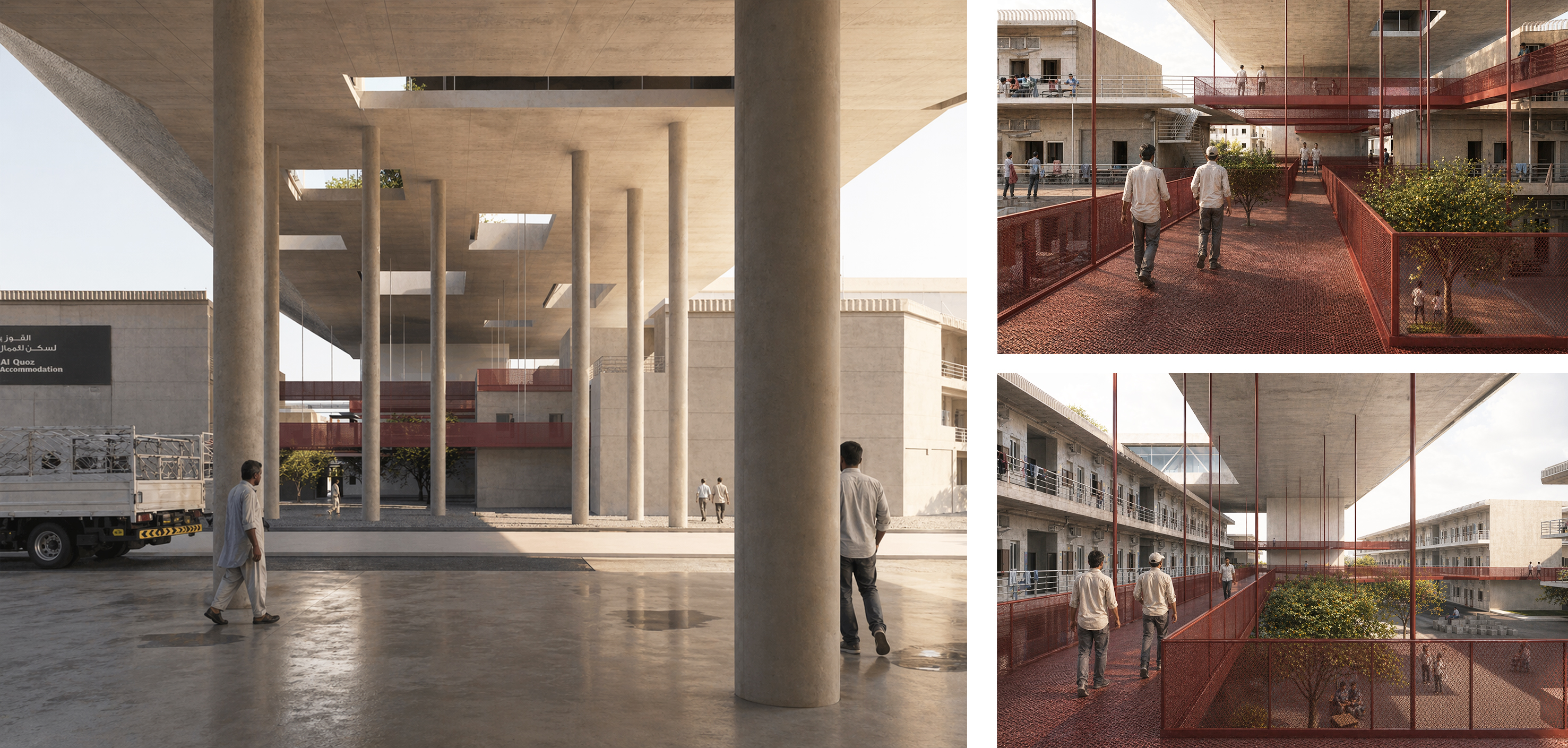
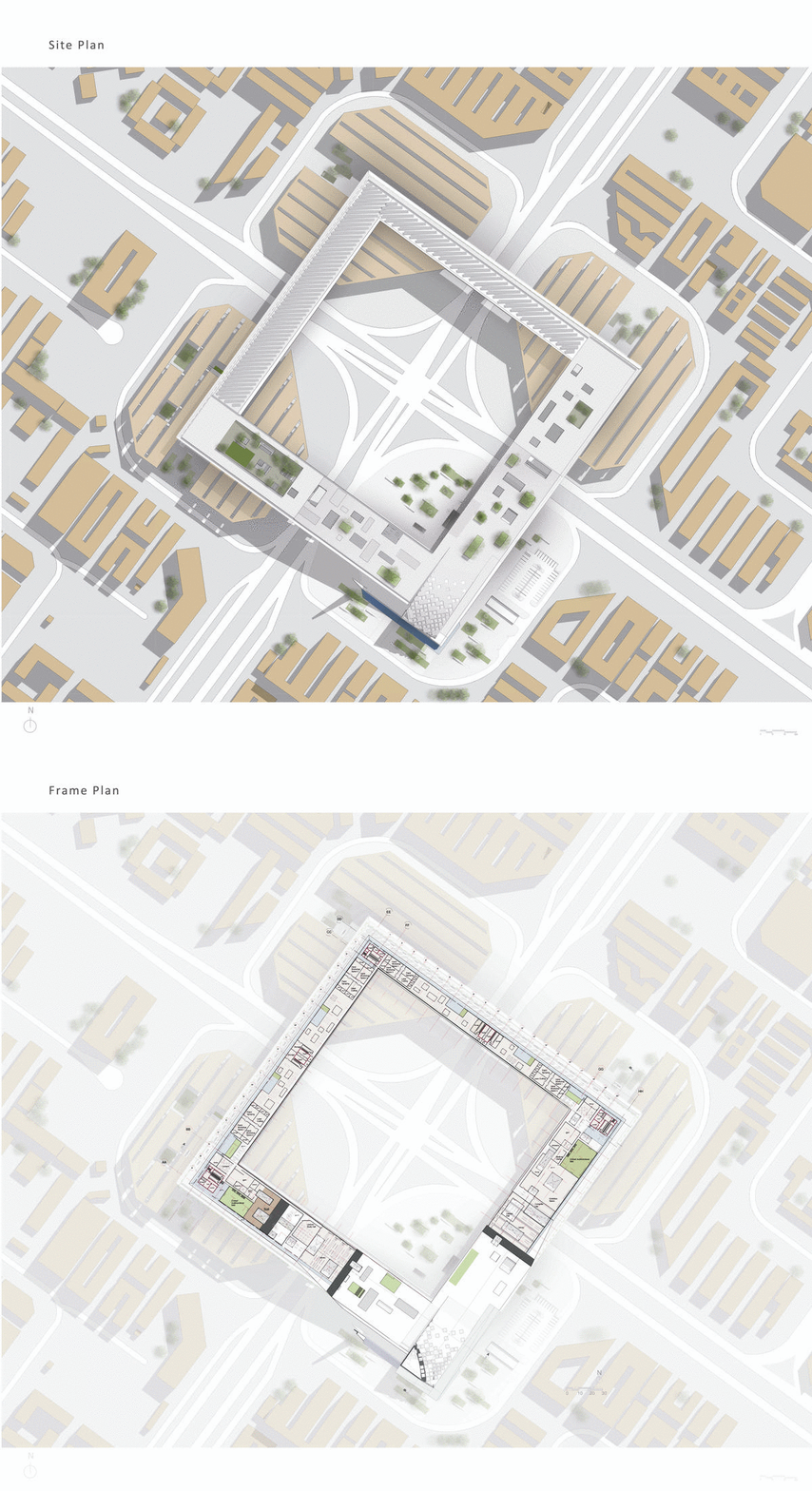
A floating frame bridges the road-separated plots, forming shaded underneath spaces that physically and visually connect the community across the major road intersection.
Program Distribution
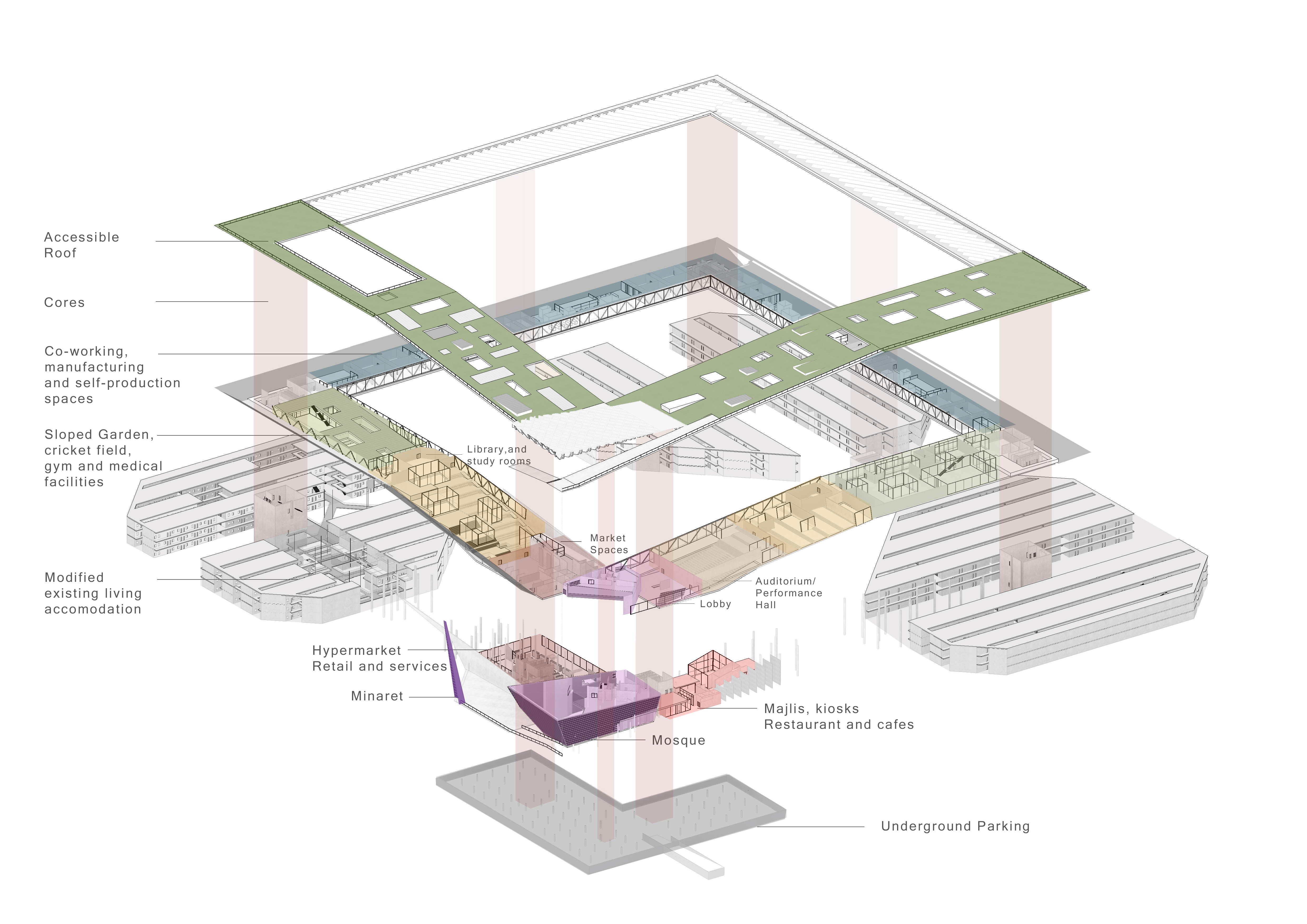
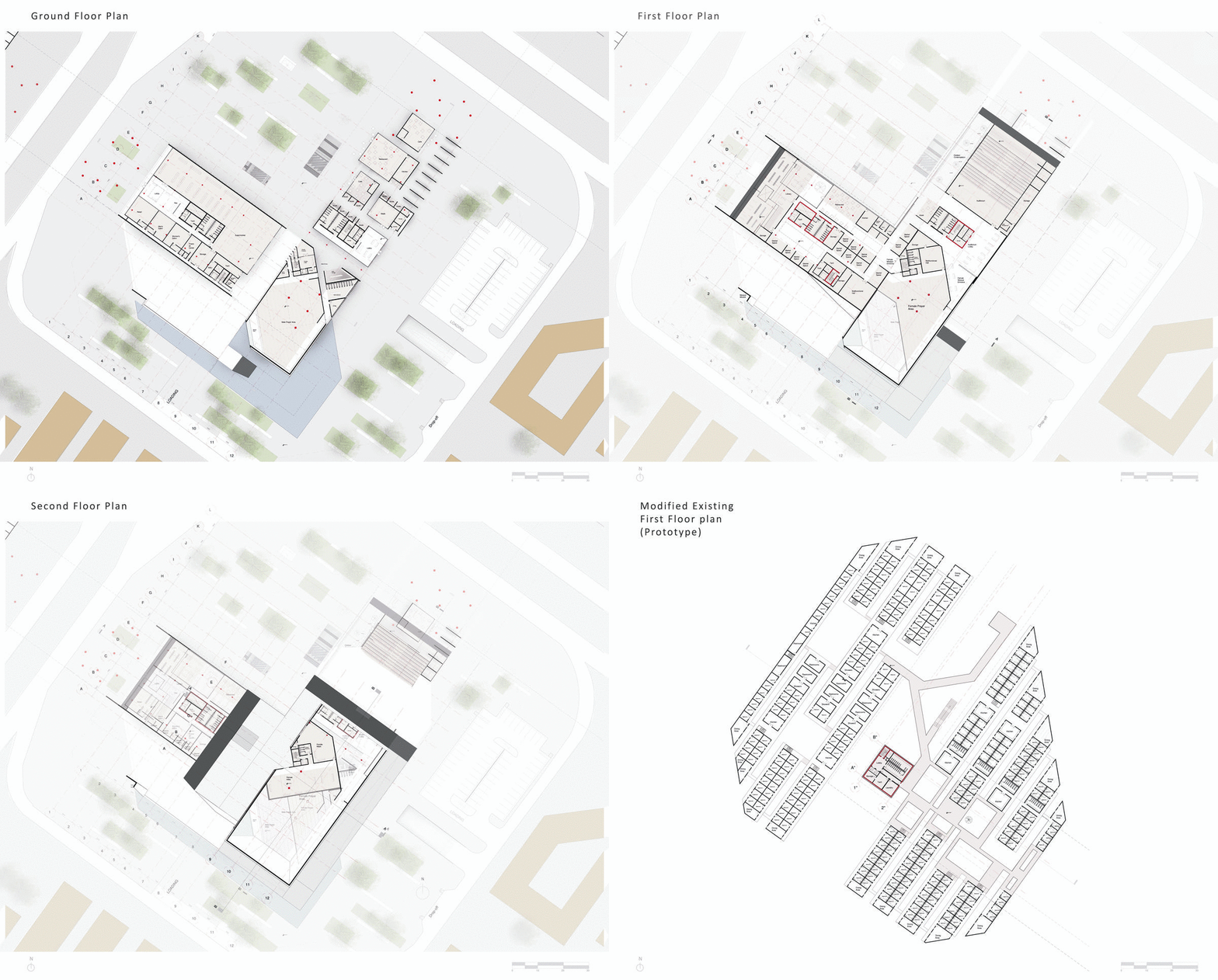
Narrow sides accommodate co-working and light industrial zones; wider sides house free-time facilities, commercial spaces, the mosque, and community services.
Mosque & Descending Roof
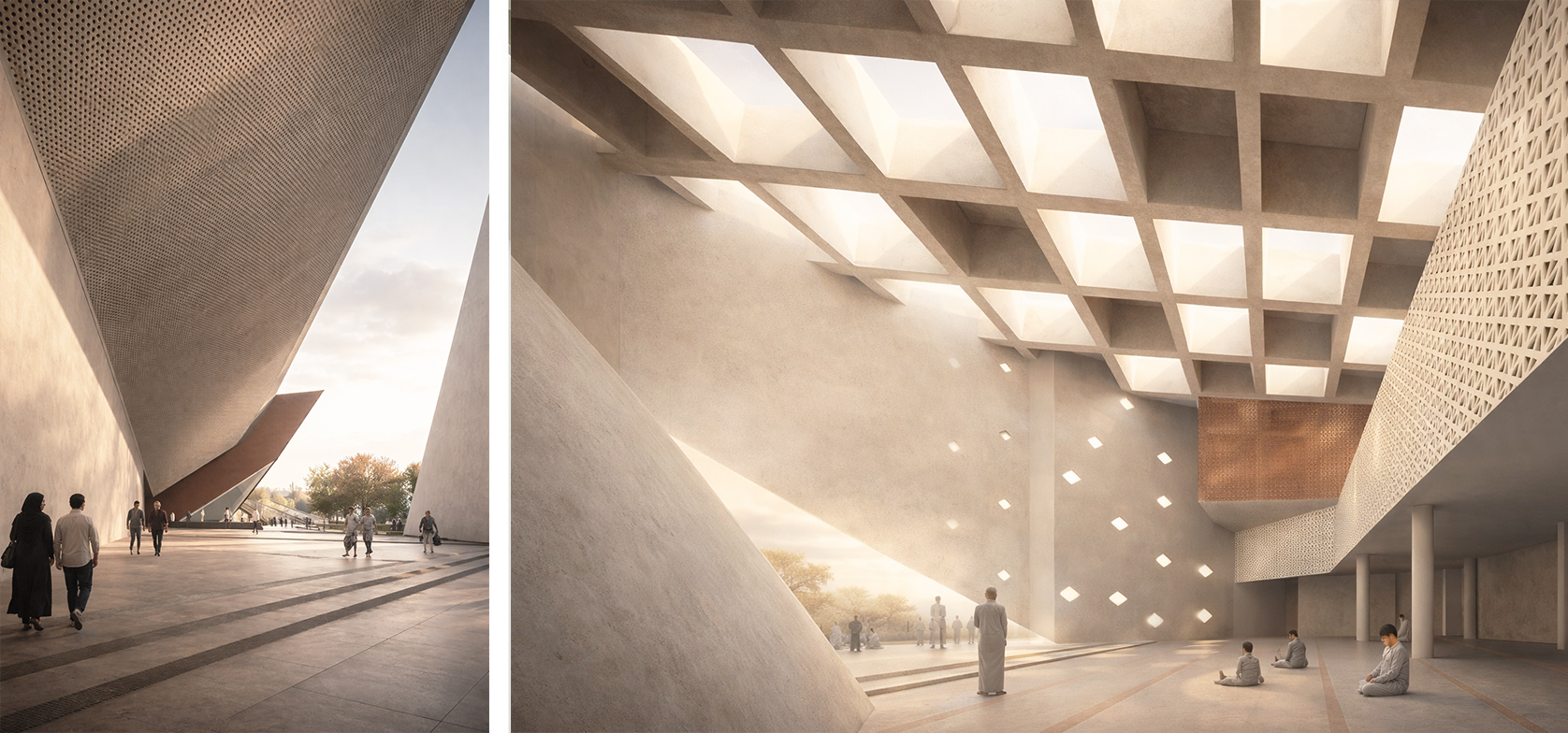
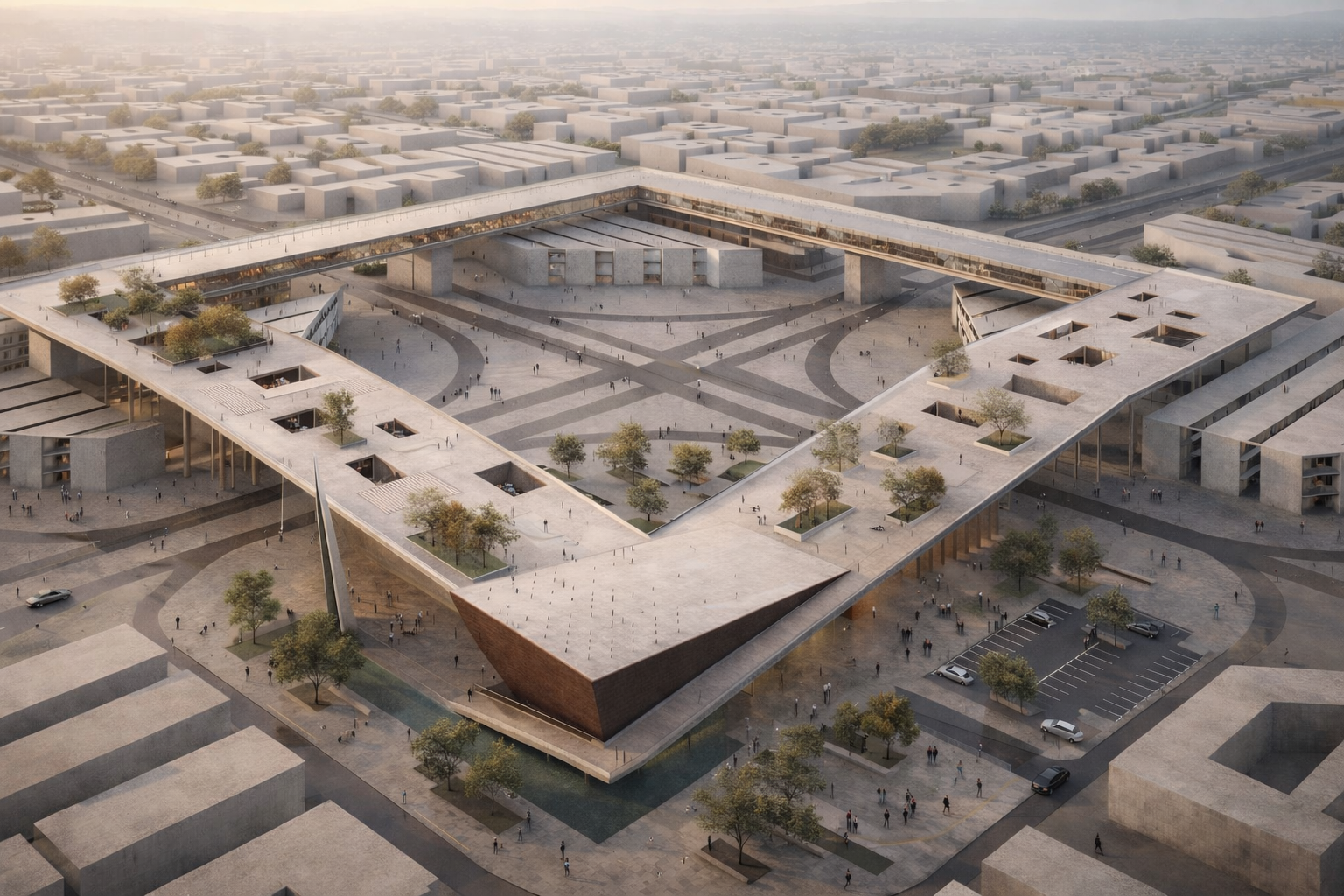
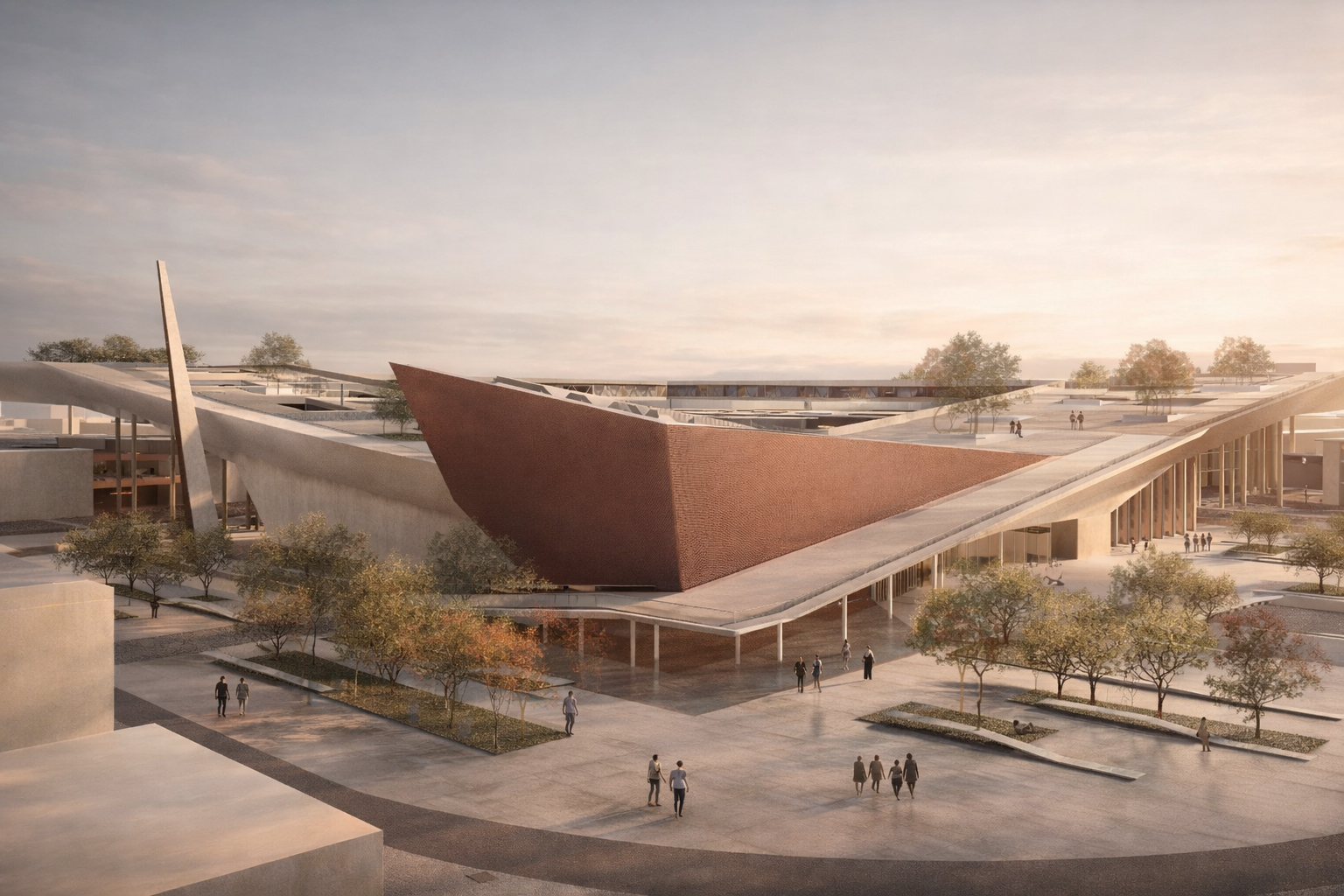
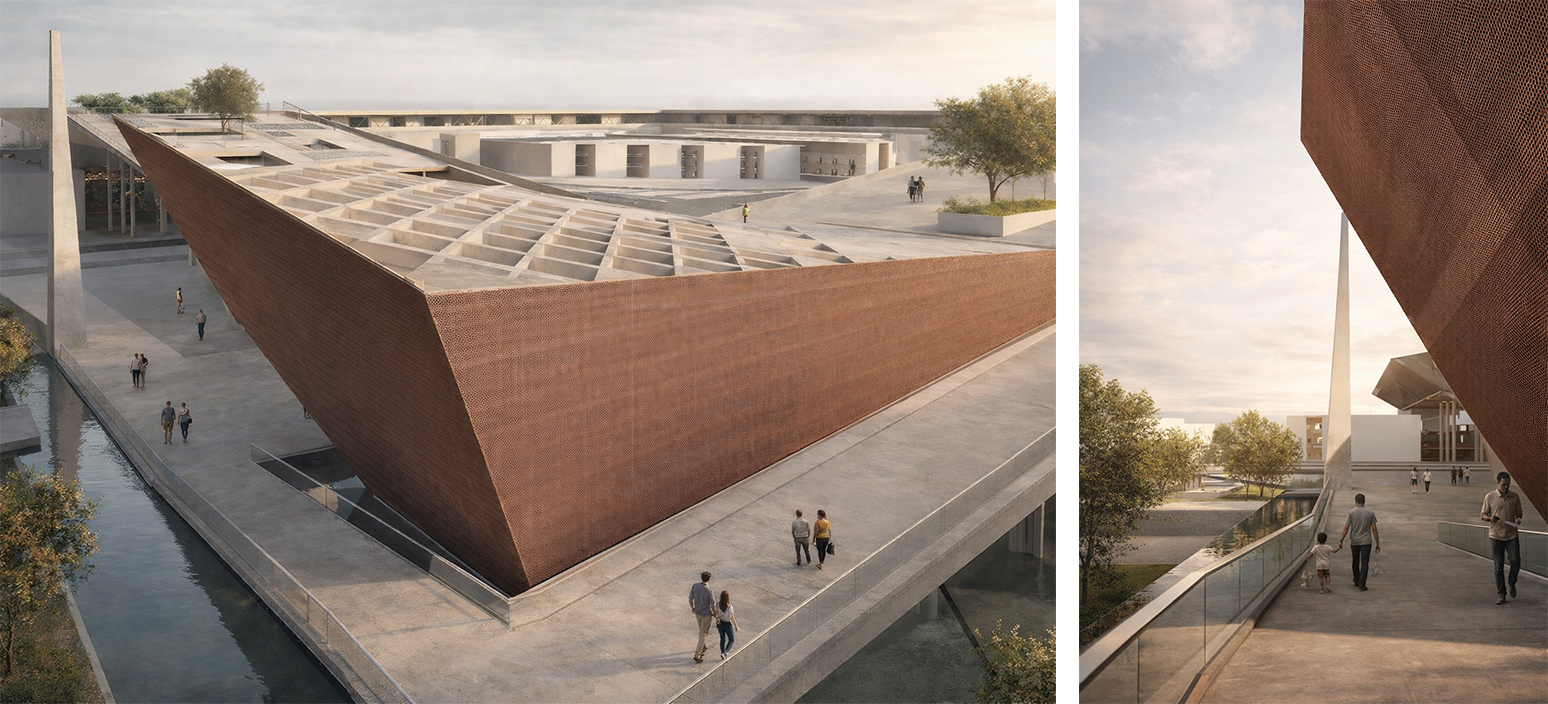
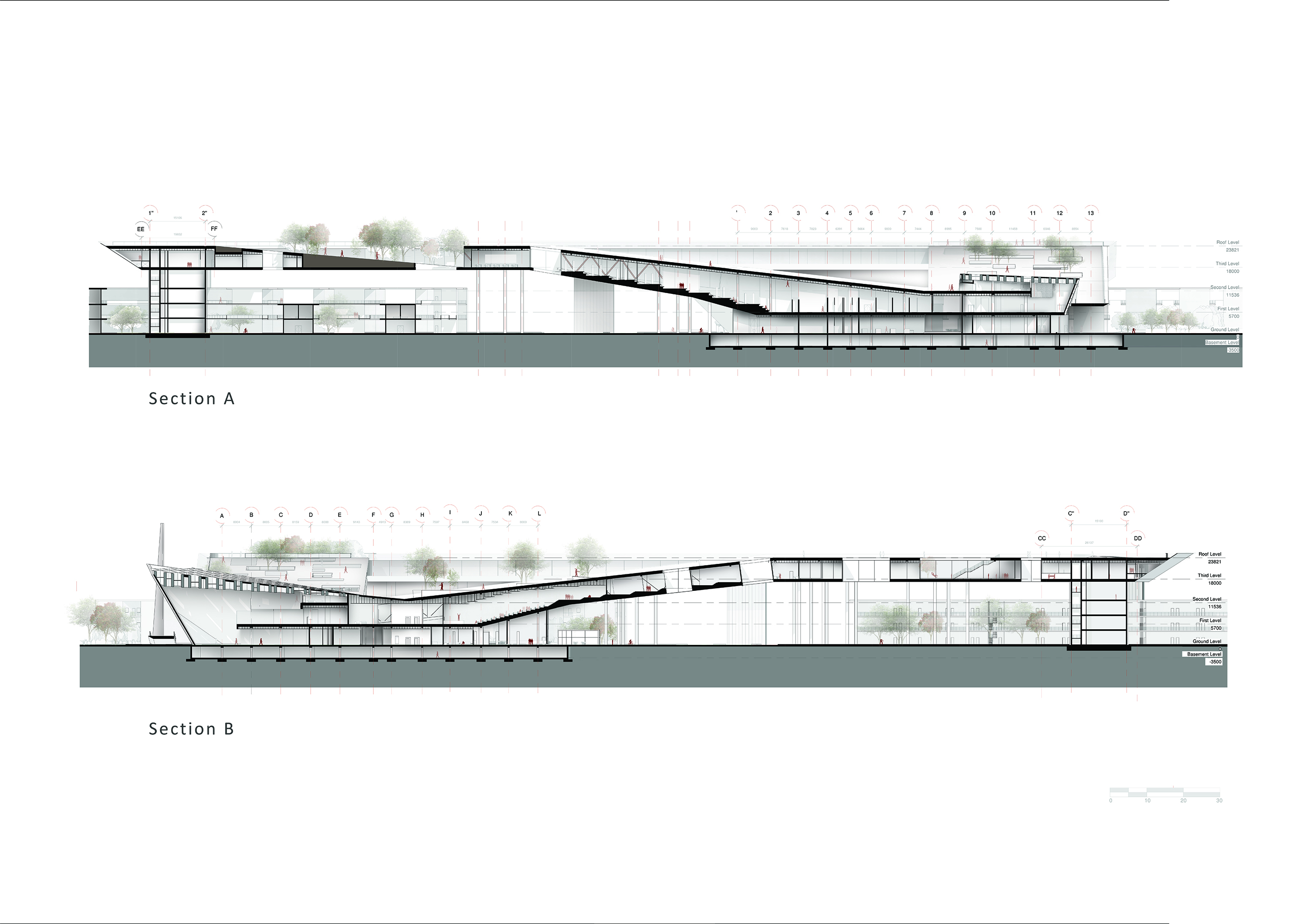
The frame peels back to reveal the mosque with roof access through an upper floor opening. The roof descends to ground level through a sloping ramp beside the mosque, punctured by hollow spaces, courtyards, sloping gardens, and cricket fields.
Night lighting enhances intimacy, security, and visual attraction — bringing the community together after dark.
Community & Integration
Three key spatial moves foster belonging and activate the community at every level:
Elevated Walkways
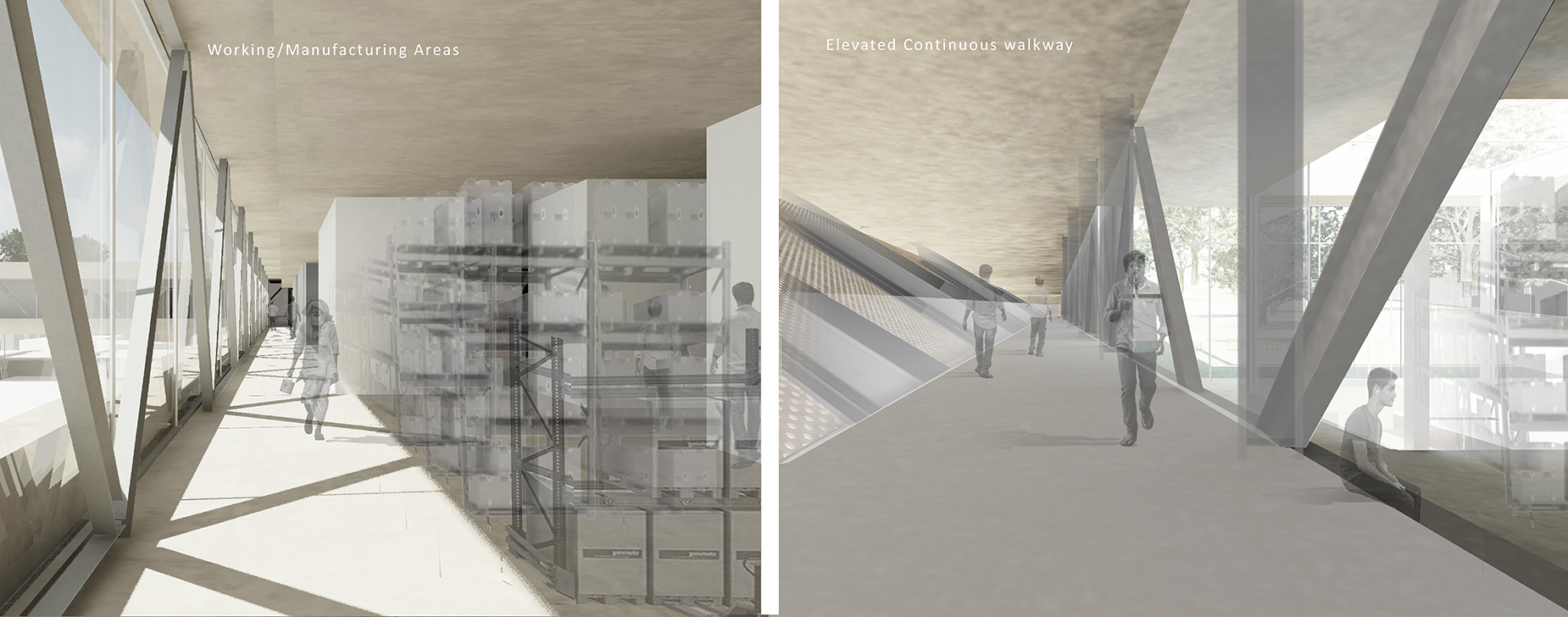
Hanged elevated walkways bridge connections from one part of the building to the other, fostering a sense of community among the labor workers and creating intimacy within the shaded semi-public spaces of the existing labor housing.
Hub Center
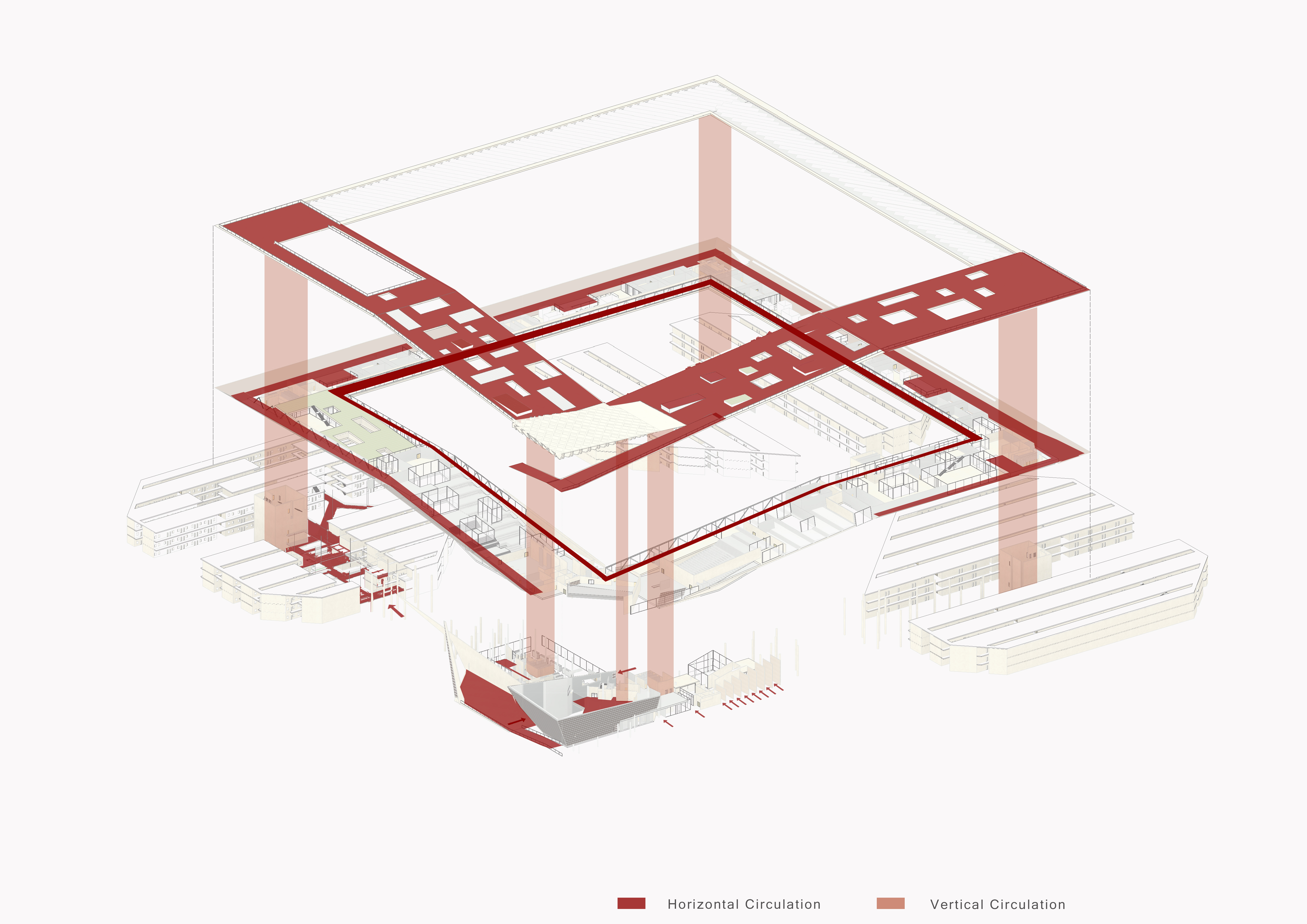
The focal point of the project — the meeting and the synergy of a wider community. The roof, accessible via spaces within the frame and the mosque upper floor, becomes the wider landscape where various views and visual connections are established with the spaces underneath.
Ramp & Water Feature
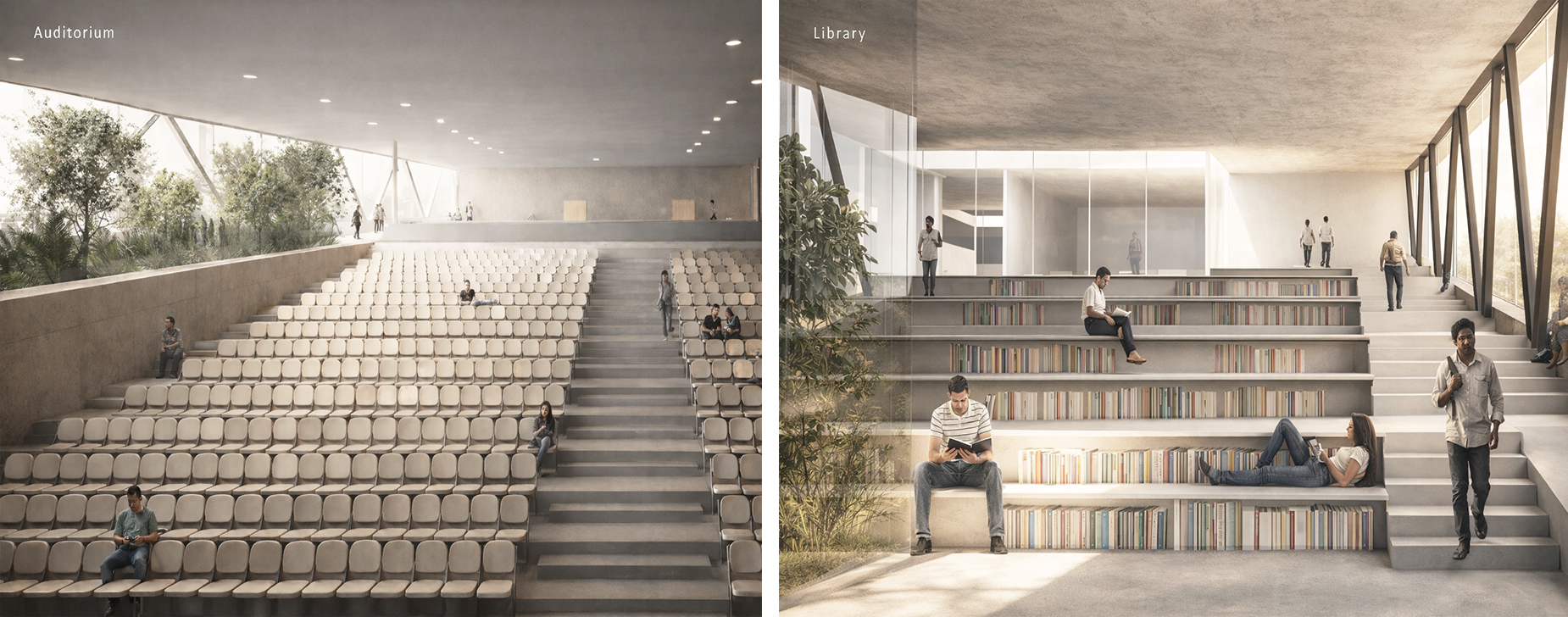
As users go up or down the ramp near the mosque, the experience is purified and refreshed with a running water feature underneath. The sloping interior frames an auditorium and a library, with distributed daylighting lifting the mood and experience of the users.
The working area features an elevated circulation path that runs continuously on the outer sides of the frame, optimizing the space between the slanting outer walls and the interior.
Design Development
Sustainability & Materiality
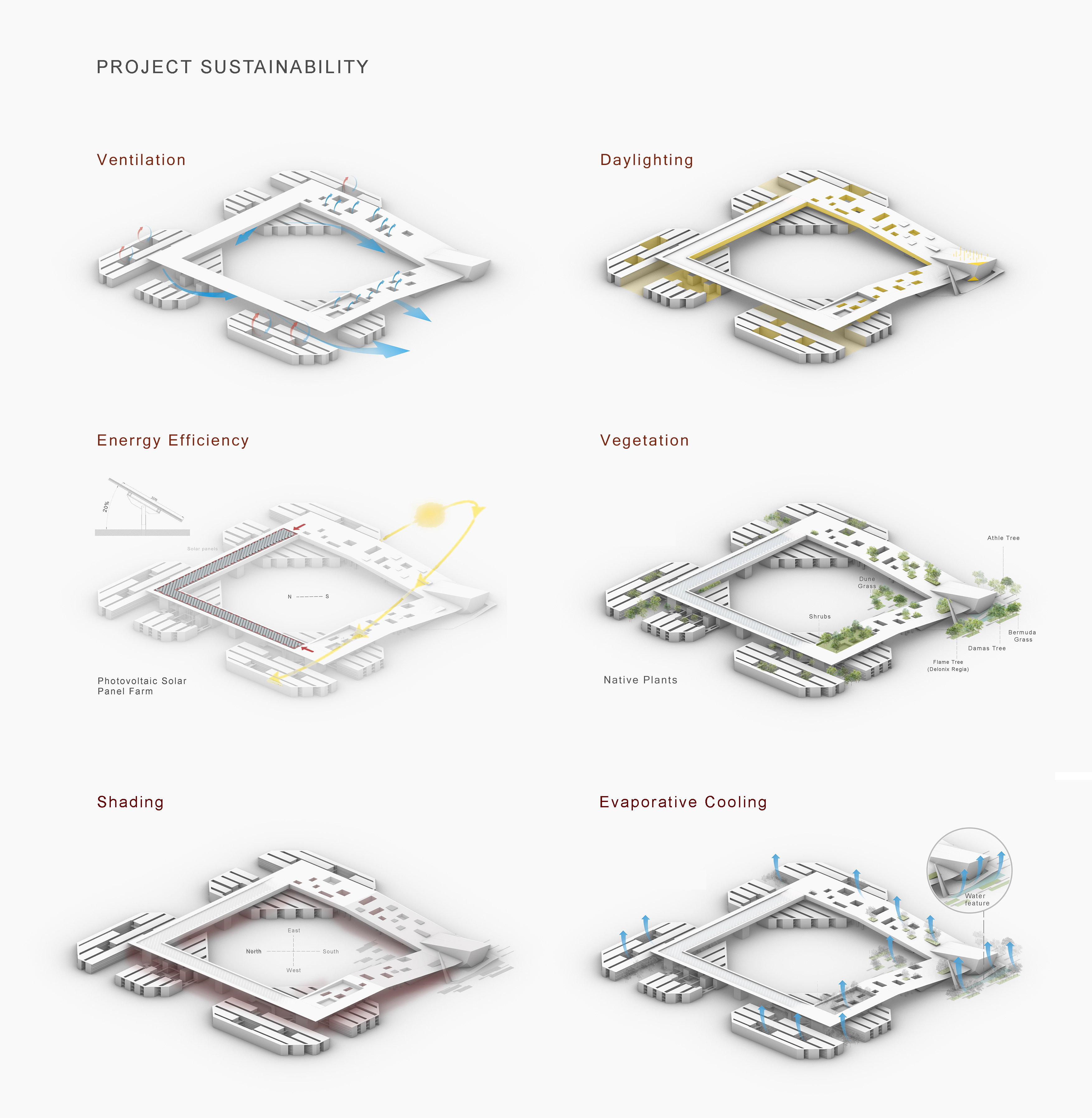
The project uses passive and active design strategies to enhance the quality of experience and reduce energy consumption:
Passive Design
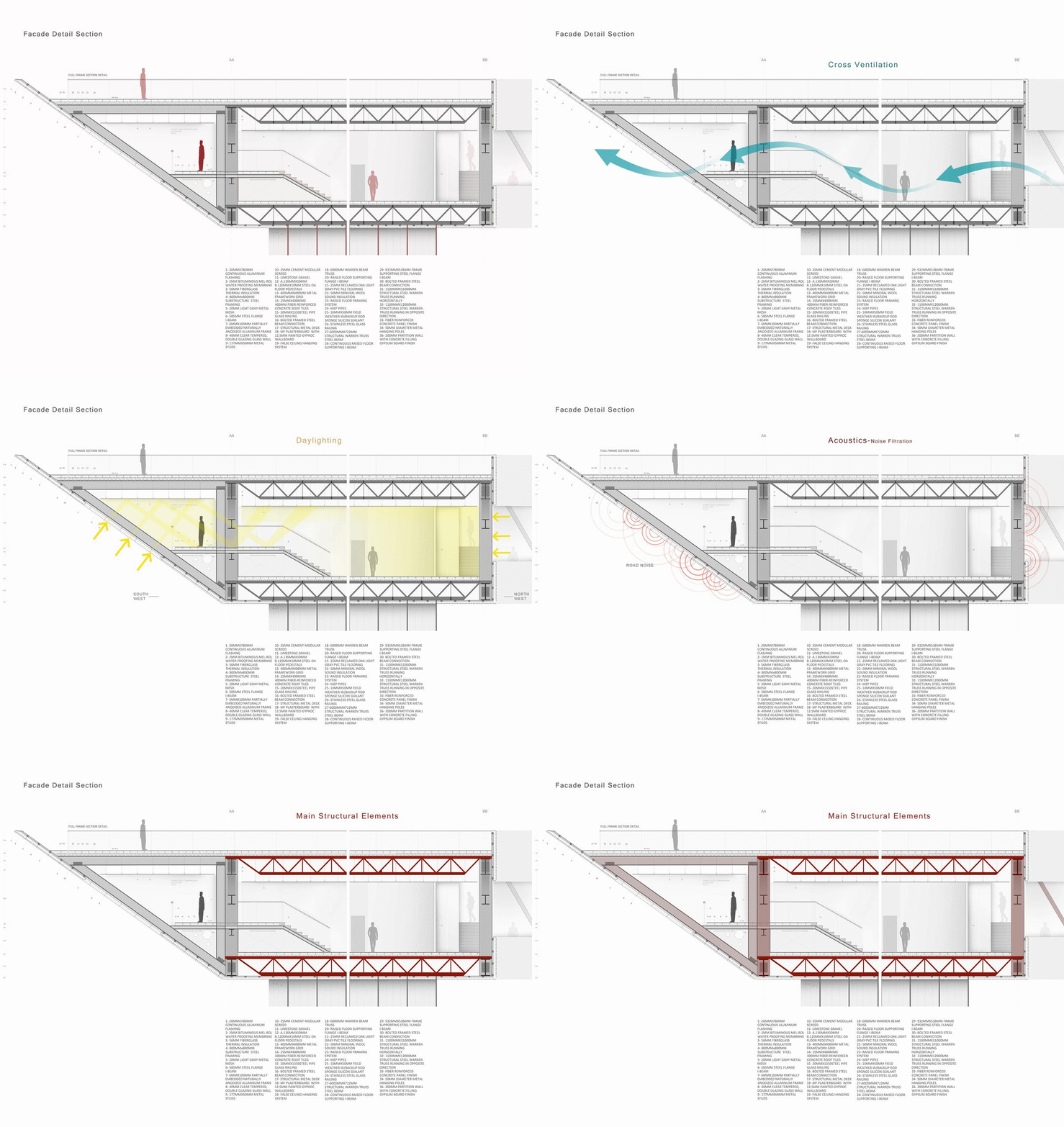
Ventilation, daylighting, shading, and vegetation are woven into the architectural form. The facade brings together structural, functional, and aesthetic composition through distributed daylighting, pollution filtration, and noise reduction. The light-colored ceiling maximizes reflection of daylight into inner spaces.
Active Systems
Evaporative cooling and solar panels on the roof complement passive strategies, reducing energy consumption while supporting user comfort throughout the year.
Material Palette
GRFC panels in light gray for the frame top and bottom; perforated metal mesh on outer sides for light filtering; double-glazed glass on inner walls for transparency. The mosque is clad in brownish-red perforated metal mesh contrasting the frame. Elevated walkways in carbon steel wire mesh; pylons in tempered U-glass for a lighter visual effect.
The mosque is deformed and oriented towards the direction of Mecca — its southwest corner dragged up to highlight the qibla wall with light coming through translucent glass.