MAYAROUFAIL.
Architecture · Urban Design · Milano
Maya Roufail.
Church of the Future

Architectural Design

Church of the Future

Bovisa, Milan, Italy  ·  2025

Scroll
← All Projects
Architectural Design

Design an interconfessional sacred space that belongs to everyone — rooted in the campus landscape, open to all beliefs.

Sacred SpaceInterconfessionalTimber StructureConcept Design
LocationBovisa, Milan, Italy
FunctionSacred / Community Space
Year2025
Project Sections
01
Section

Project Brief

An intensive one-week design workshop at Politecnico di Milano, Bovisa campus, organized in collaboration with the Lombardy Episcopal Conference. Students were given two defining objectives:

cross

Dual-Purpose Space

A single space serving both Christian liturgical celebration with a clear identity and interfaith meditation welcoming people of all backgrounds and beliefs.

liturgical celebrationinterfaith meditationinclusive identity
leaf

Campus Wellbeing

The spiritual space would enhance the psychophysical wellness, inclusion, and multiculturalism of the international student body at the new Bovisa Nord Campus.

psychophysical wellnessinclusionmulticulturalism
map

Site: Gasometer Park

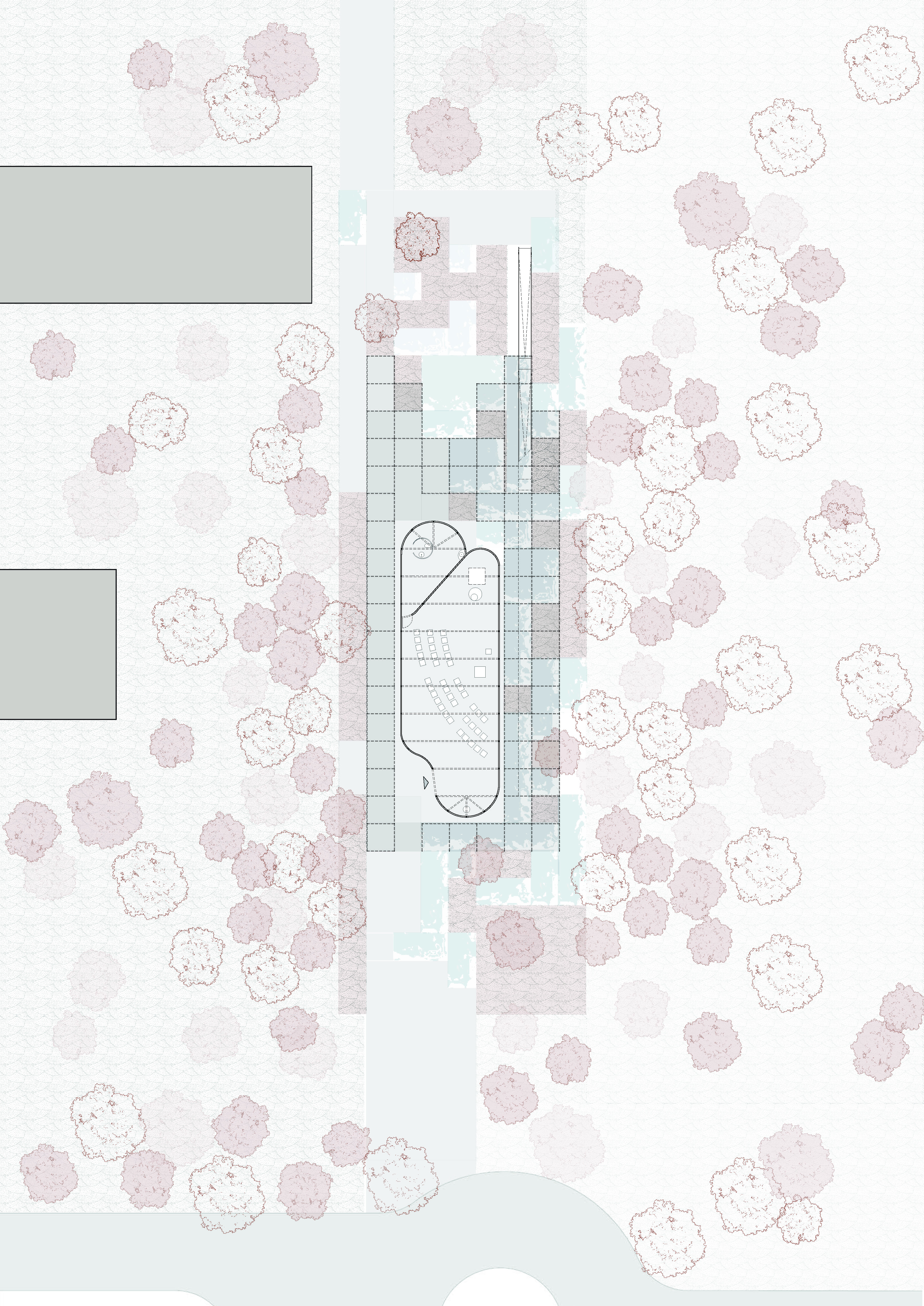
The project is sited within the Gasometer Park area of Bovisa — a natural setting that emphasizes contemplation amid the historical industrial structures of the campus.

natural settingindustrial heritagecampus integration

The brief demanded architecture that could hold stillness and openness simultaneously — a building for everyone, and for no single belief.
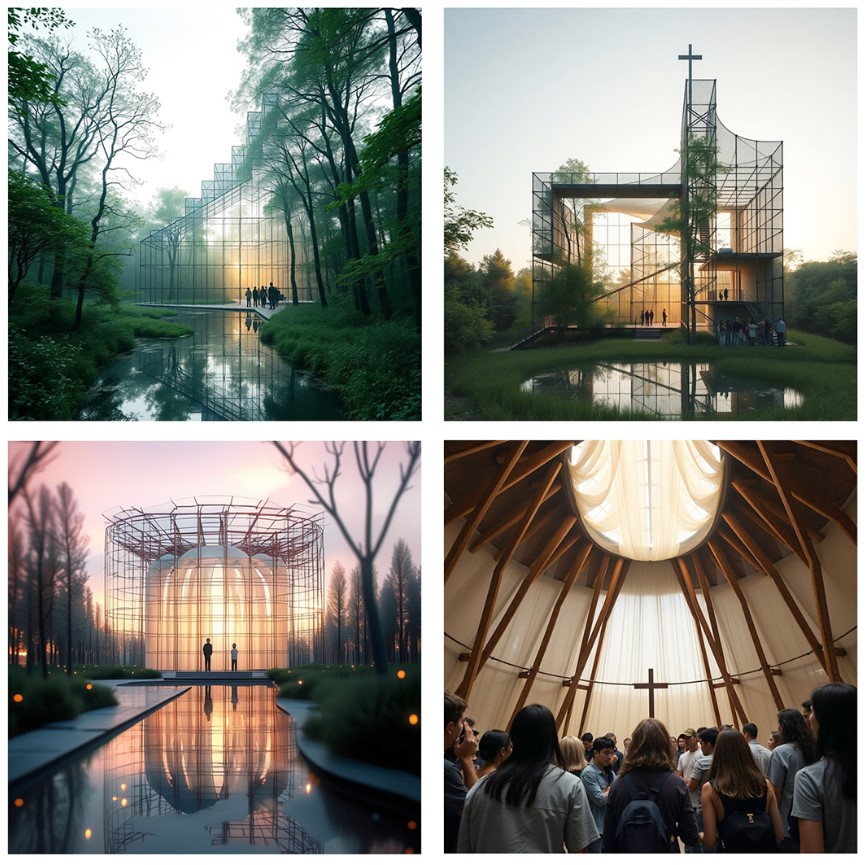
Image 1
02
Section

Concept & Prompt

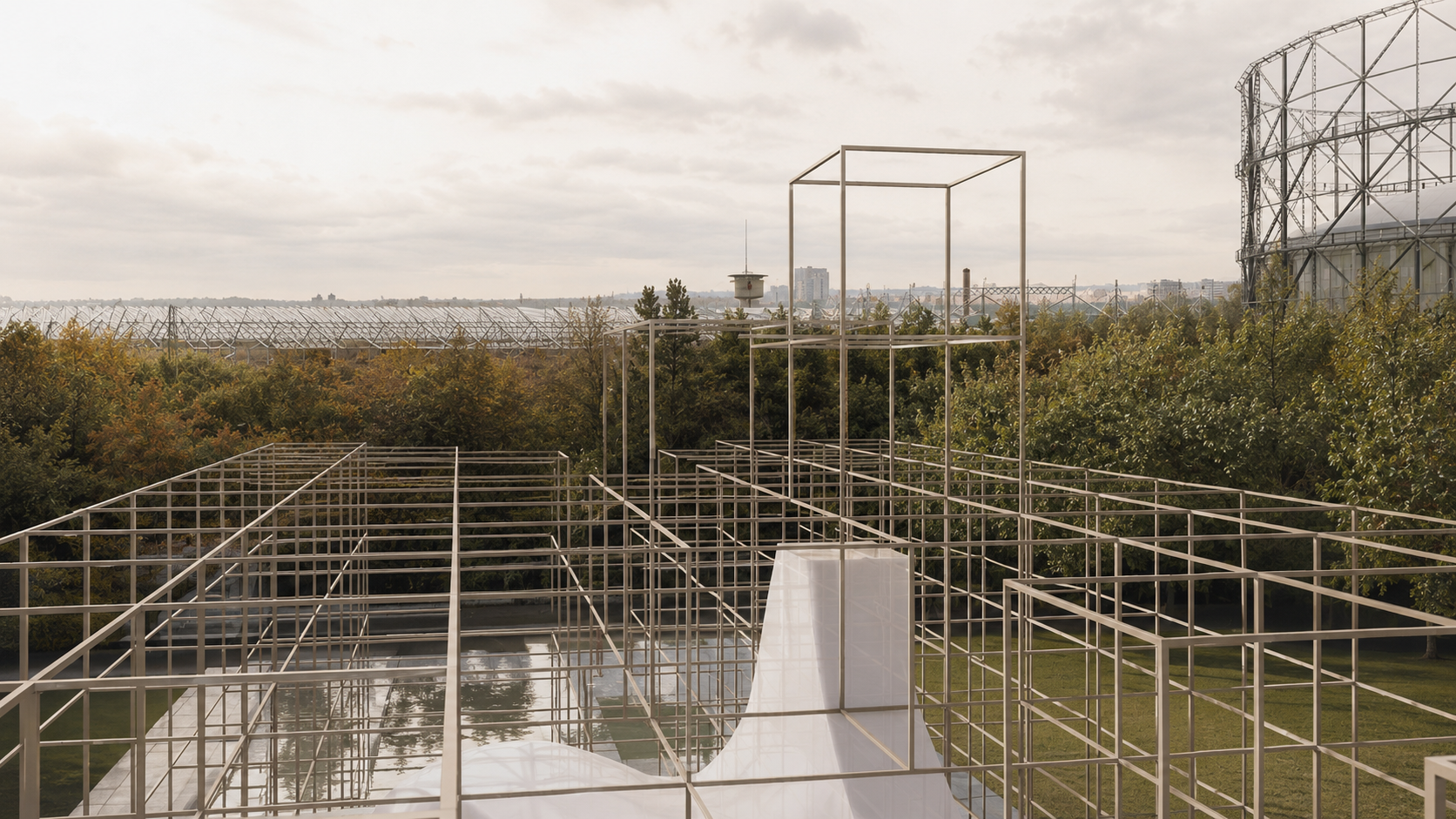
The design language was established early: lightness and transparency as its fundamental character.
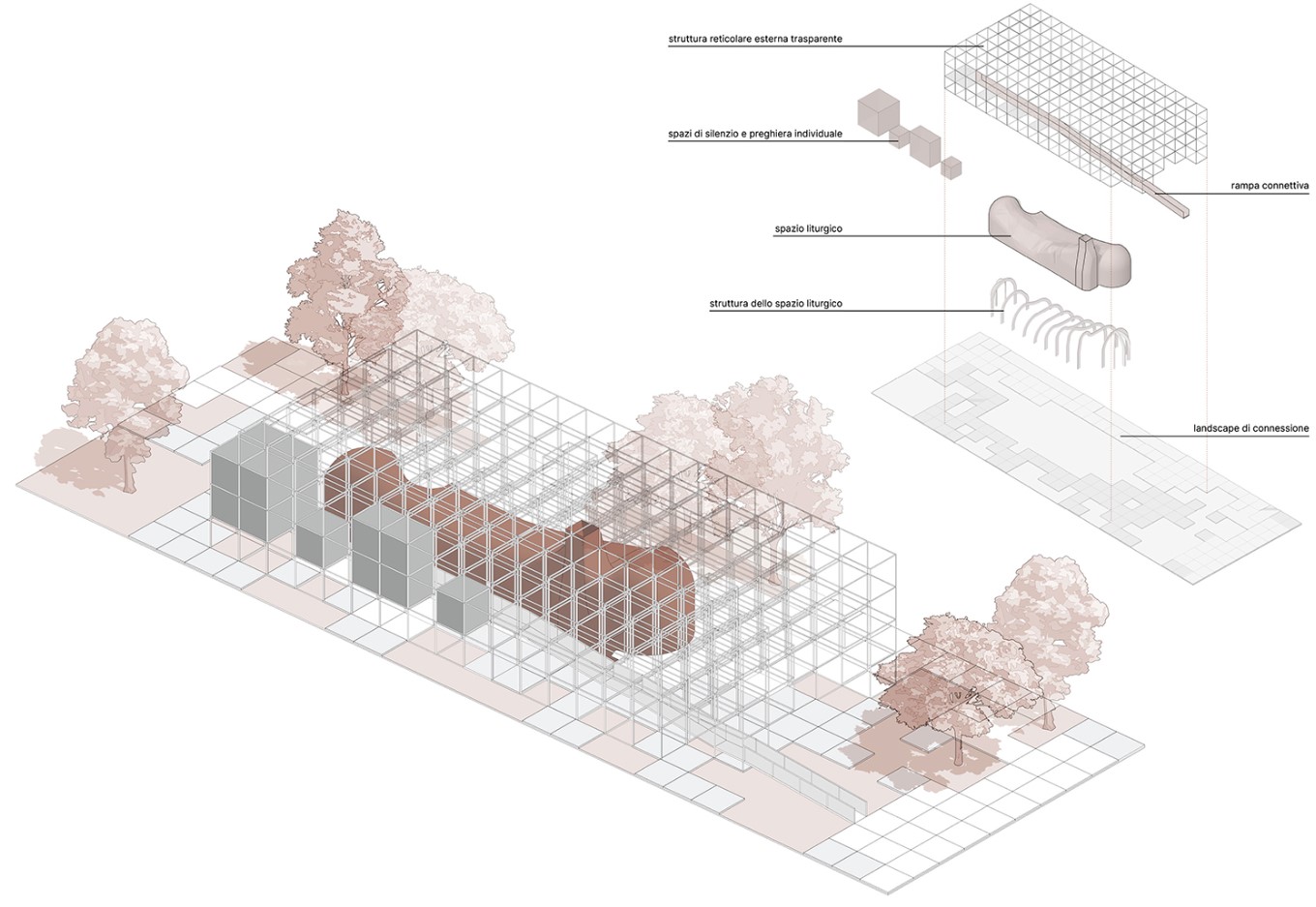
A reticular wooden structure would act as a permeable envelope — suggesting openness and welcome, while fluid interior forms conceived as a textile membrane would create the gathering space within.
The contrast between the regularity of the exoskeleton and the fluidity of the interior volume became the architectural concept — an experimental architecture evoking intimacy and gathering.
Image 2
03
Section

Concept Development

Three architectural instruments define the building — each translating the concept into spatial resolution:

grid

The Exoskeleton

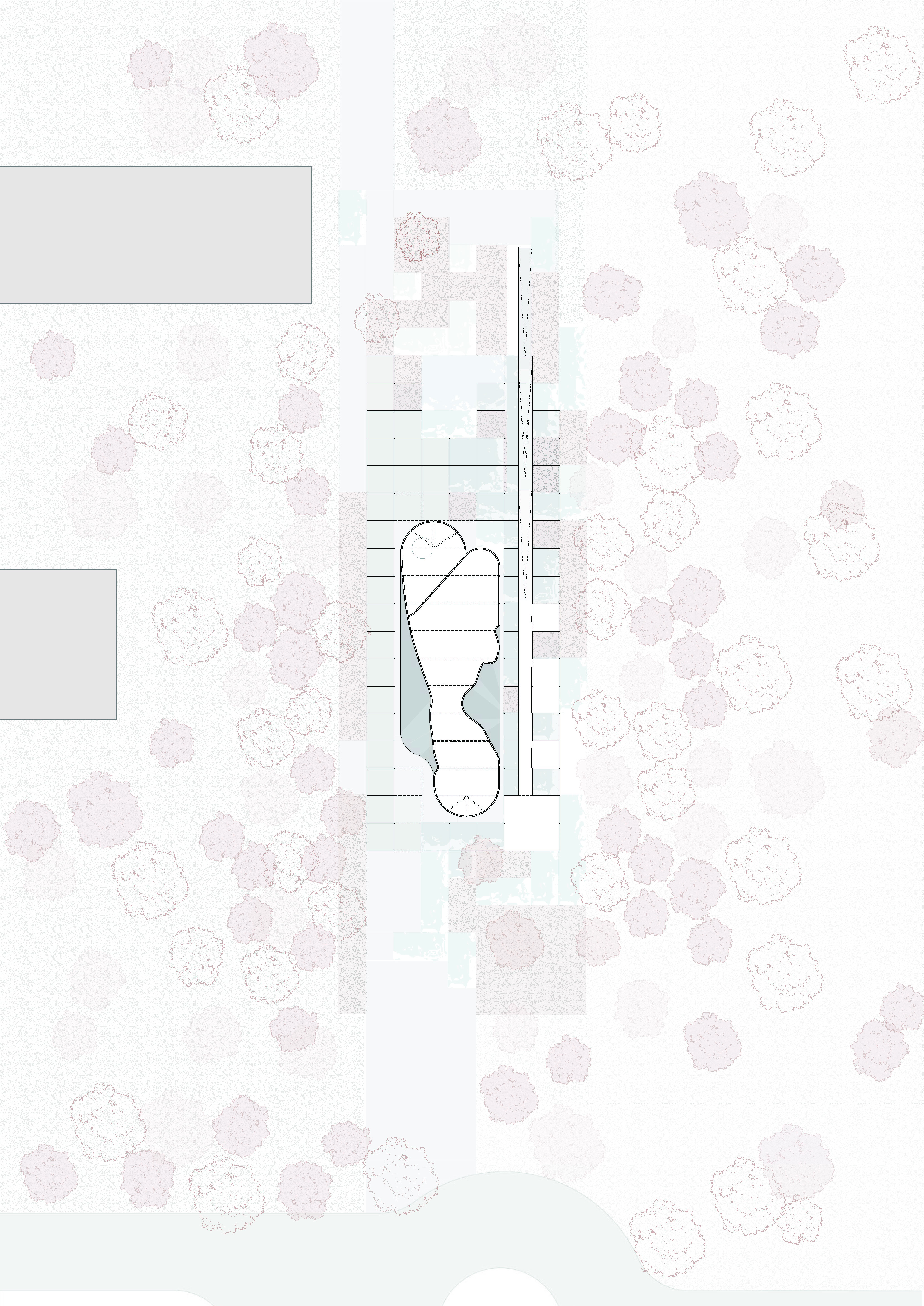
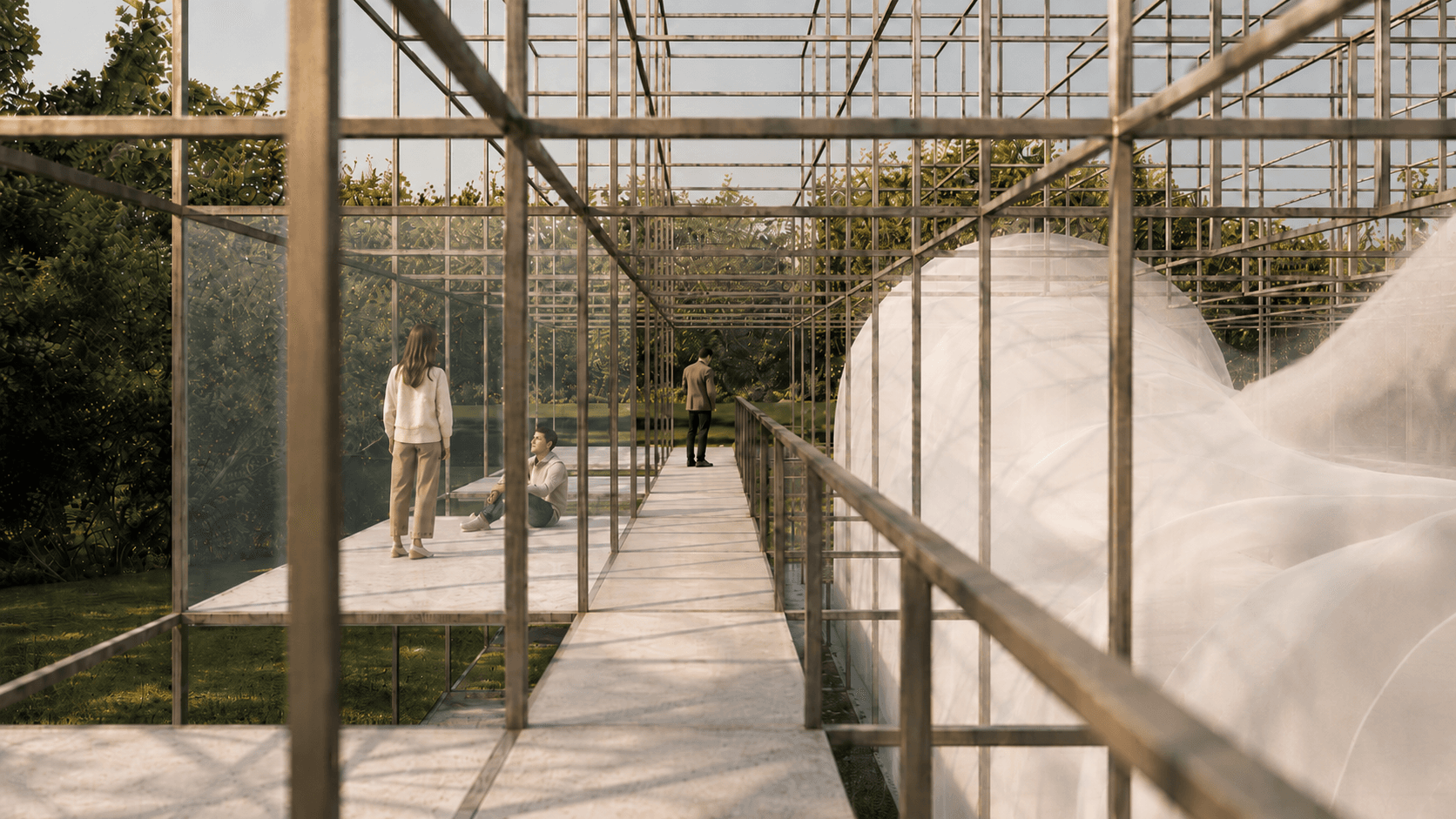
A reticular wooden lattice forms the outer structure — permeable, light-filtering, and structural. It frames the sky above and the campus landscape beyond, reading as a woven threshold between inside and outside.

timber latticelight filtrationpermeability
wave

The Membrane

The organic interior volume houses the liturgical space — fluid, soft, and free of solid walls. Visual permeability throughout invites contemplation; the absence of partition keeps spirituality from being confined.

organic formfluid spacevisual permeability
drop

Water & Ground

A water feature at the building's base symbolizes purification — an element present in places of prayer across diverse traditions. The paved access path acts as a transition from the campus's daily rhythm to the building's introspective dimension.

water symbolismpurificationthreshold transition

The plans and sections articulate how the three systems layer: the exoskeleton defines the outer boundary, the membrane carves the interior volume, and the ground plane anchors both to the landscape.
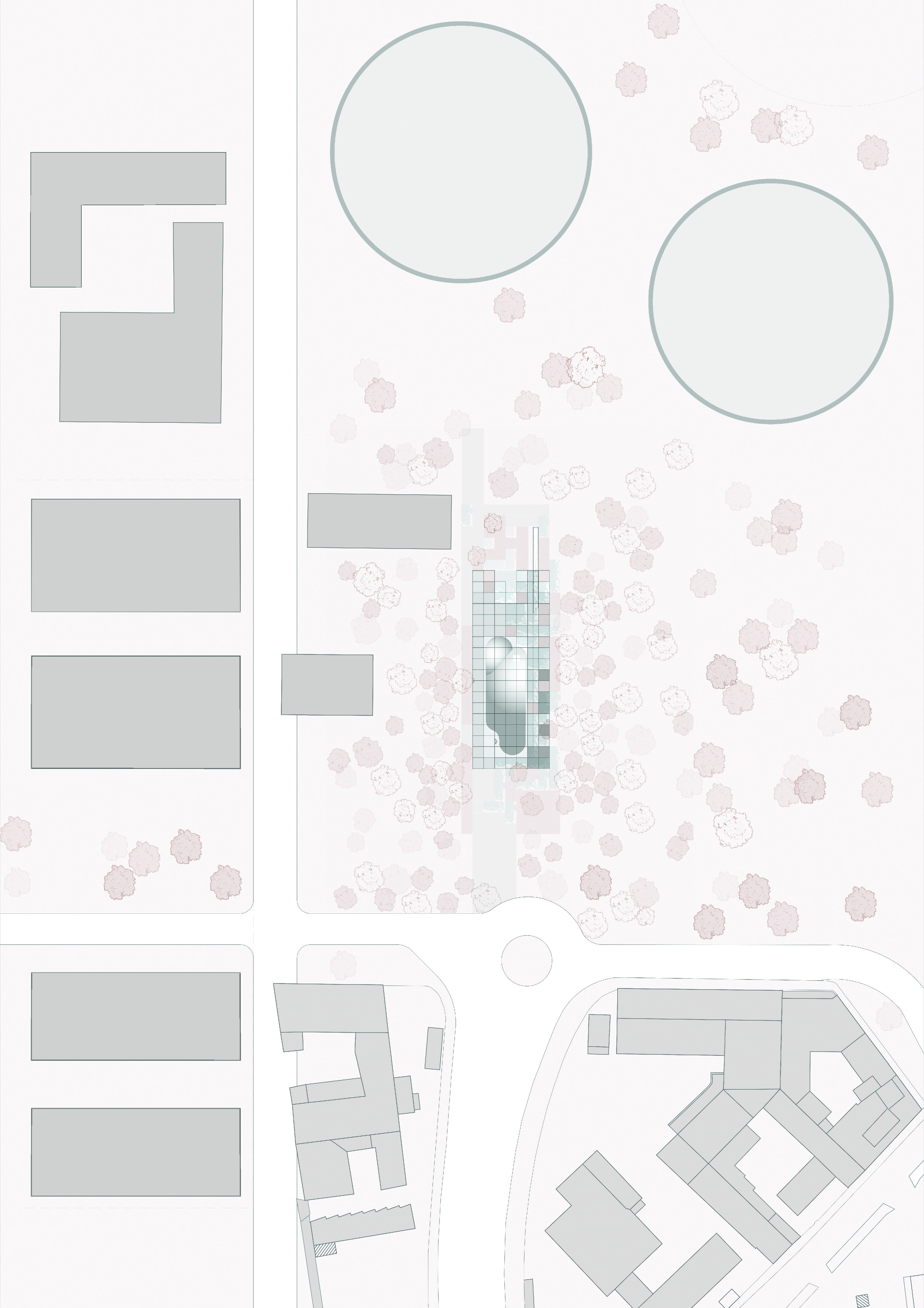
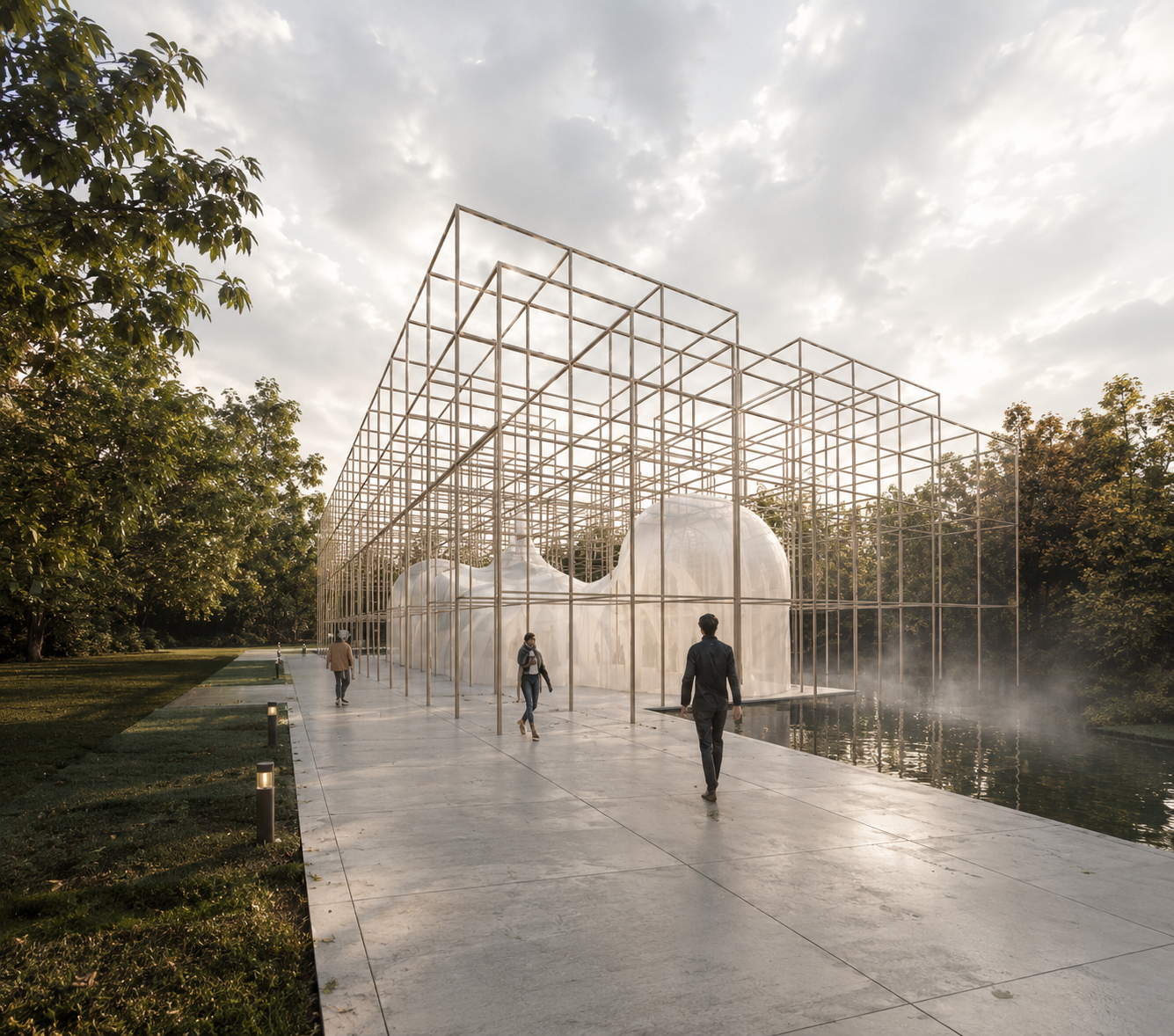
Image 3
Image 4
Image 5
Image 6
04
Section

Visualization

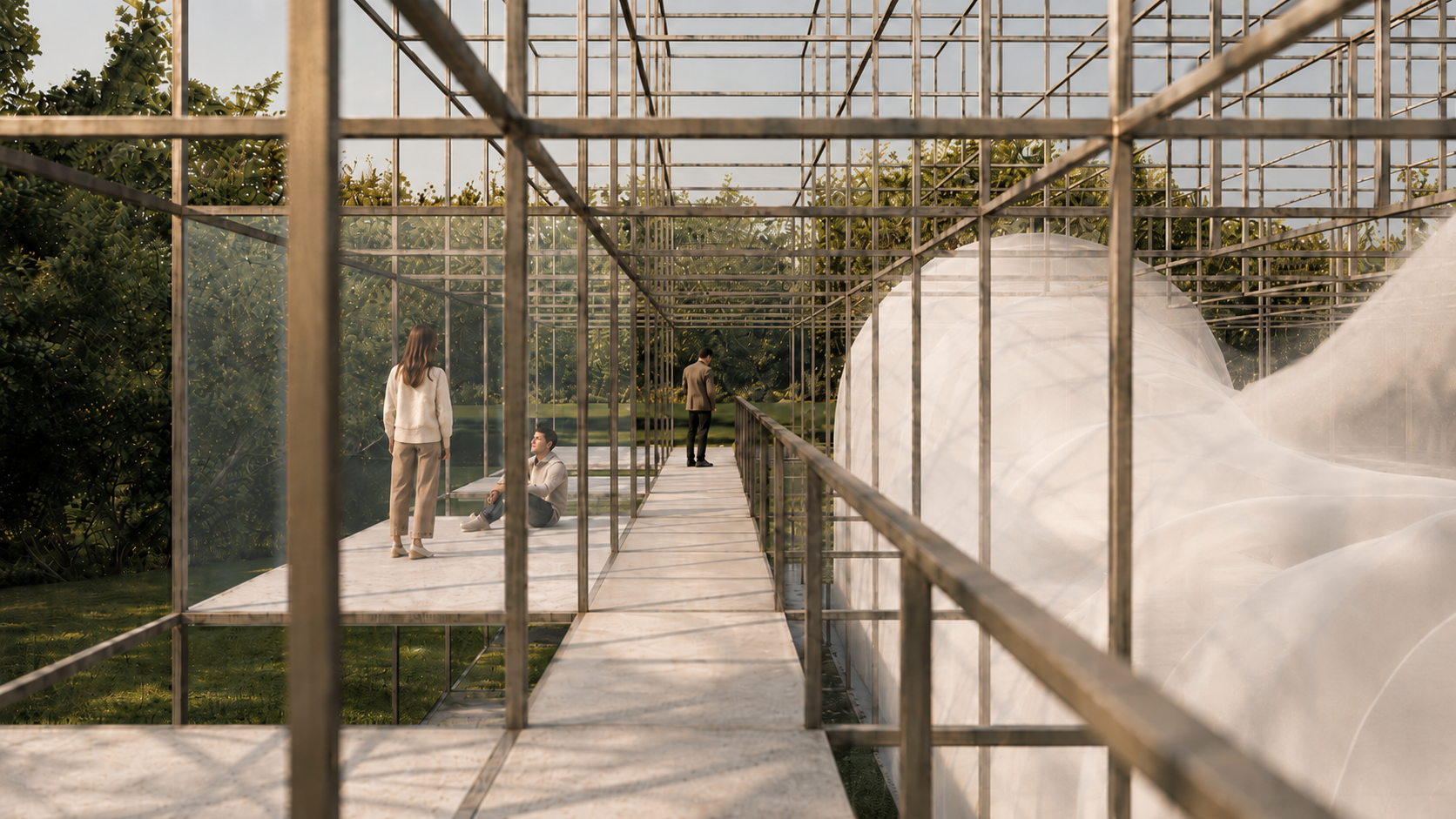
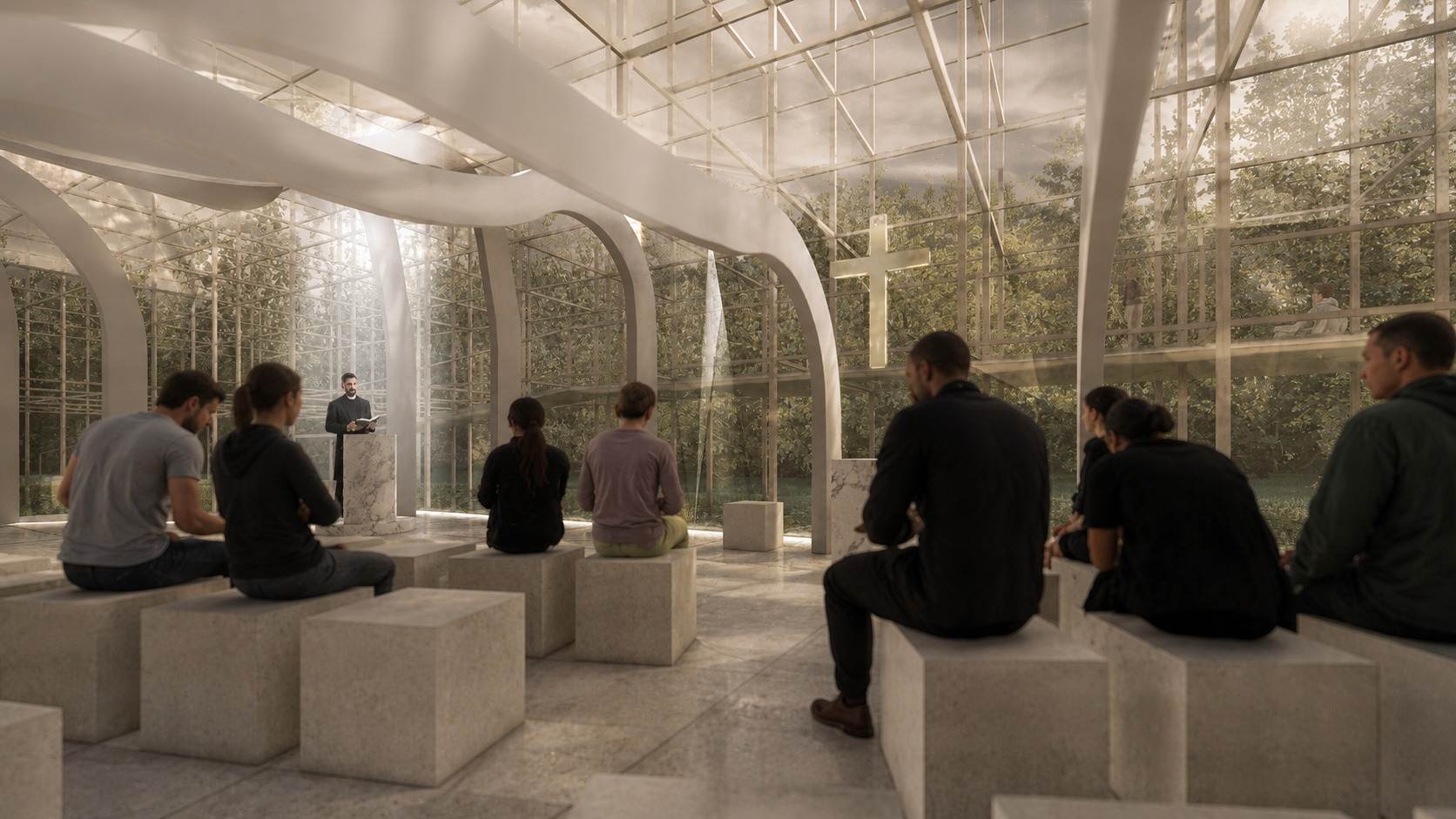
natural light is the primary material of the interior — filtering through the wooden lattice, it creates an ethereal and continuously changing atmosphere throughout the day.
The building integrates delicately into the campus landscape: set within a green, tranquil area surrounded by trees, approached by a paved path that acts as the threshold between the daily rhythm of campus and the introspective dimension within.
The architecture fuses lightness, transparency, and organic form into a metamorphic metaphor of open spirituality — a space for people of any faith, or simply those seeking silence and reflection within the dynamic university environment.
Image 7
Image 8
Image 9
05
Section

Physical Model

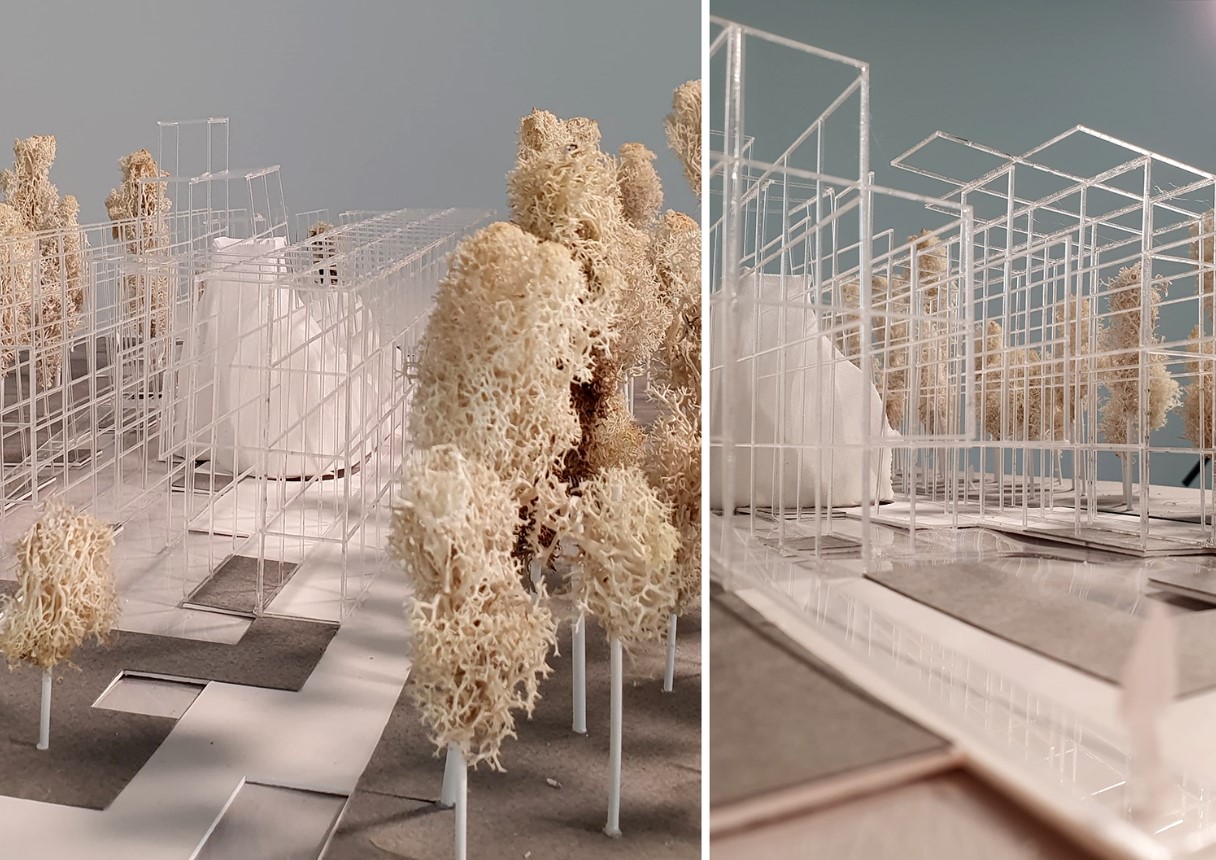
The physical model was built to test the spatial logic at scale — exploring the relationship between the reticular exoskeleton and the enclosed membrane volume, and how light passes through and animates the space between them.
The model confirmed that the building's character comes not from mass or enclosure, but from the interplay of structure, transparency, and the filtering of light.
Built with Chiara Brambilla, Margherita Guffanti, Erika Secchi, and Giada Tricarico.
Image 10