The Urban Spectacle
A fully computational pavilion design for Abu Dhabi — where site location, surface form, and structural system are each derived from algorithmic analysis rather than intuition.
Academic WorkParametric Design — Grasshopper · Politecnico di Milano · June 2023 · Maya Roufail
The Urban Spectacle
Dubai / Abu Dhabi, UAE · 2023Design a parametric pavilion using Grasshopper — deriving site location, form, facade, and structure entirely from algorithmic analysis and physics simulation.
The Spectacle Hub
Module Design · Facade Application
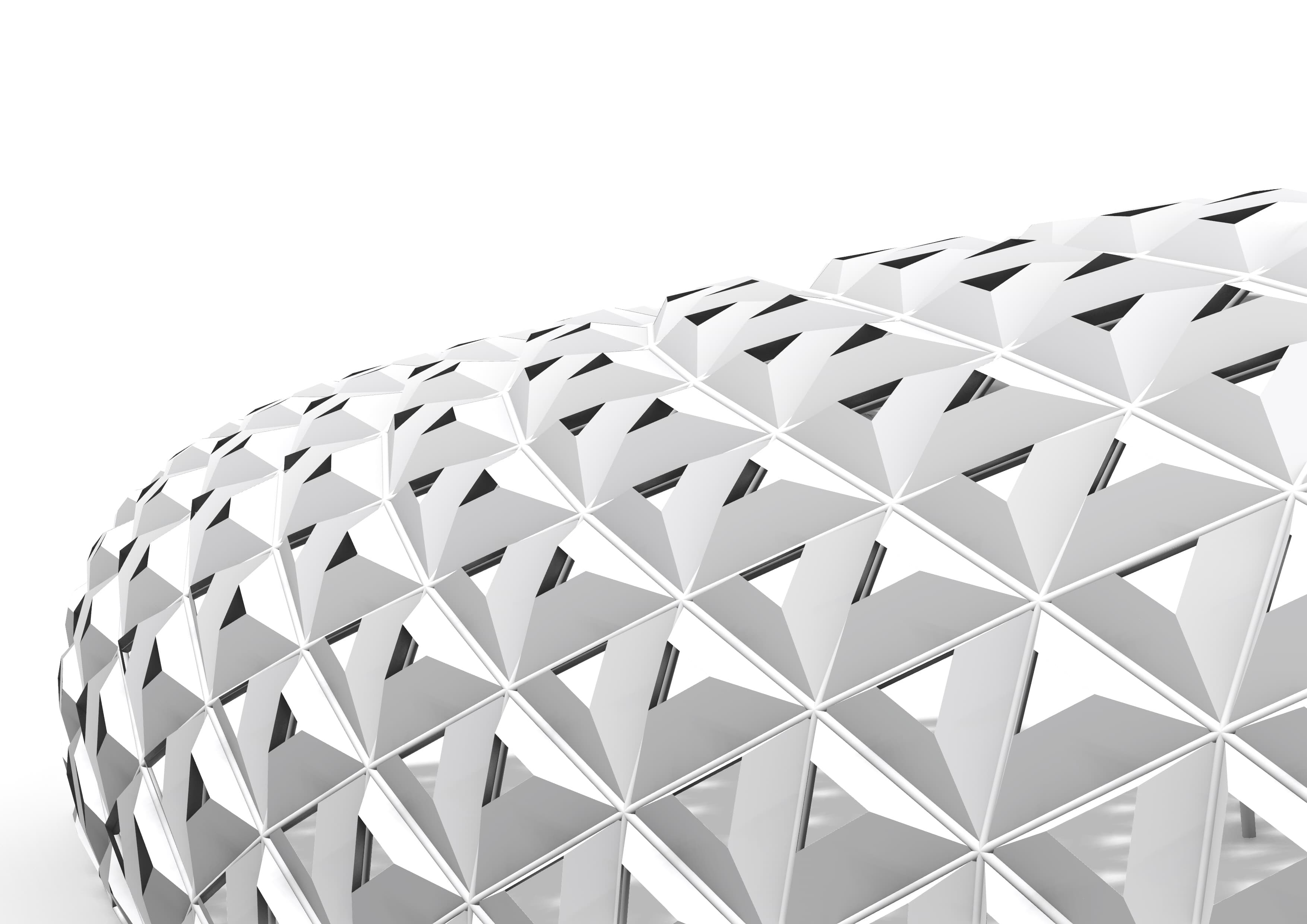
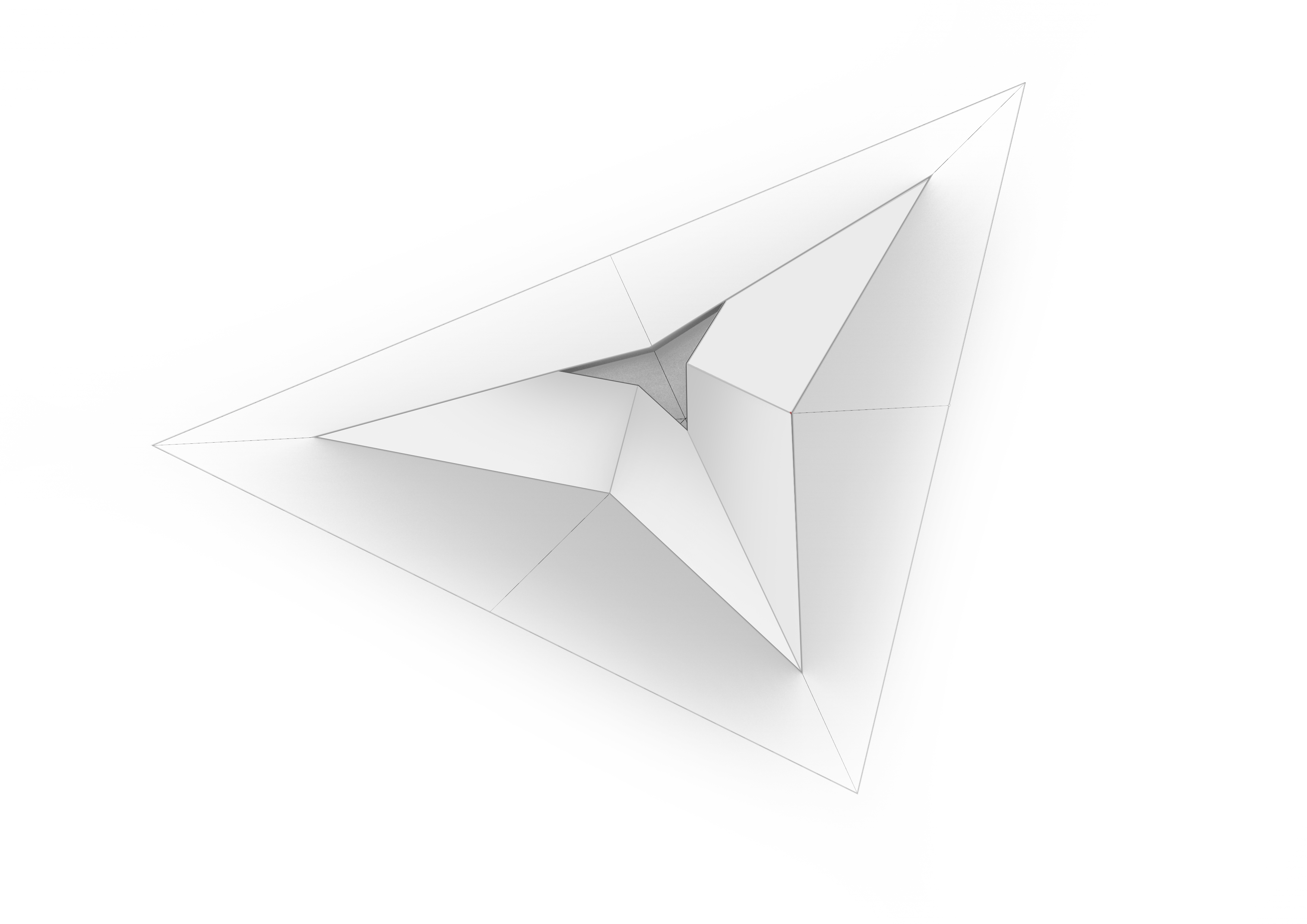
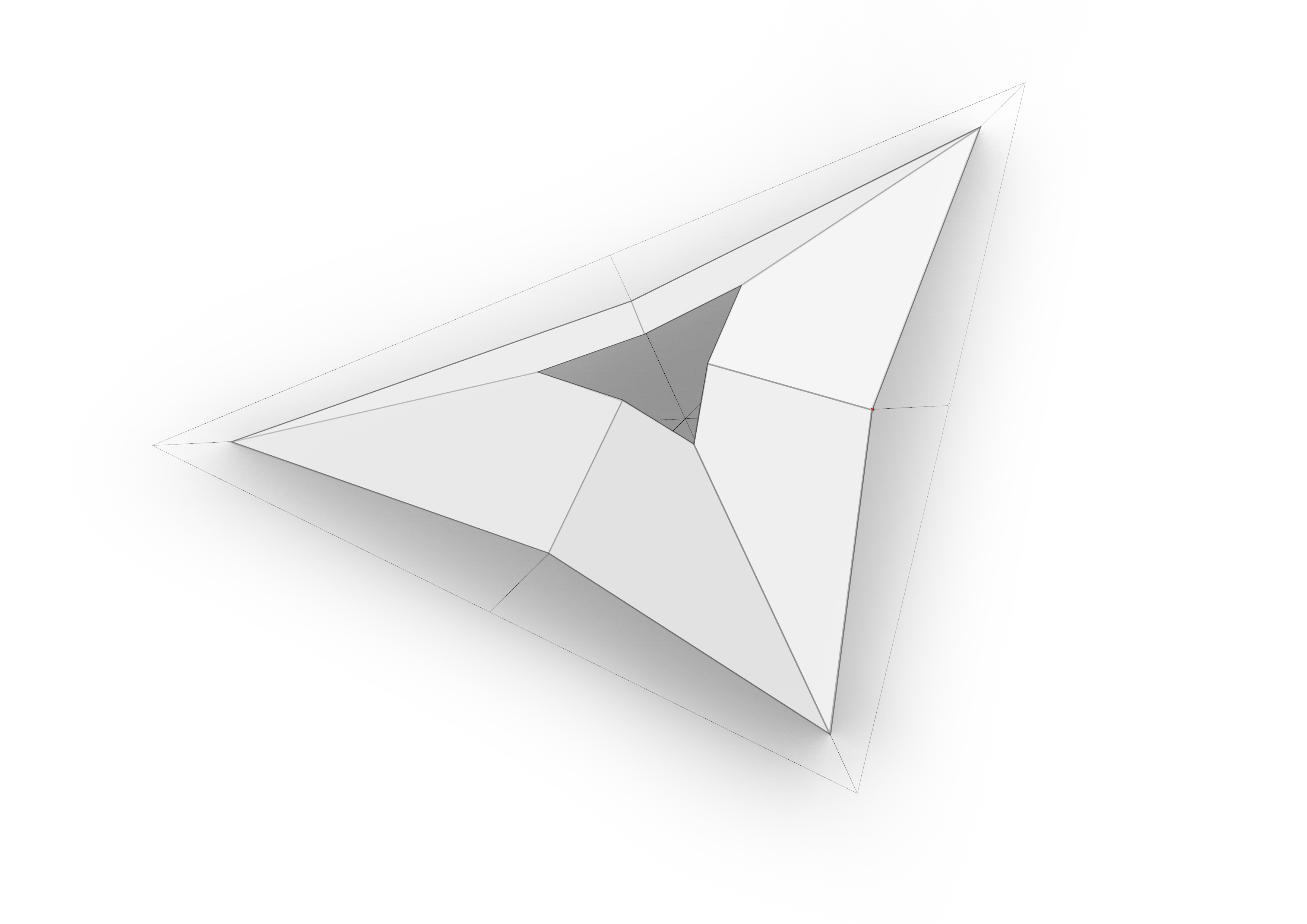
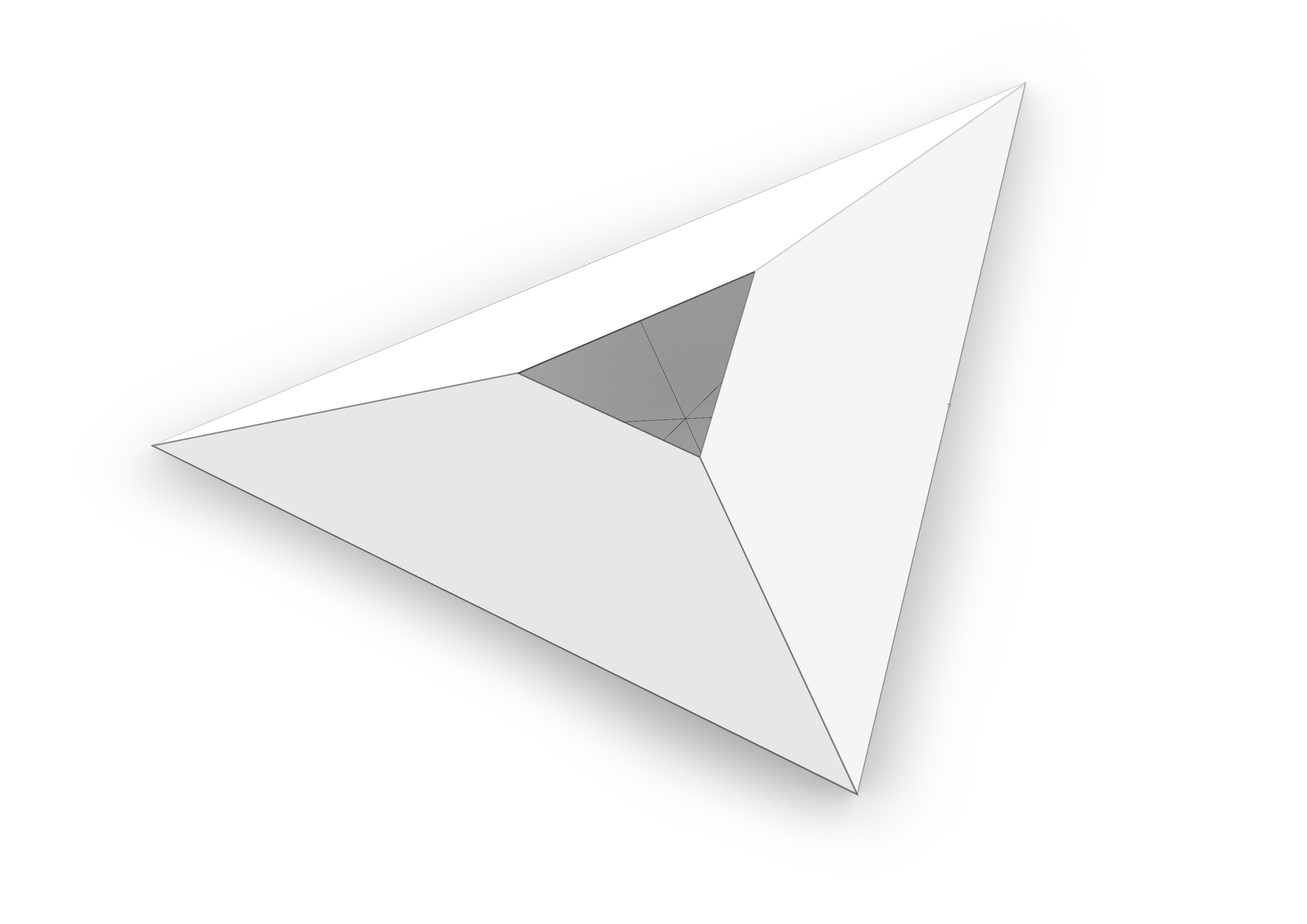
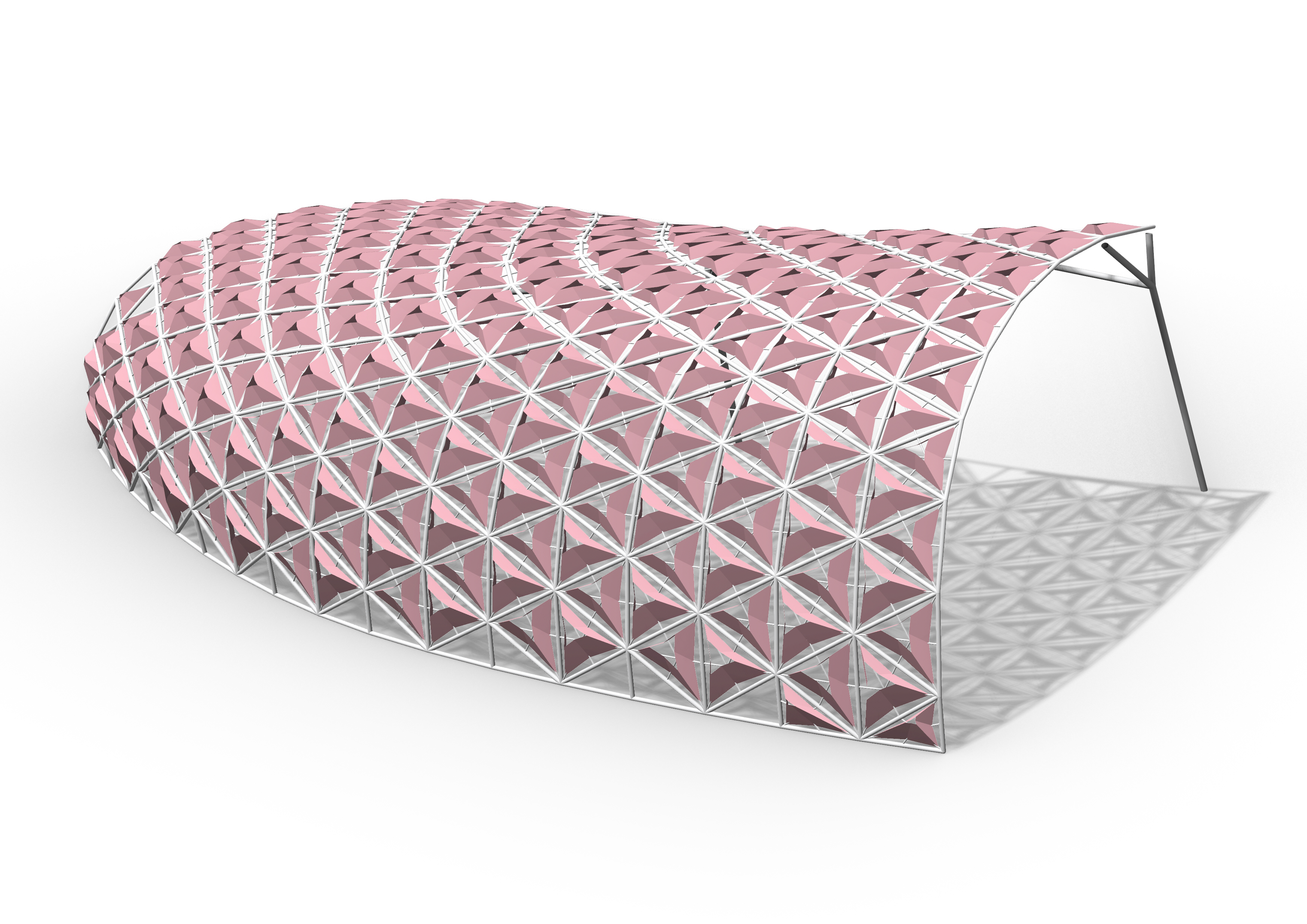
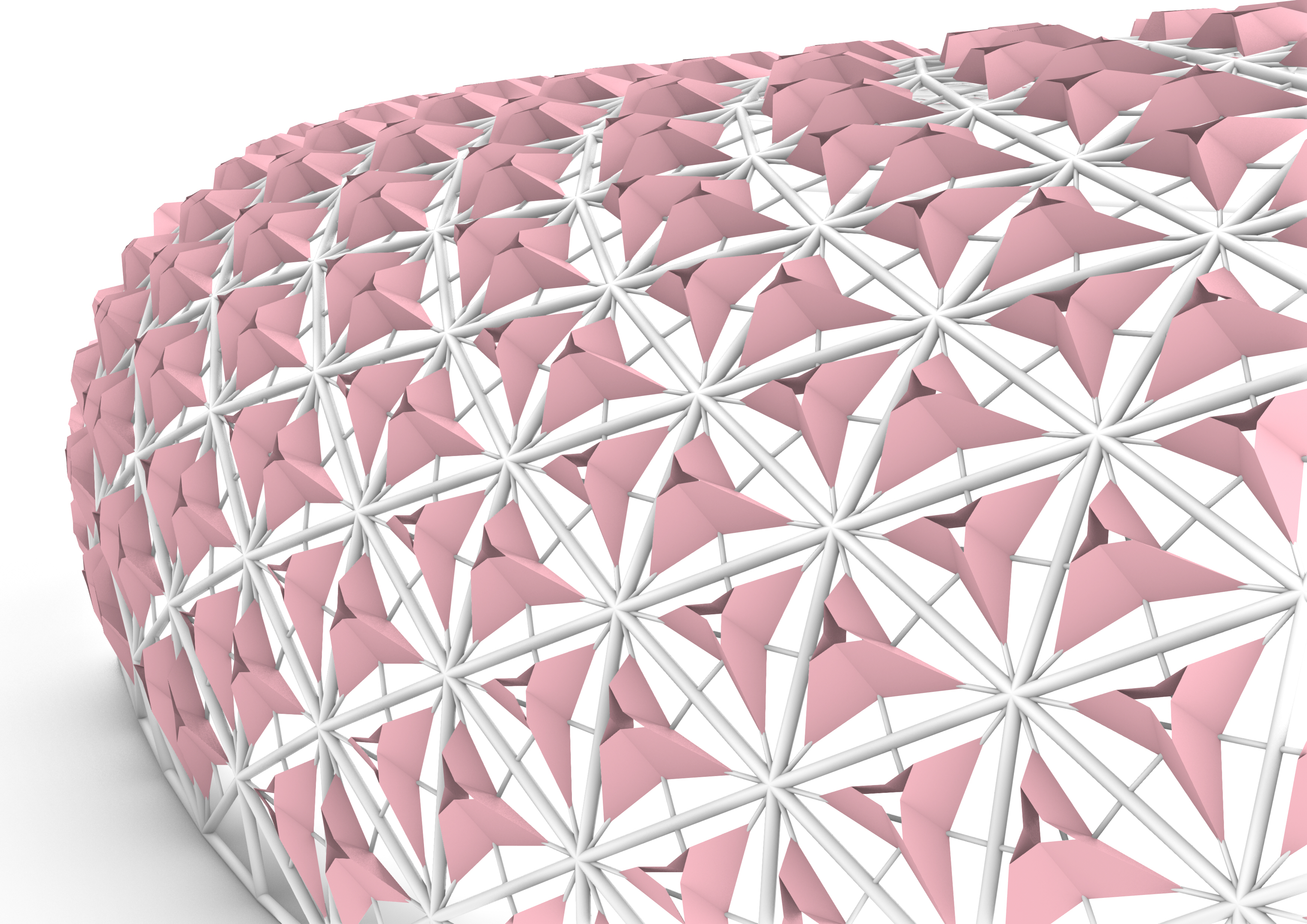
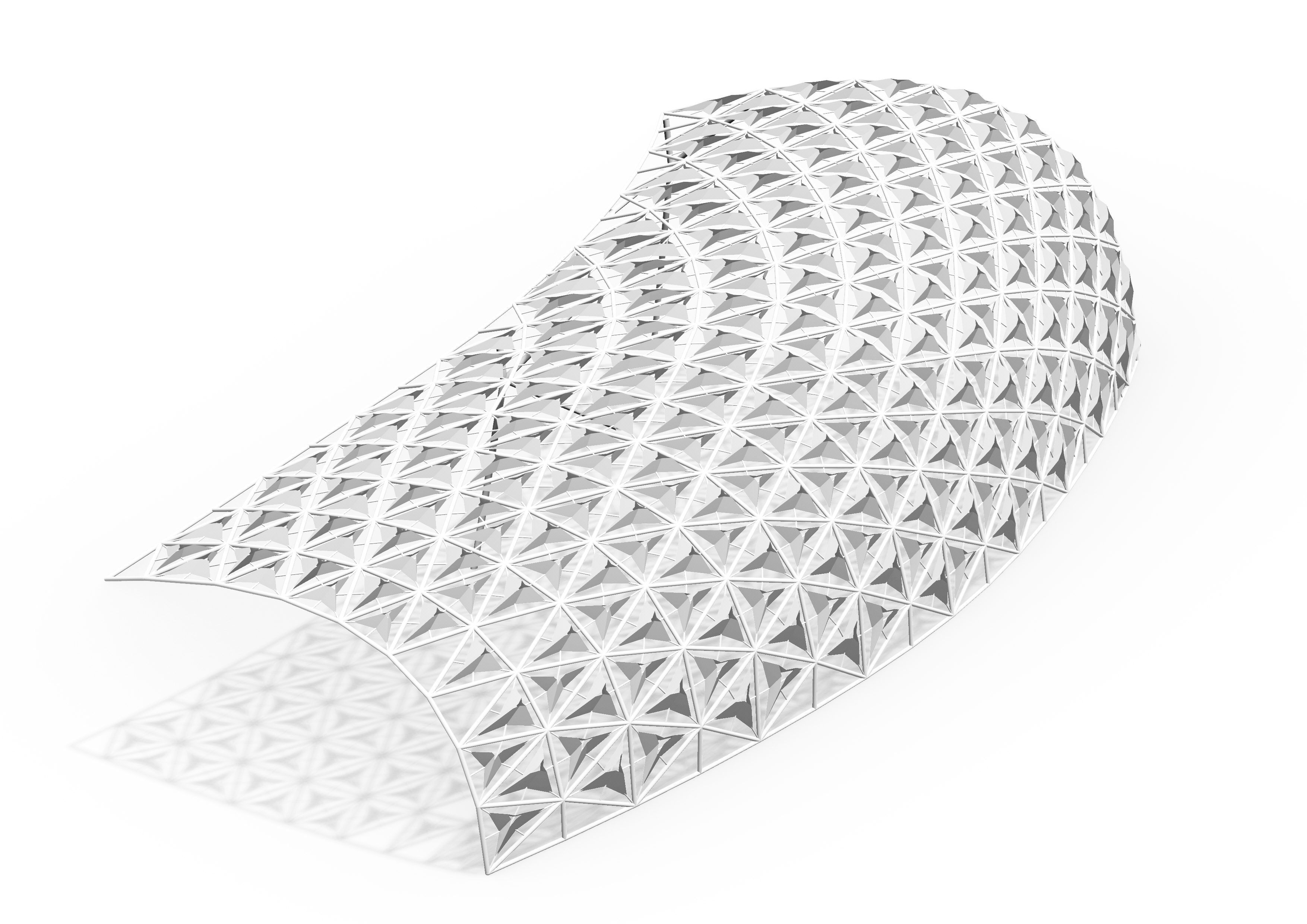
The facade module is the central concept of the pavilion. Each triangular unit deforms parametrically — rotating and folding outward from a closed, opaque rectangle to a fully open origami-like form. As the sun moves across the sky, the graduated opening sequence generates a constantly shifting pattern of light and shadow across the pavilion surface: the spectacle that gives the project its name. Applied at the scale of the relaxed mesh, hundreds of modules work in concert to modulate the interior climate without mechanical systems.
Structural Analysis
Triangulated Grid · Karamba3D FEA · Aluminum
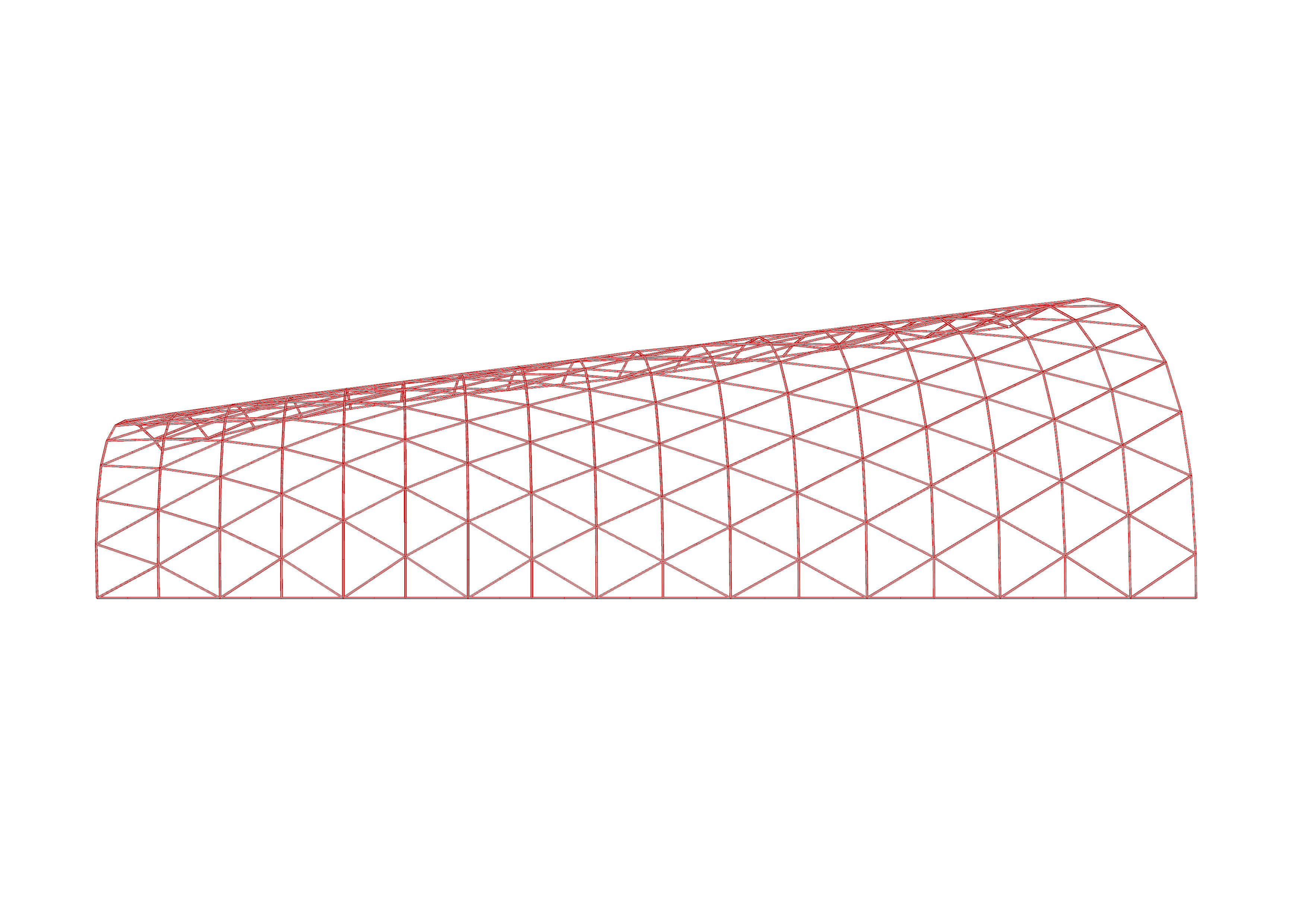
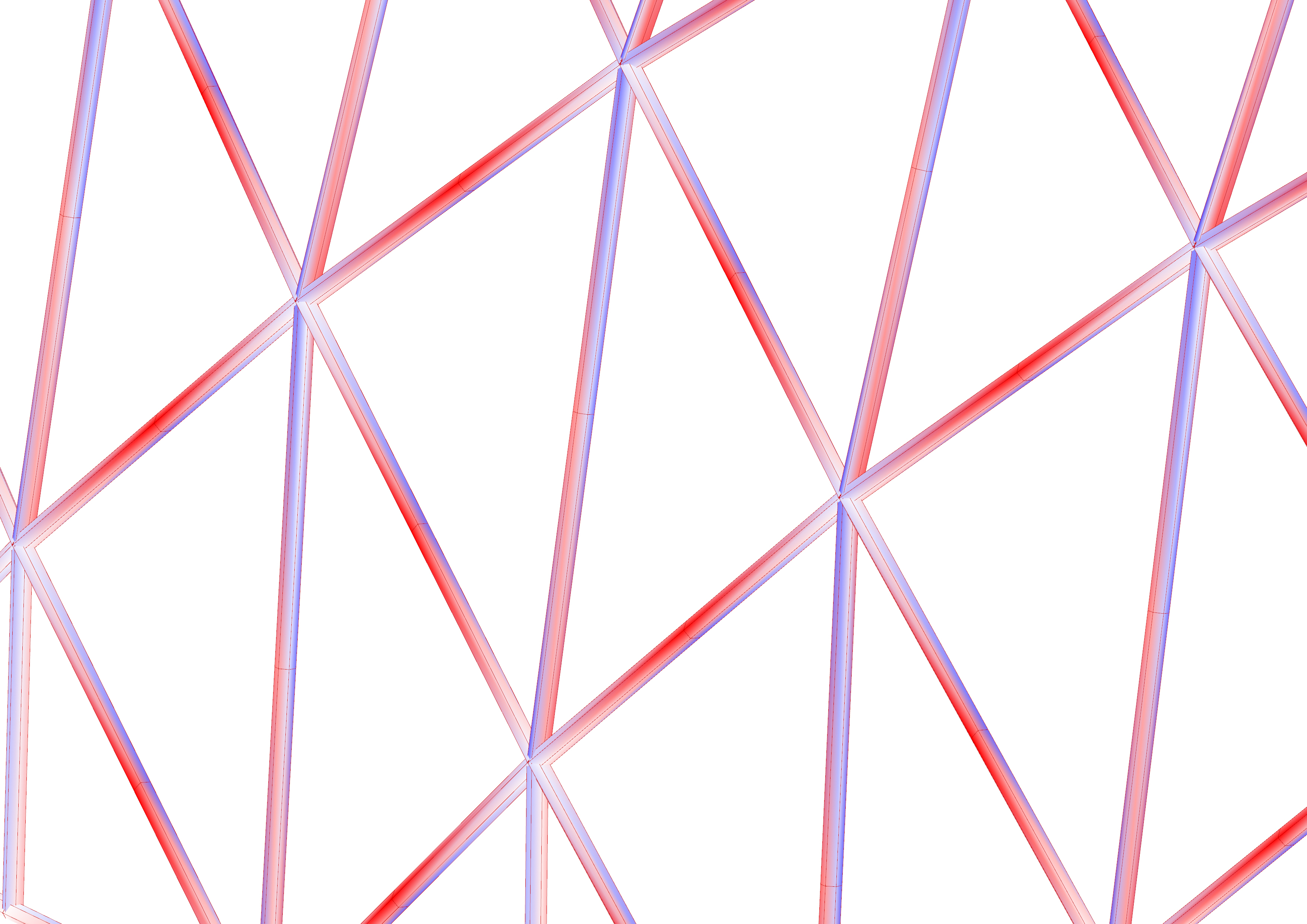
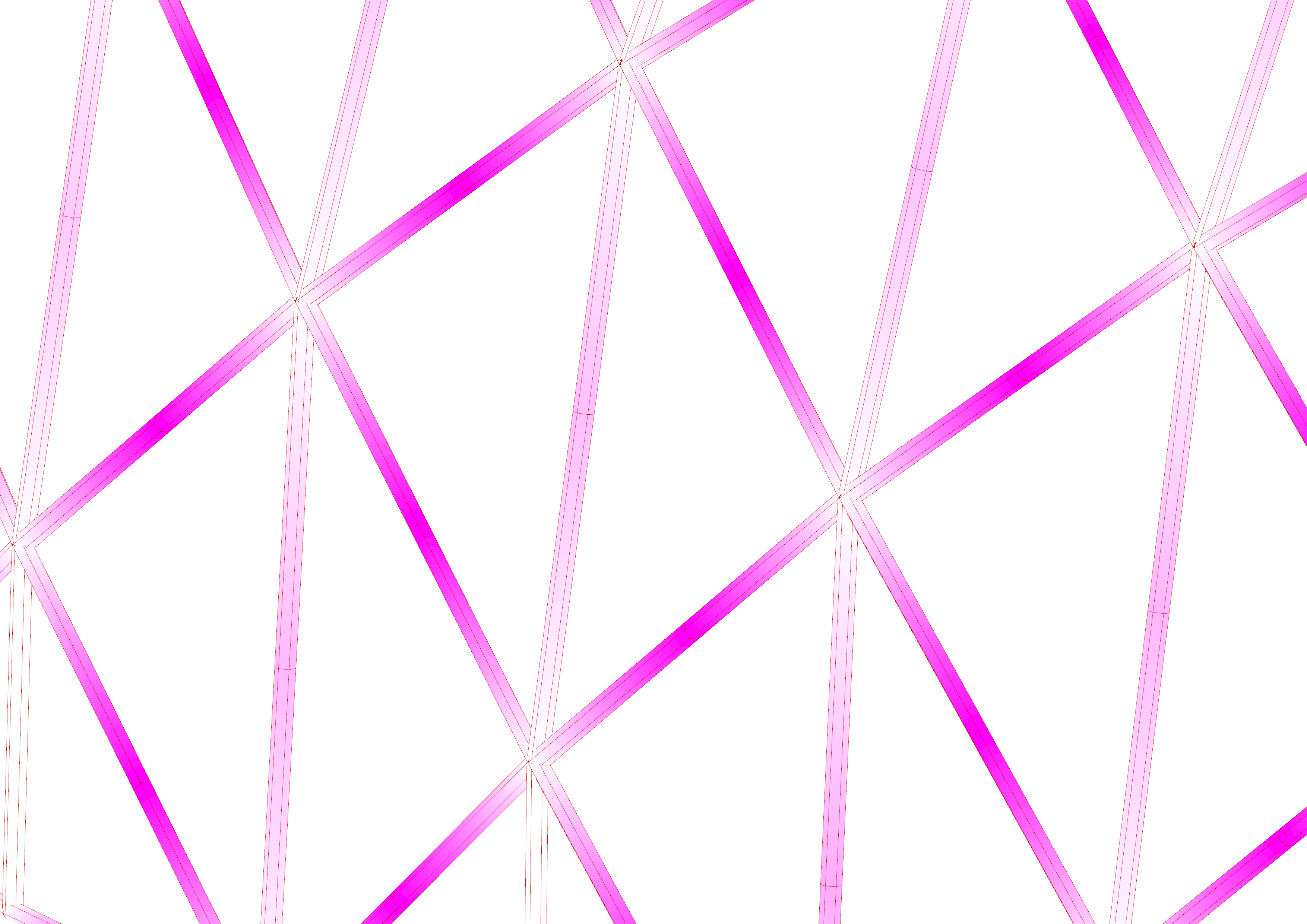
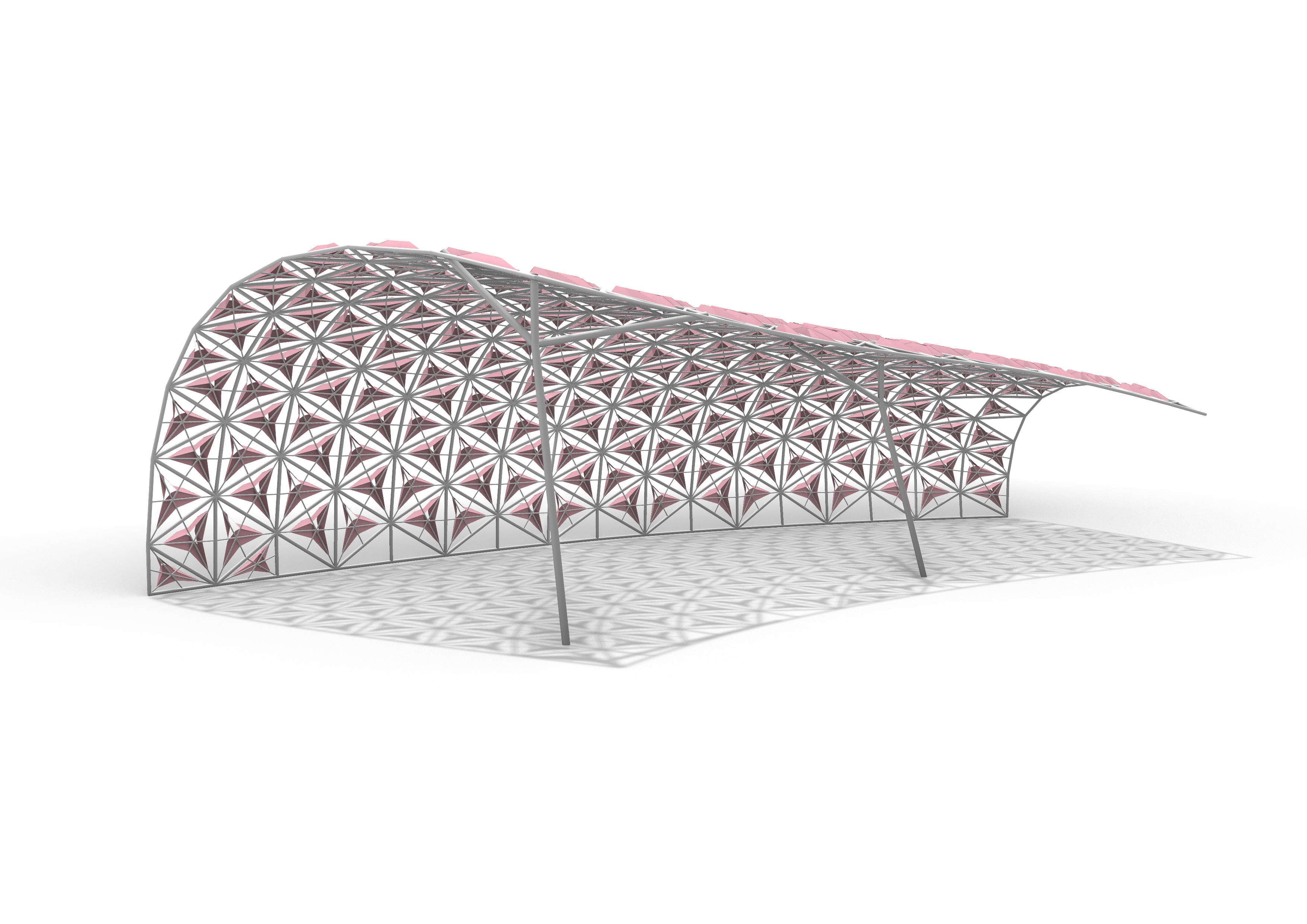
The pavilion structure is a triangulated tubular grid fabricated in Aluminum AW3004H16 with an O-section profile — a material choice that balances lightness with stiffness. A Karamba3D finite element analysis runs live within Grasshopper, evaluating structural performance under a design wind speed of 45 m/s, the governing load condition for Dubai. Utilization maps — coded from blue (within capacity) to red (approaching limit) — confirm that the triangulated geometry distributes loads efficiently across every member. The displacement diagram reveals the minimal deformation of the canopy under combined gravity and lateral wind.
Environmental Analysis
Abu Dhabi Climate · Wind Rose · Sun Exposure
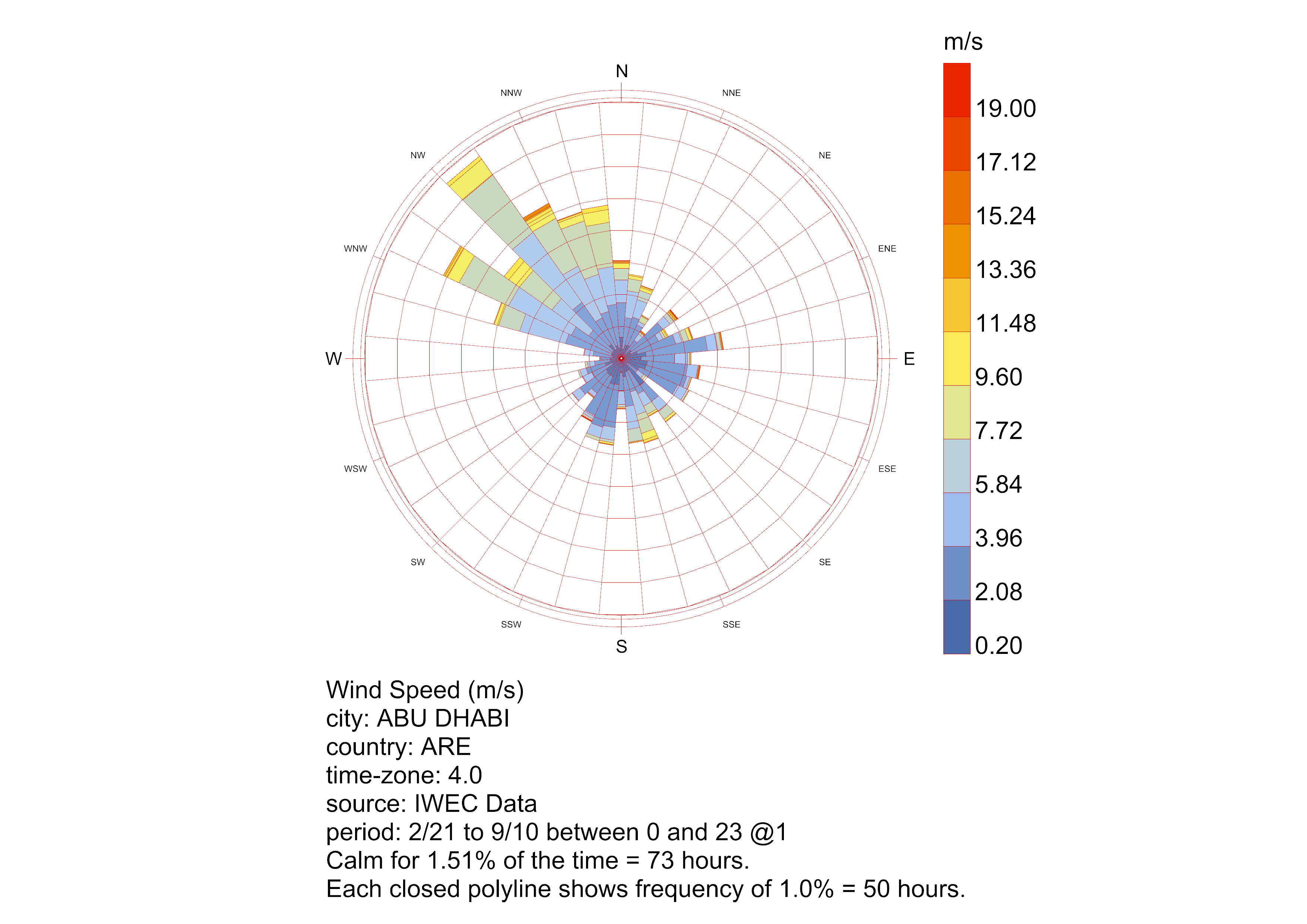
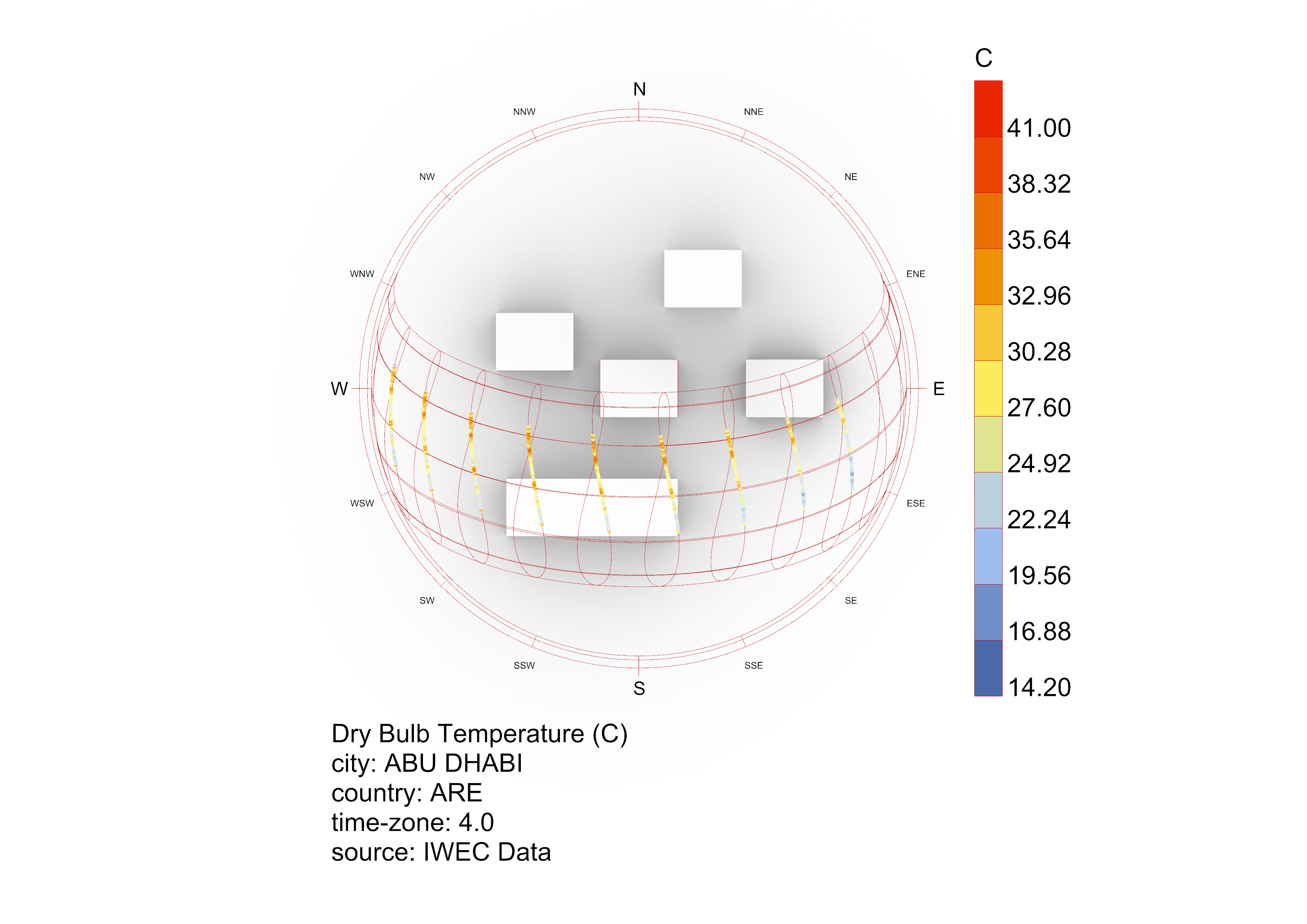
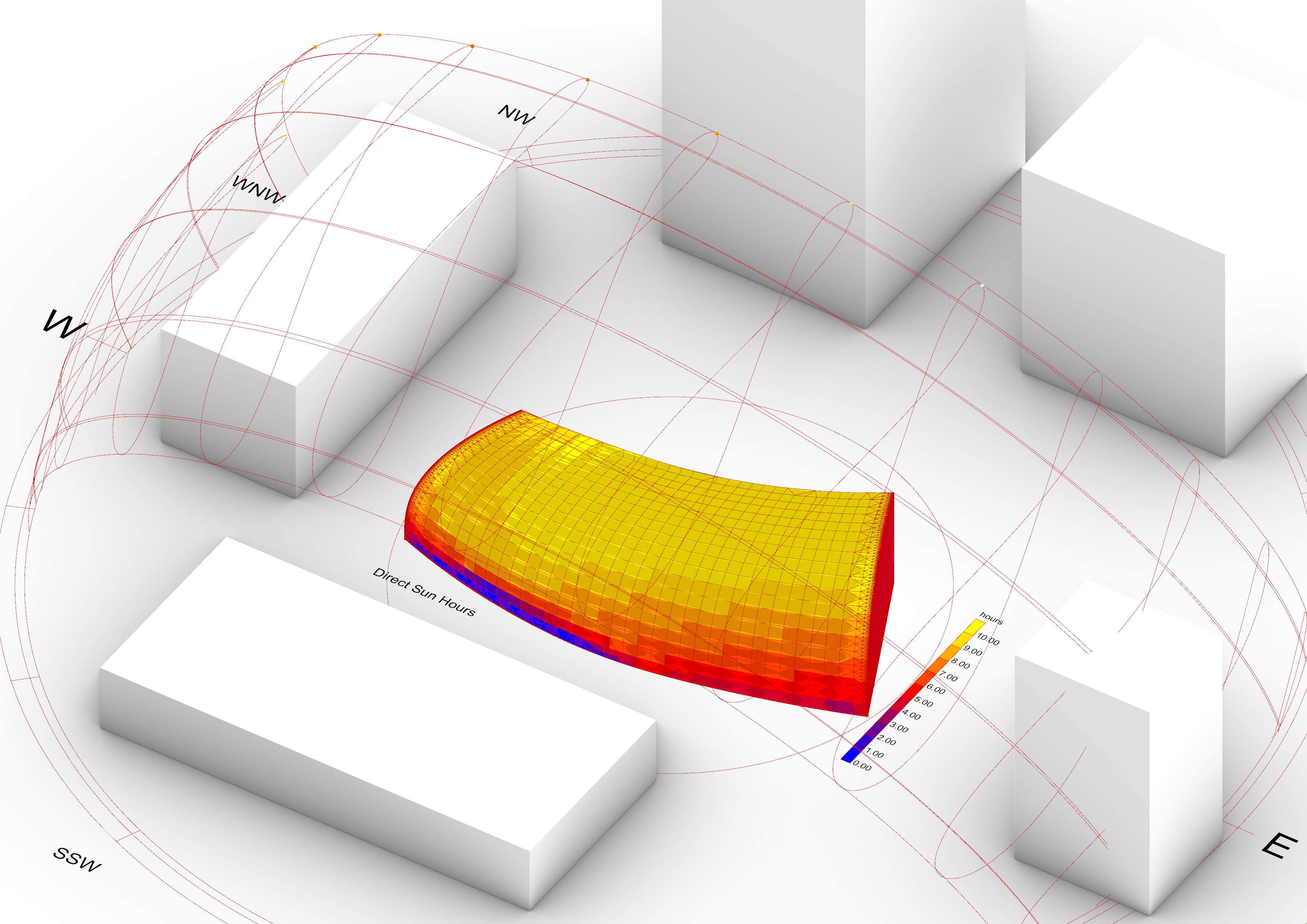
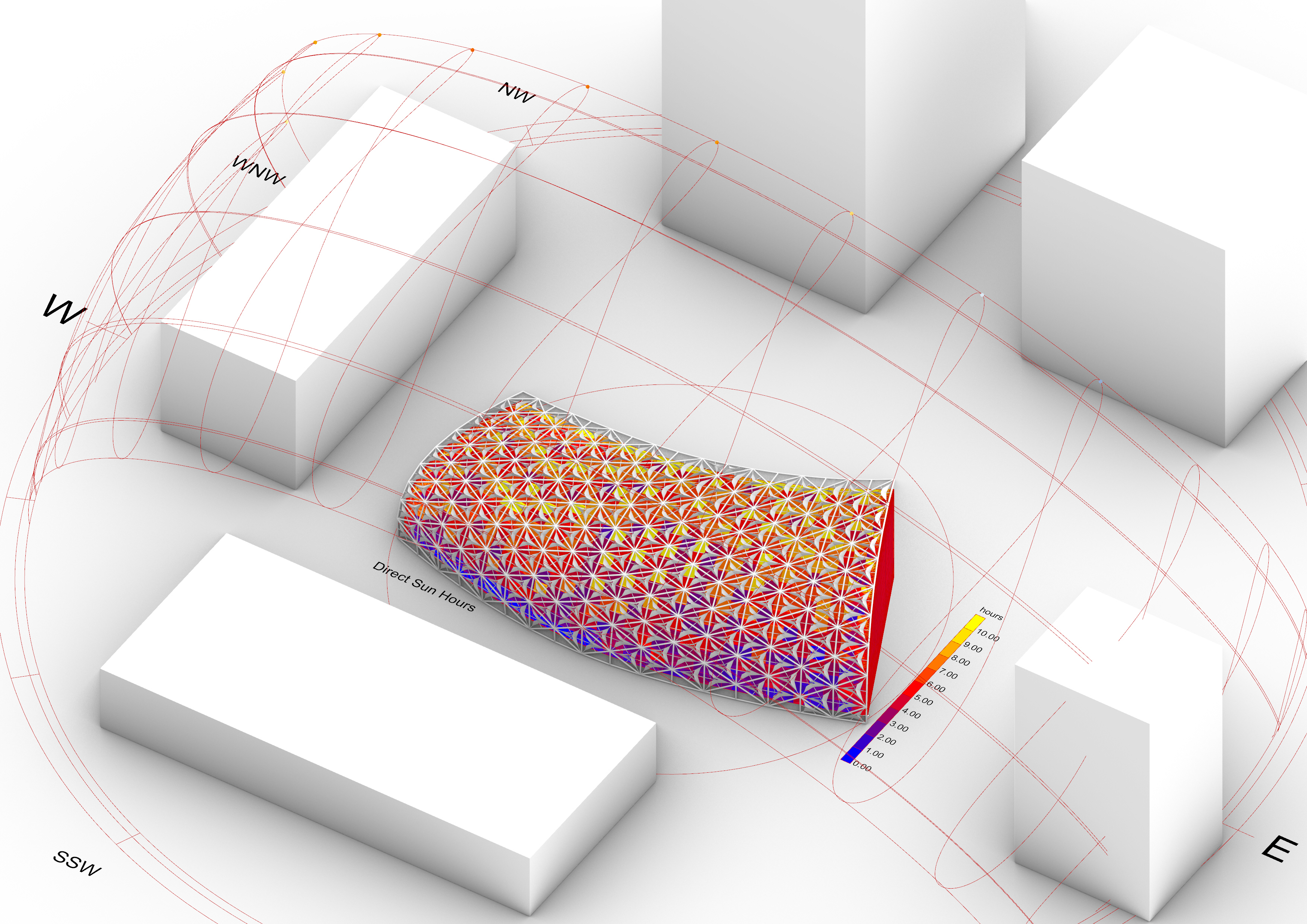
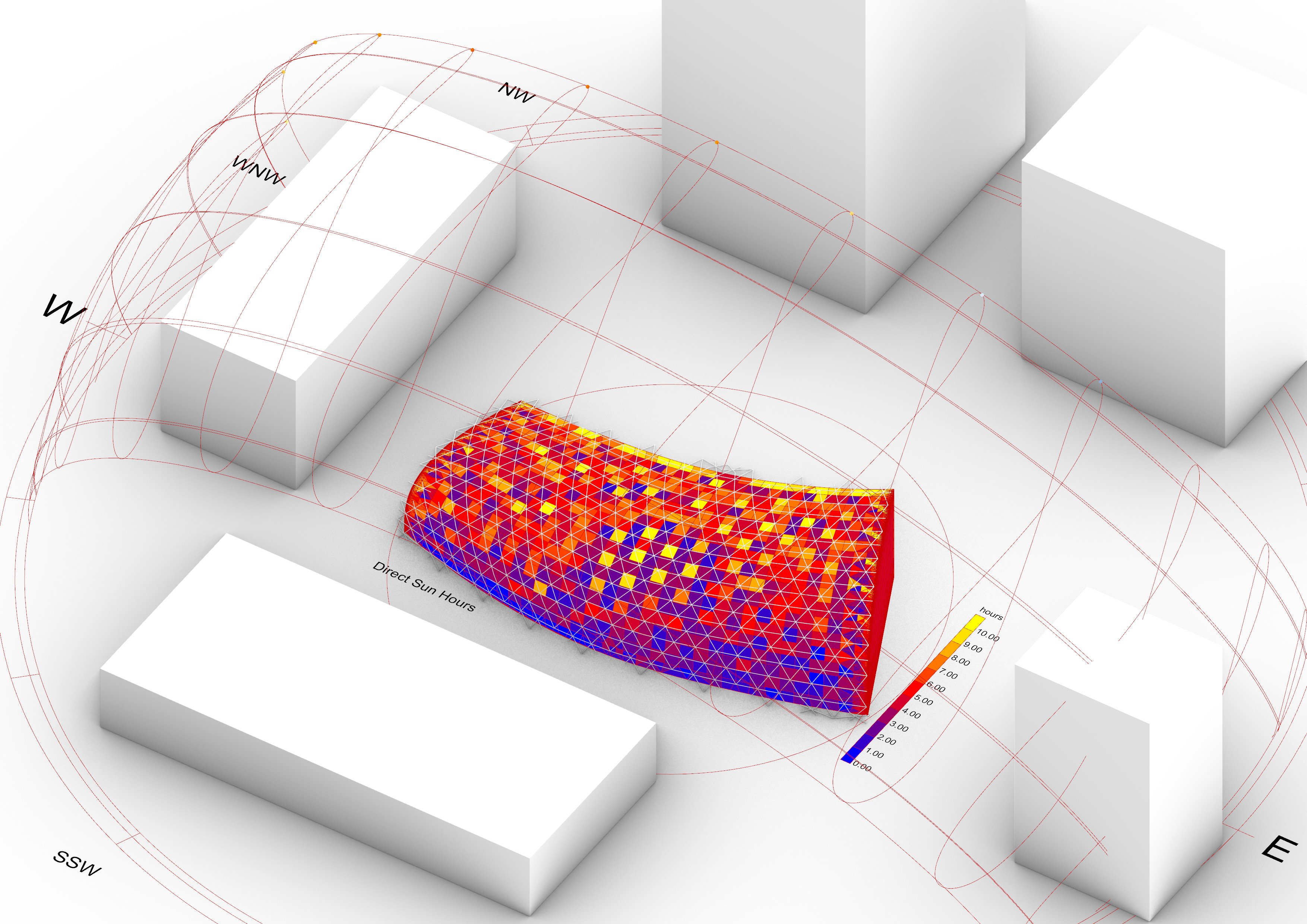
Dubai's climate sets strict constraints: peak dry bulb temperatures exceed 34°C in summer, and direct solar radiation is intense year-round. The wind rose for Abu Dhabi identifies the prevailing north-westerly Shamal wind as the dominant airflow direction, directly informing the pavilion's orientation on site. The sun path diagram maps seasonal solar angles across the site. A Ladybug sun exposure analysis — applied first to the simple extruded mesh and then to the fully triangulated structure — quantifies the reduction in direct sun hours achieved when the facade modules are deployed at maximum opening.
Space Syntax
City Import · Galapagos · Isovist · Pedestrian Flow
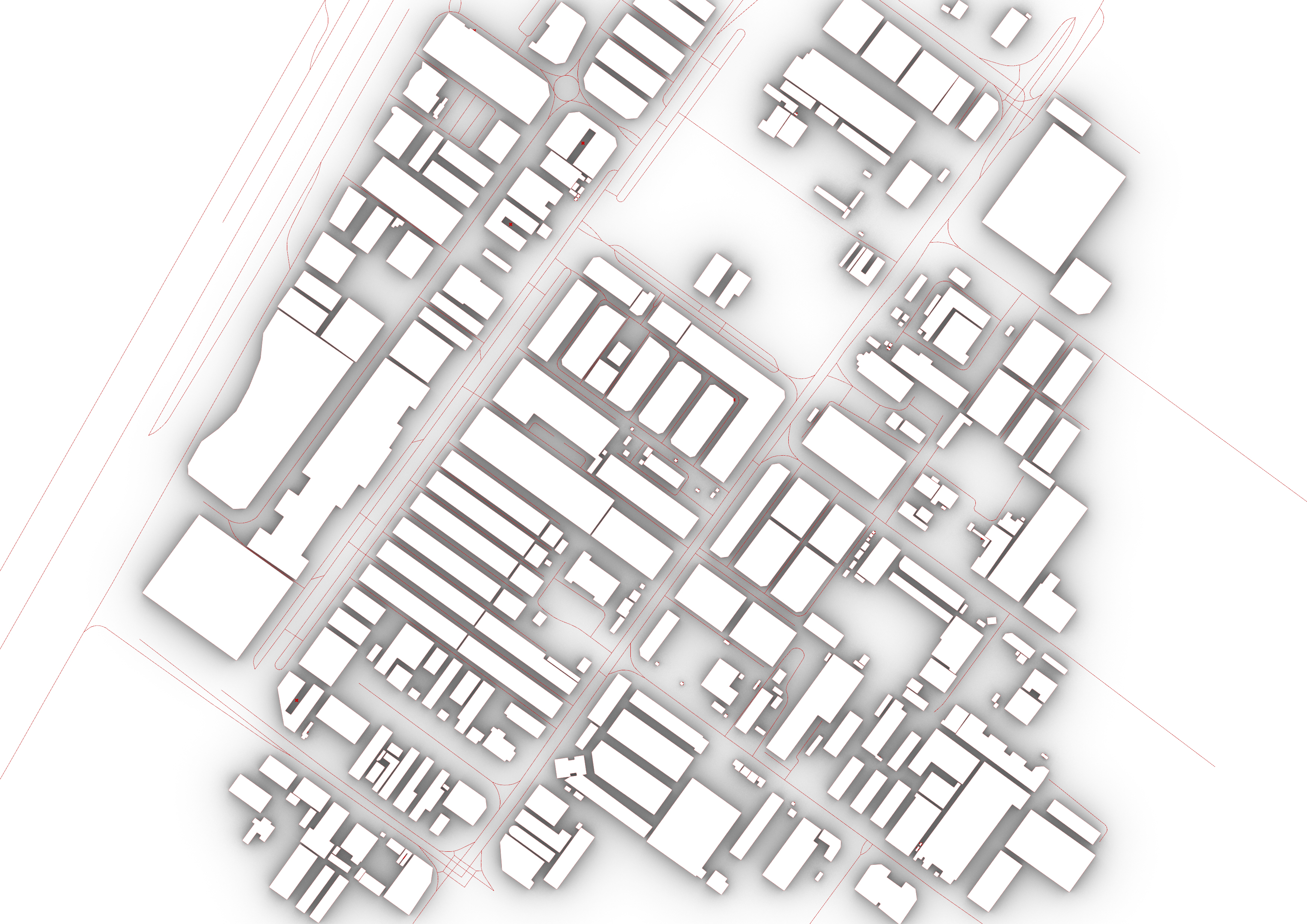
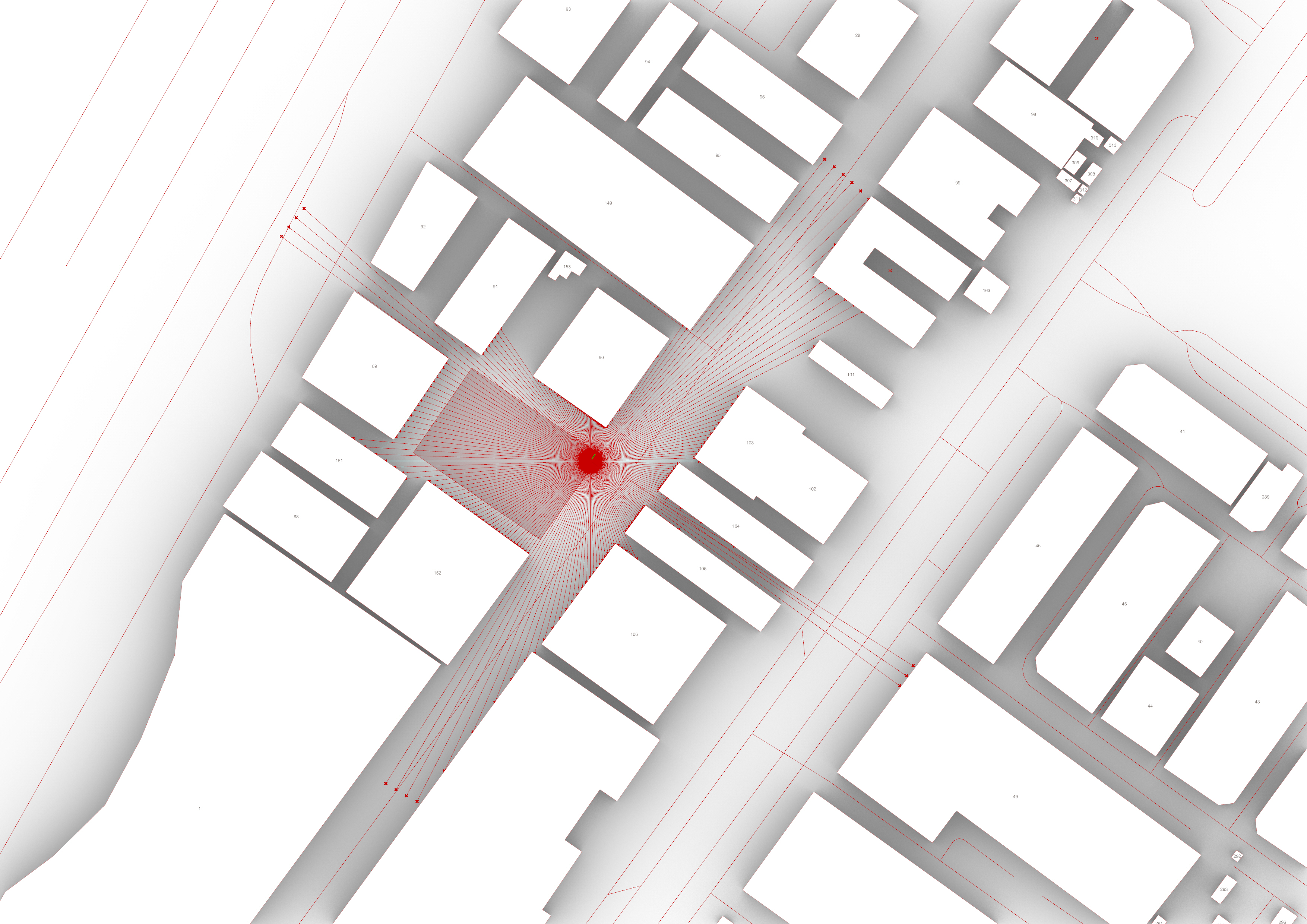
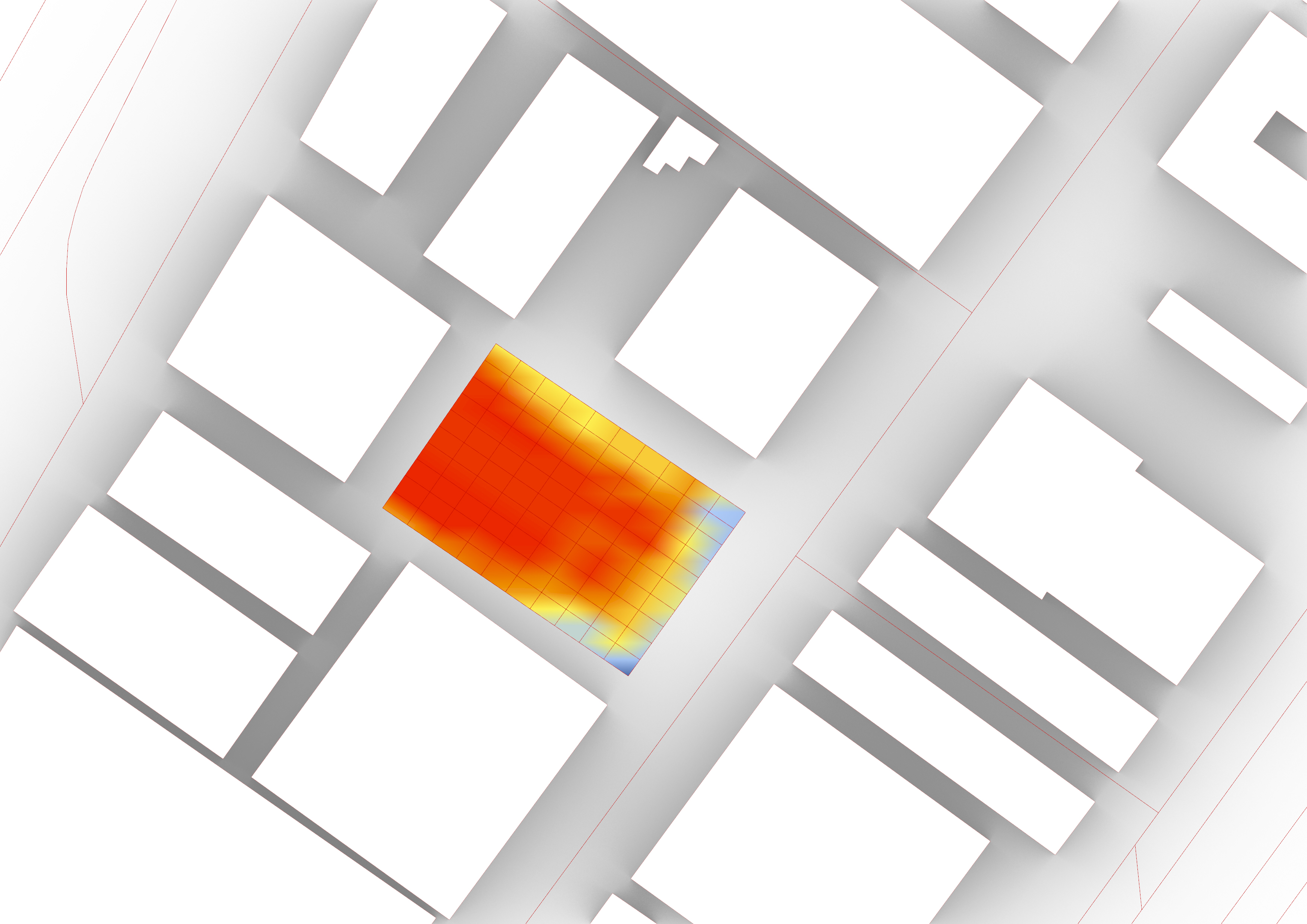
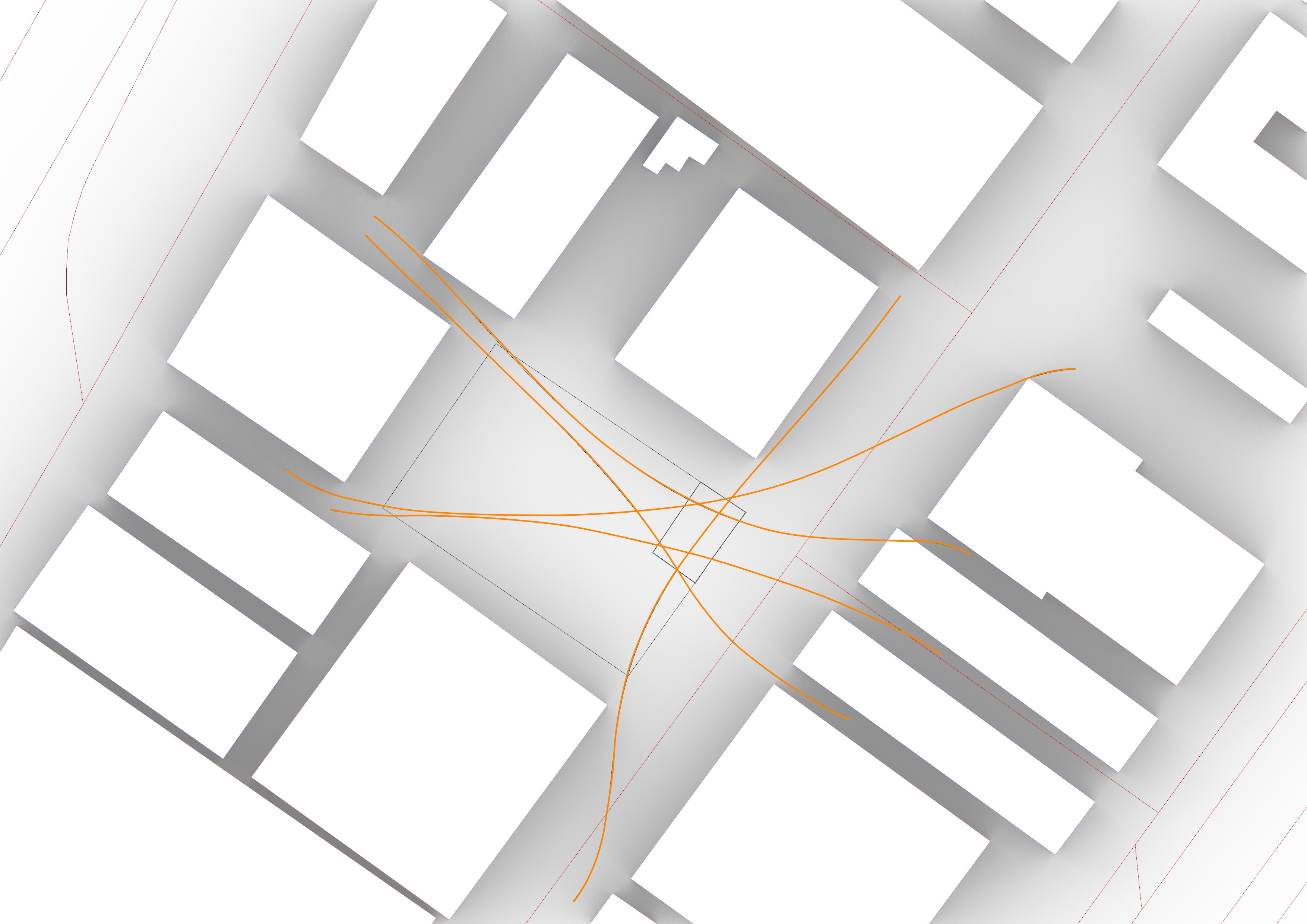
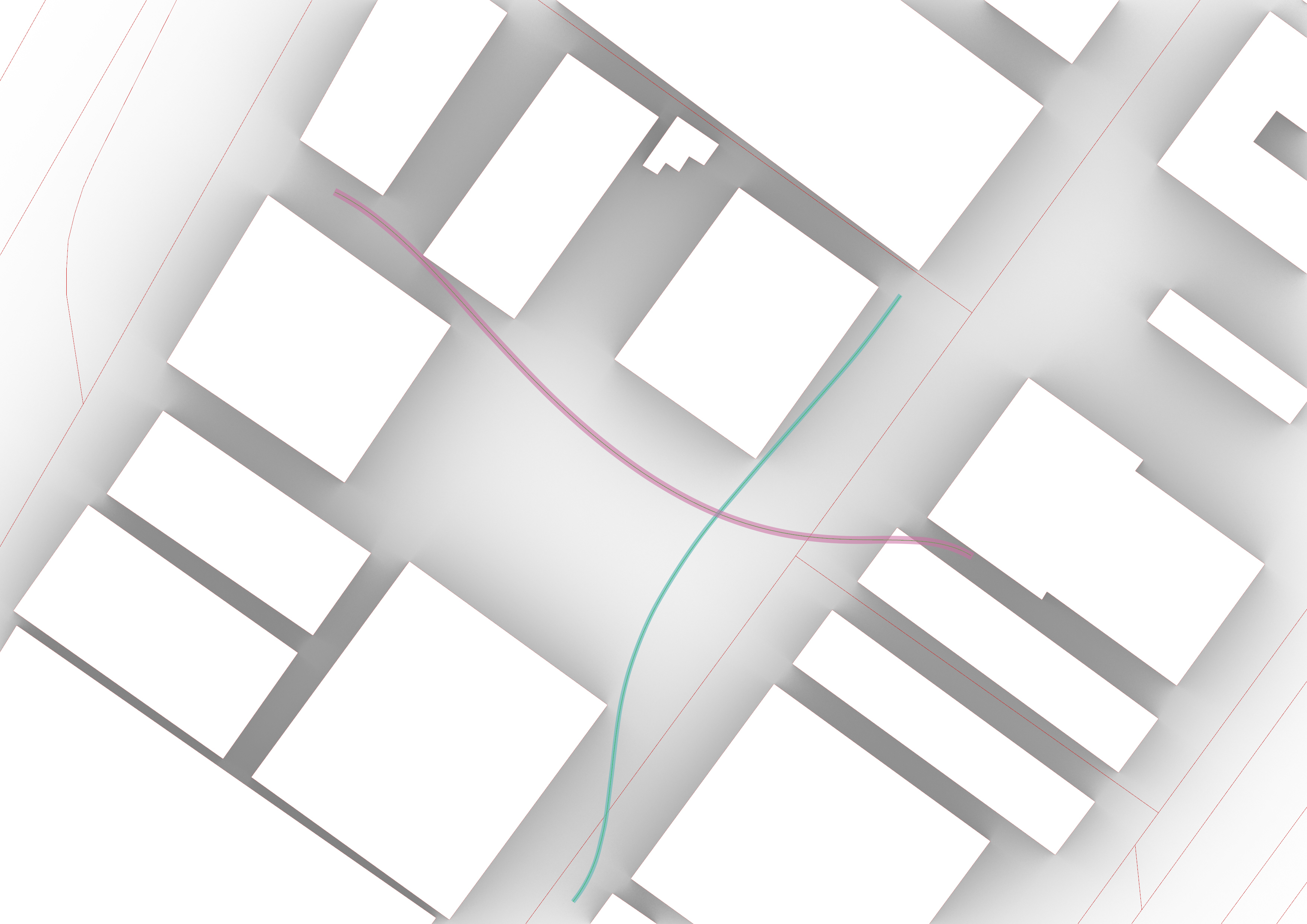
The pavilion's location is not chosen intuitively — it is derived. A real-world city model of the Al Qouz district near Alserkal Avenue in Dubai is imported directly into Rhino via Grasshopper. An isovist analysis calculates the percentage of the urban field visible from every candidate point on the site grid. A Galapagos genetic algorithm then iterates through thousands of positions, converging on the location with maximum visibility — the point from which the most people can see the pavilion. Pedestrian path analysis identifies the corridor of highest movement density, confirming that the optimal site sits precisely at the intersection of peak visibility and urban flow.
Mesh Relaxation
Kangaroo Bouncy Solver · Form Finding · Final Pavilion
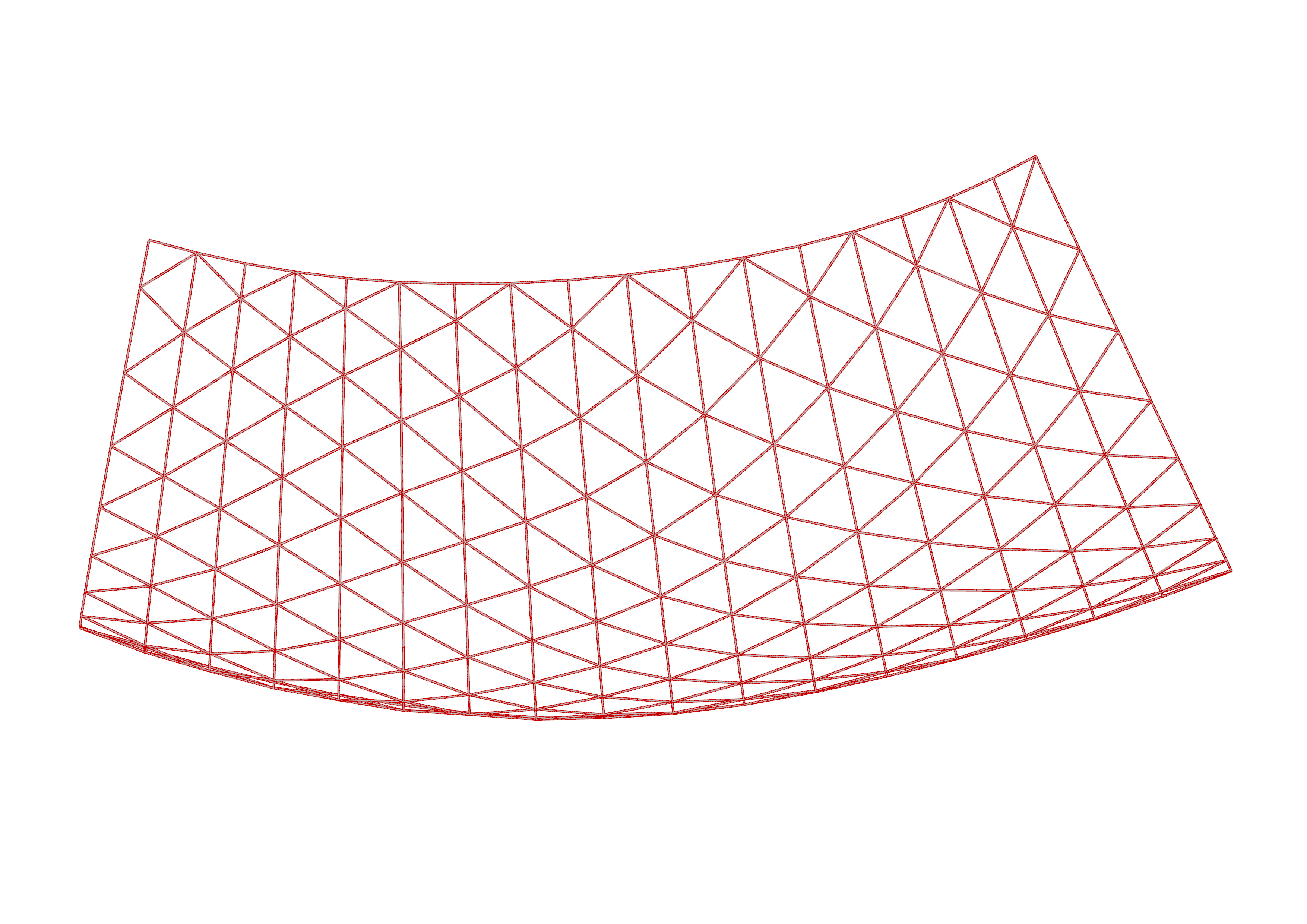
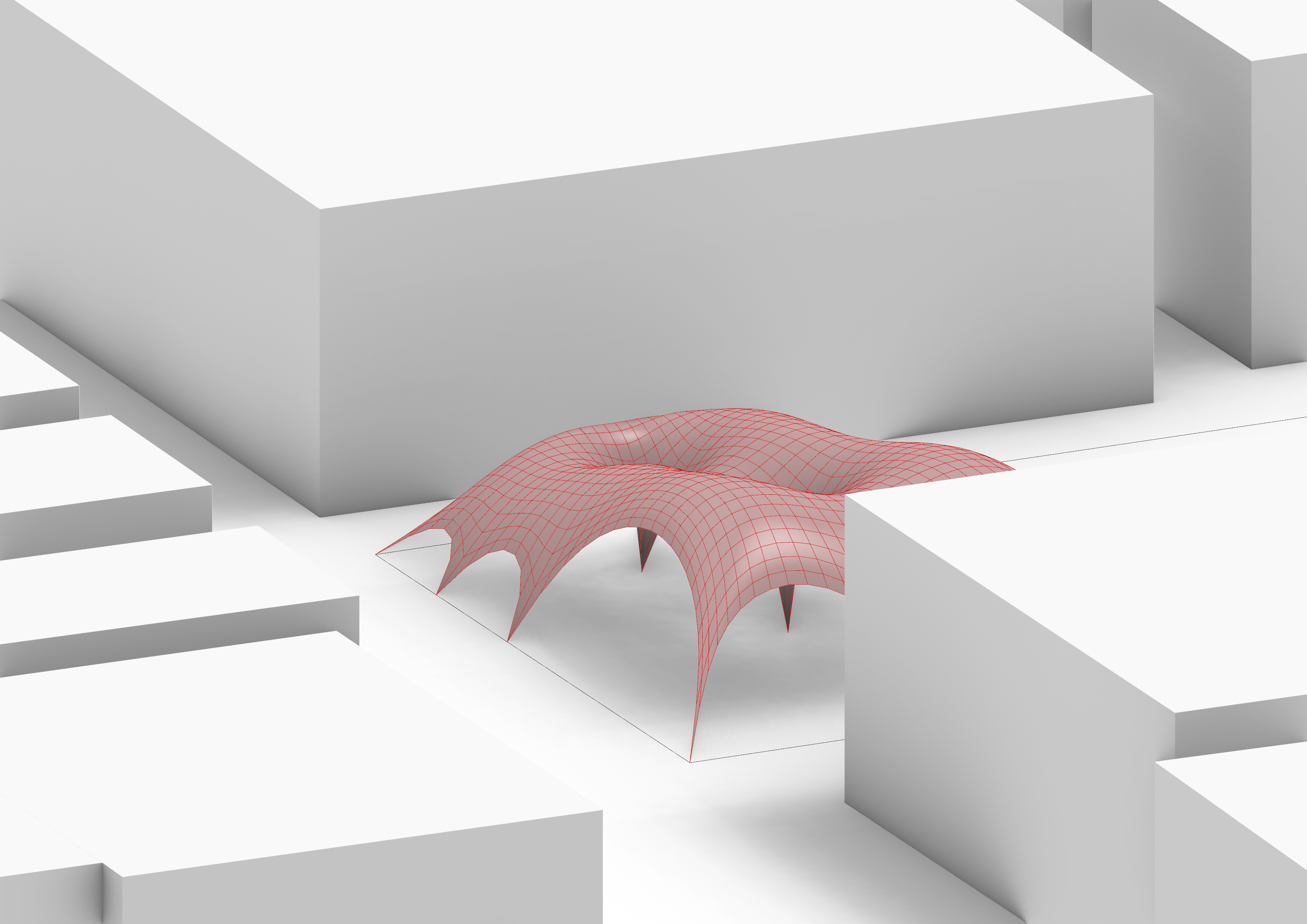
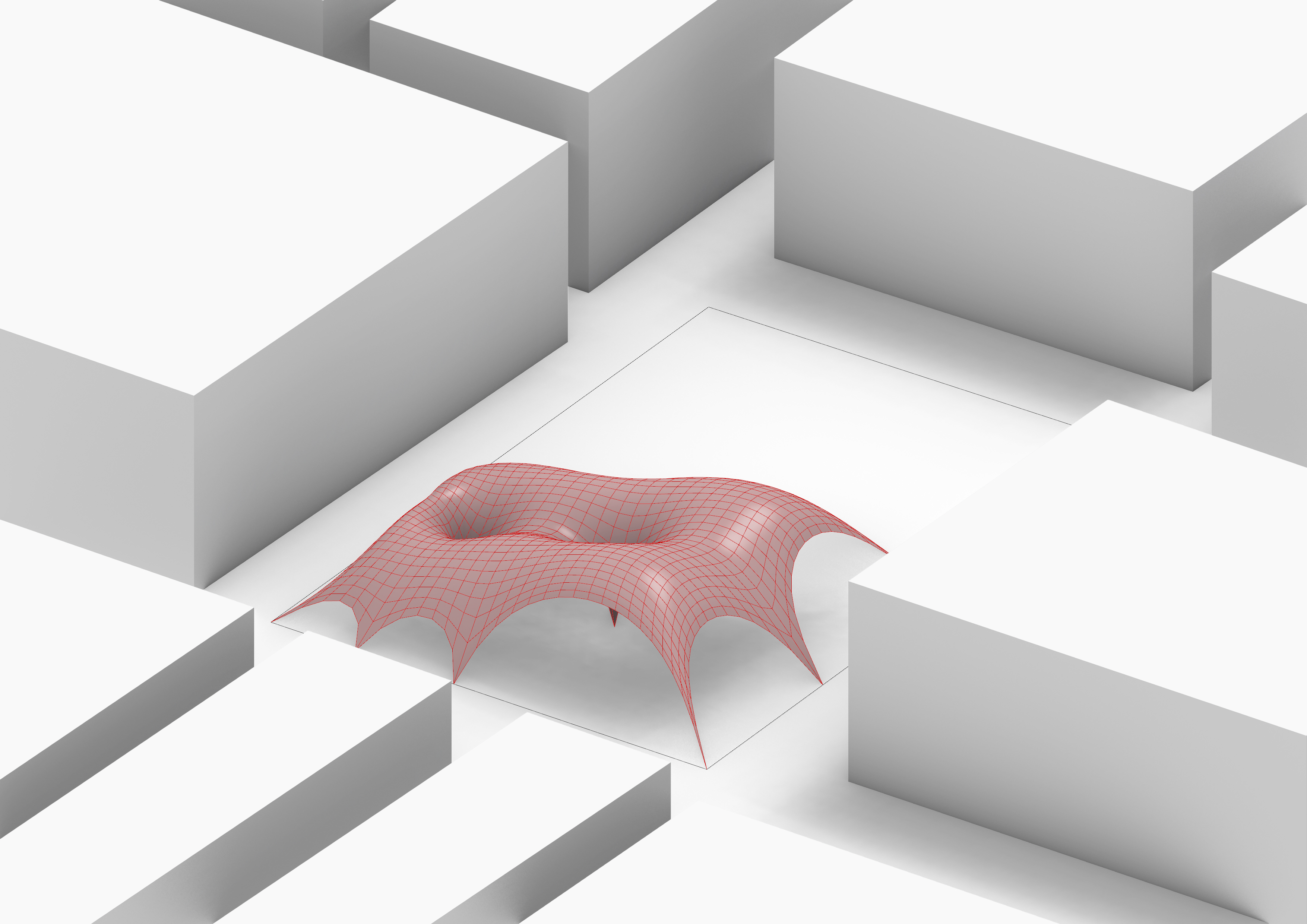
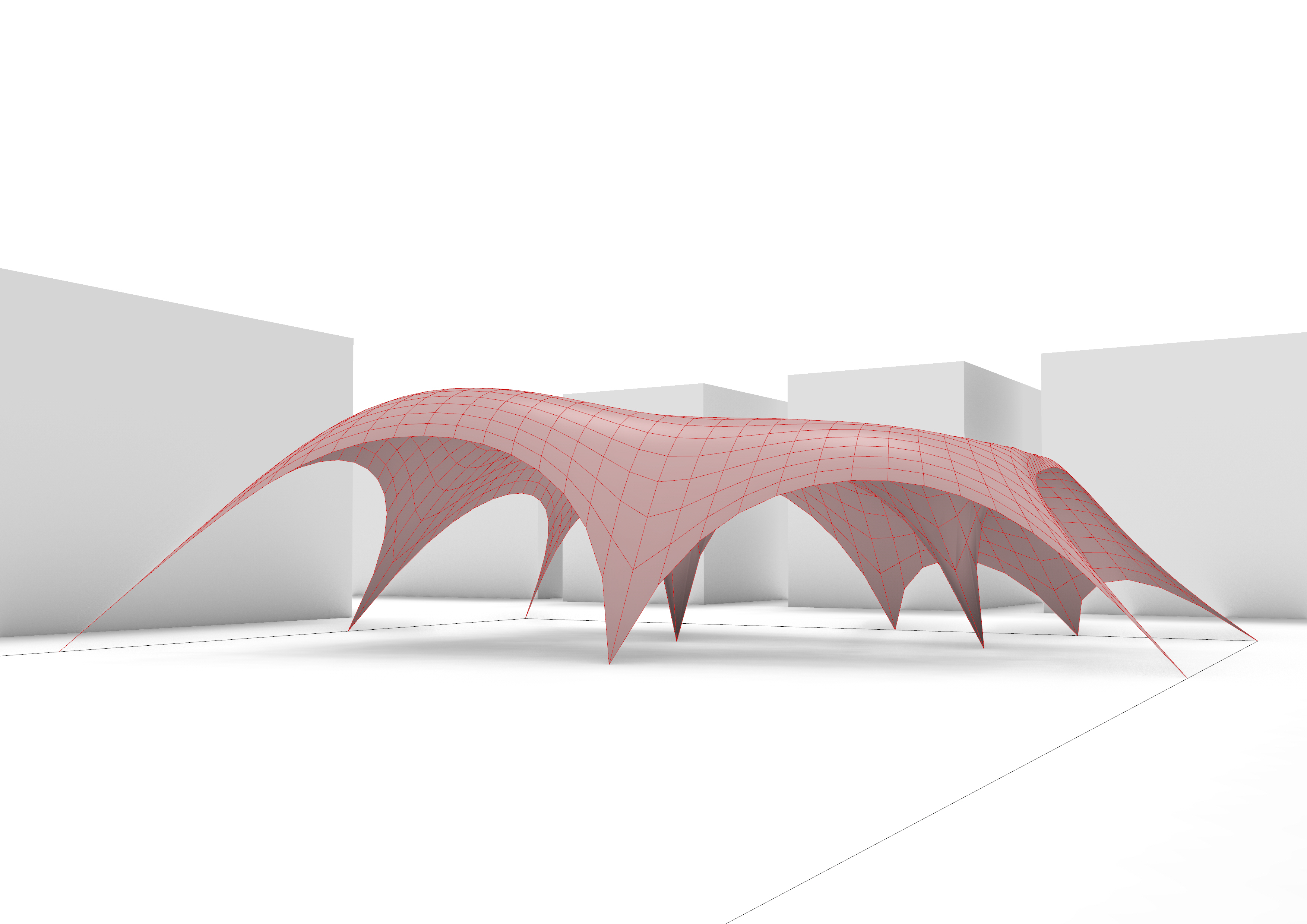
With the site determined, the pavilion form is generated through physics simulation rather than drawn. A boundary mesh placed at the chosen location is fed into Kangaroo's Bouncy Solver — a real-time elastic solver that relaxes the surface under gravity and anchor constraints, finding the minimal surface that a tensile structure would naturally assume. The form evolves from an exaggerated, almost biological early state — deep arches pulling toward anchor points — toward a smooth double-curved canopy. Once relaxed, the facade module is applied across the triangulated mesh and the Karamba3D structural grid is overlaid, completing the fully computational design chain from data to built form.
054751 · Parametric Design BIM Oriented Through Grasshopper + Rhino · Amirhossein Ahmadnia · 2022–23 · Politecnico di Milano · Maya Roufail
Parametric DesignAbout the Project
A fully computational pavilion — every decision derived from algorithmic analysis of site, climate, and movement.
The Urban Spectacle is the final exam project for the Parametric Design course at Politecnico di Milano. The brief demanded a pavilion for Dubai designed entirely within Grasshopper — from genetic optimization of its location to physics-based simulation of its form.
Every layer of the design — environmental analysis, space syntax, Galapagos optimization, Kangaroo form finding, facade panelization, and Karamba3D structural analysis — is computational. The result is architecture that does not begin with intention, but with data.