The Shed — A Parametric Study
A parametric dissection of Diller Scofidio + Renfro's movable performing arts centre in Hudson Yards — from the sliding Vierendeel truss shell to the inflatable ETFE pillow facade.
Academic WorkDigital Design and Fabrication · DDFT341 · Prof. Jose Carrillo · Summer 2019 · Maya Roufail
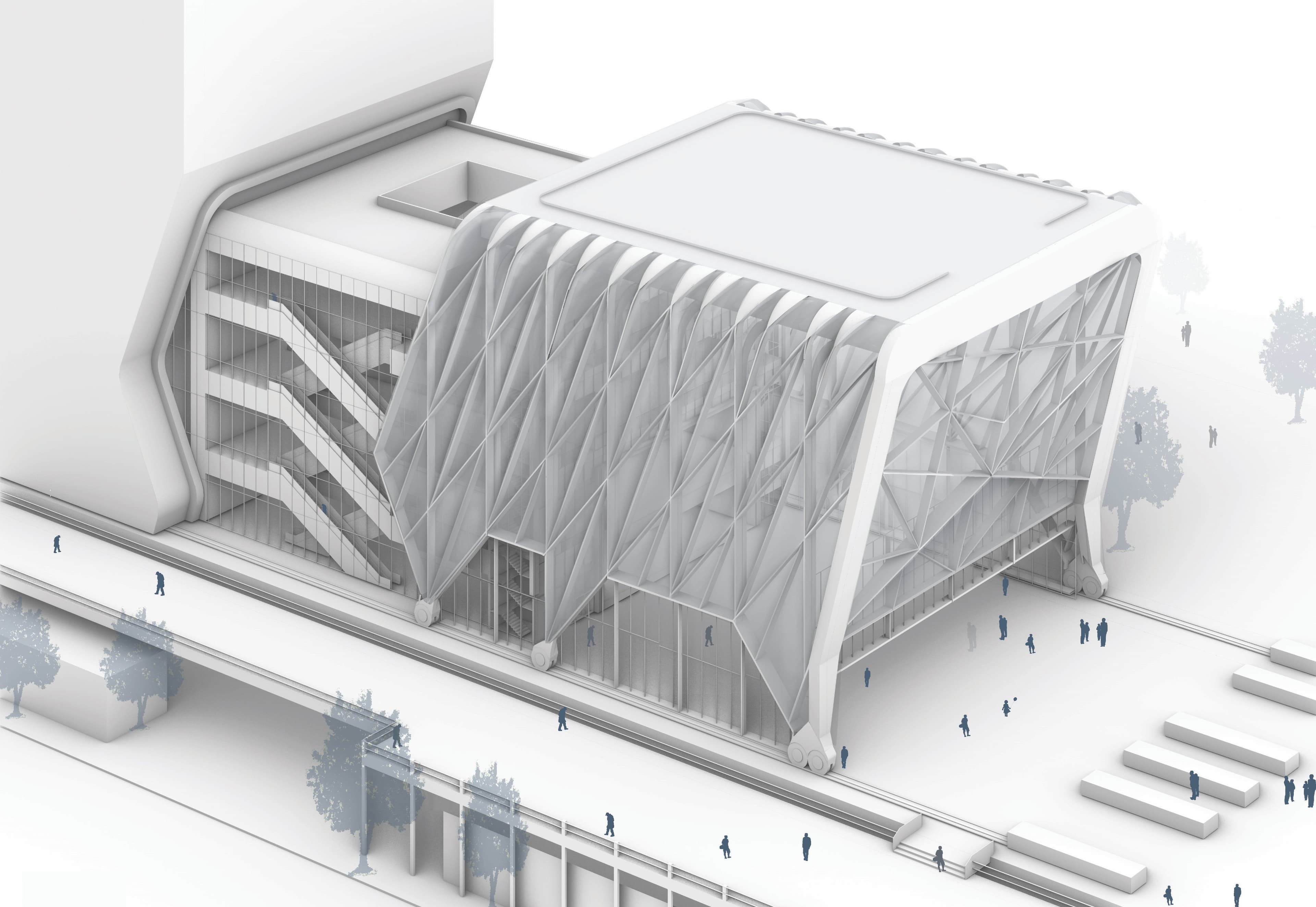
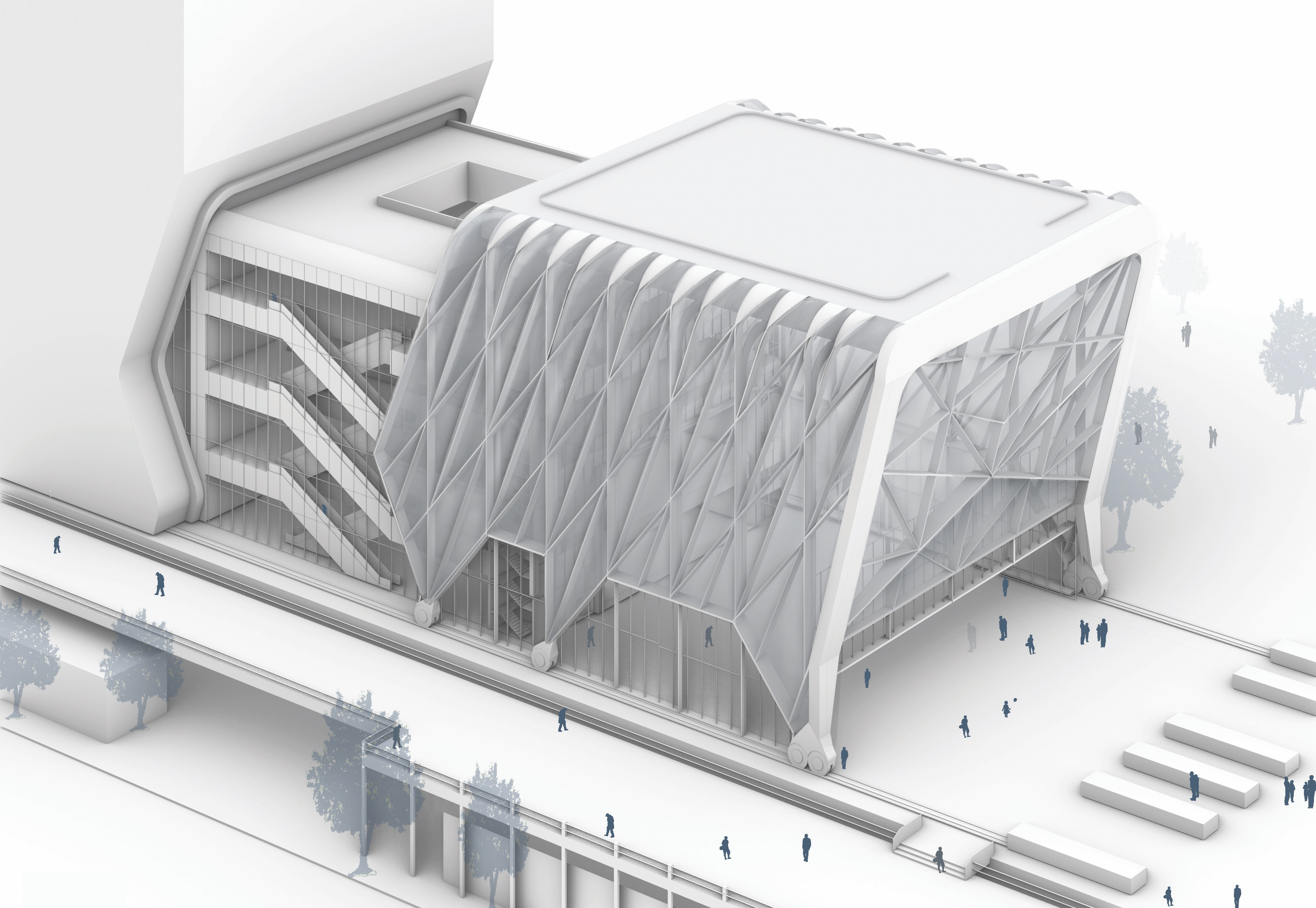
The Shed
New York, USA · 2019Digitally model and dissect The Shed by Diller Scofidio + Renfro — analysing how parametric tools translate a movable building into architectural form.
The Building
Diller Scofidio + Renfro · Hudson Yards, New York · 2019
The Shed is a movable performing arts venue whose outer shell — a Vierendeel truss clad in ETFE inflatable pillows — slides on tracks to extend the venue footprint from 17,000 to 36,000 sq ft. Architecture that moves is architecture that responds.
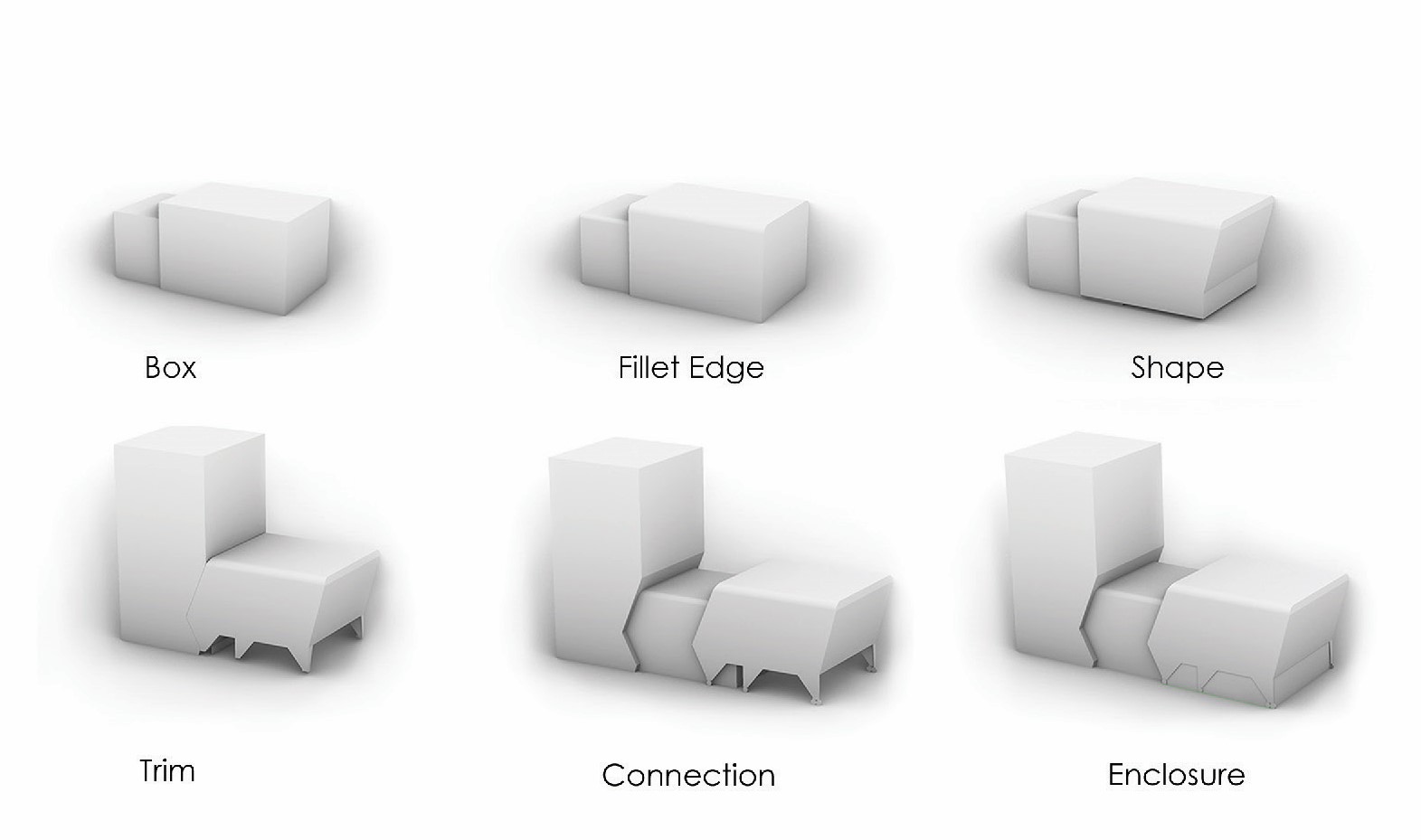
Building Operations
Box · Fillet Edge · Shape · Trim · Connection · Enclosure
The building is reconstructed through a sequence of parametric operations — from a simple extruded mass to the complex faceted form of the shell. Each operation transforms the geometry, mirroring the logic of digital fabrication: architecture as a series of precise, repeatable decisions.
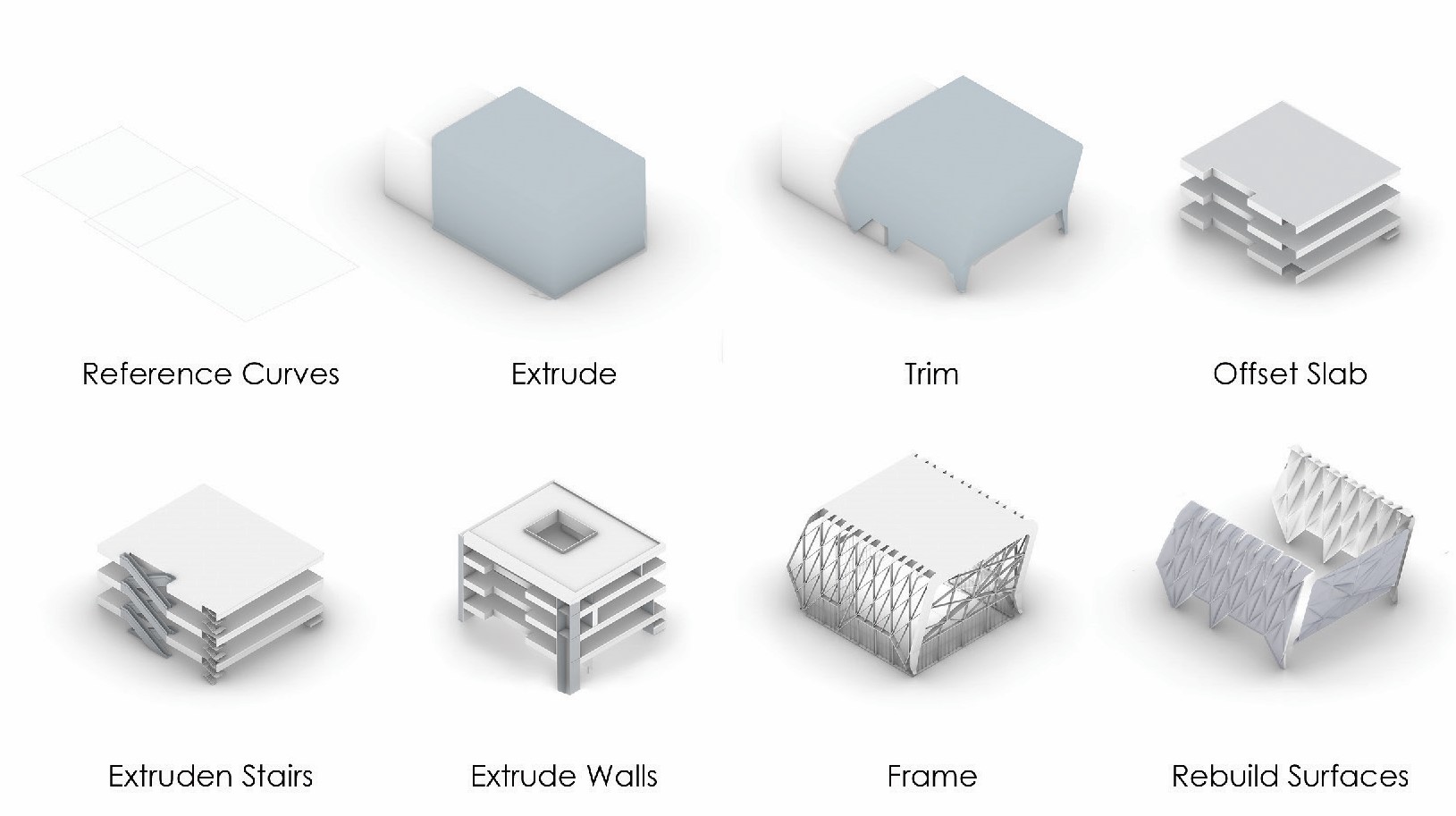
Geometry Generation
Reference Curves · Extrude · Trim · Offset Slab · Extruded Stairs · Include Walls · Frame · Rebuild Surfaces
From Reference Curves through to Rebuild Surfaces, the geometry generation process traces the building's parametric logic step by step. Each move builds on the last — revealing how digital fabrication thinking shapes architectural form at every scale, from the structural grid to the cladding module.
Building Parts
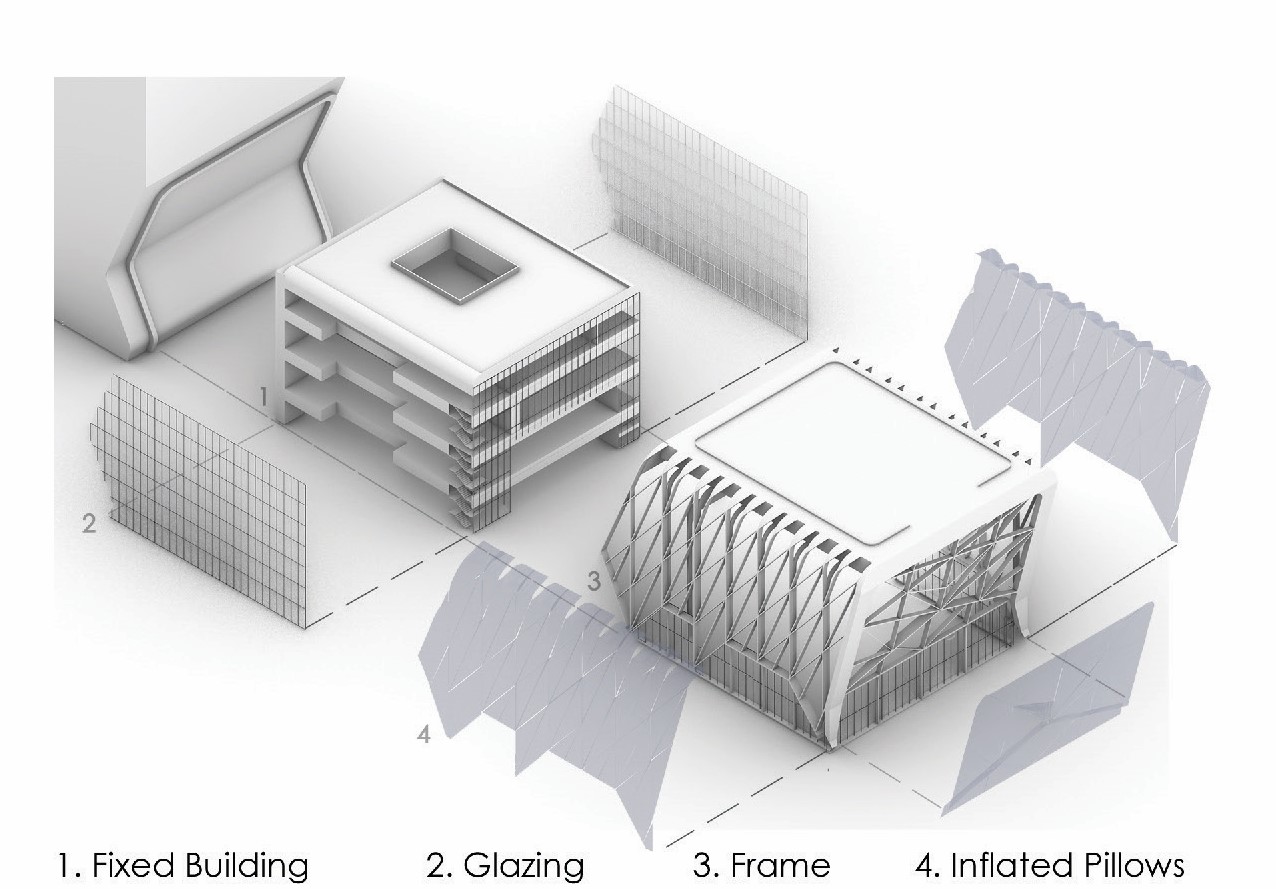
01 Fixed Building · 02 Glazing · 03 Frame · 04 Inflated Pillows
The building is decomposed into four primary components. Each has its own material logic, structural role, and contribution to the overall performance — both architectural and operational. Isolating the parts clarifies how the whole behaves.
Technical Views
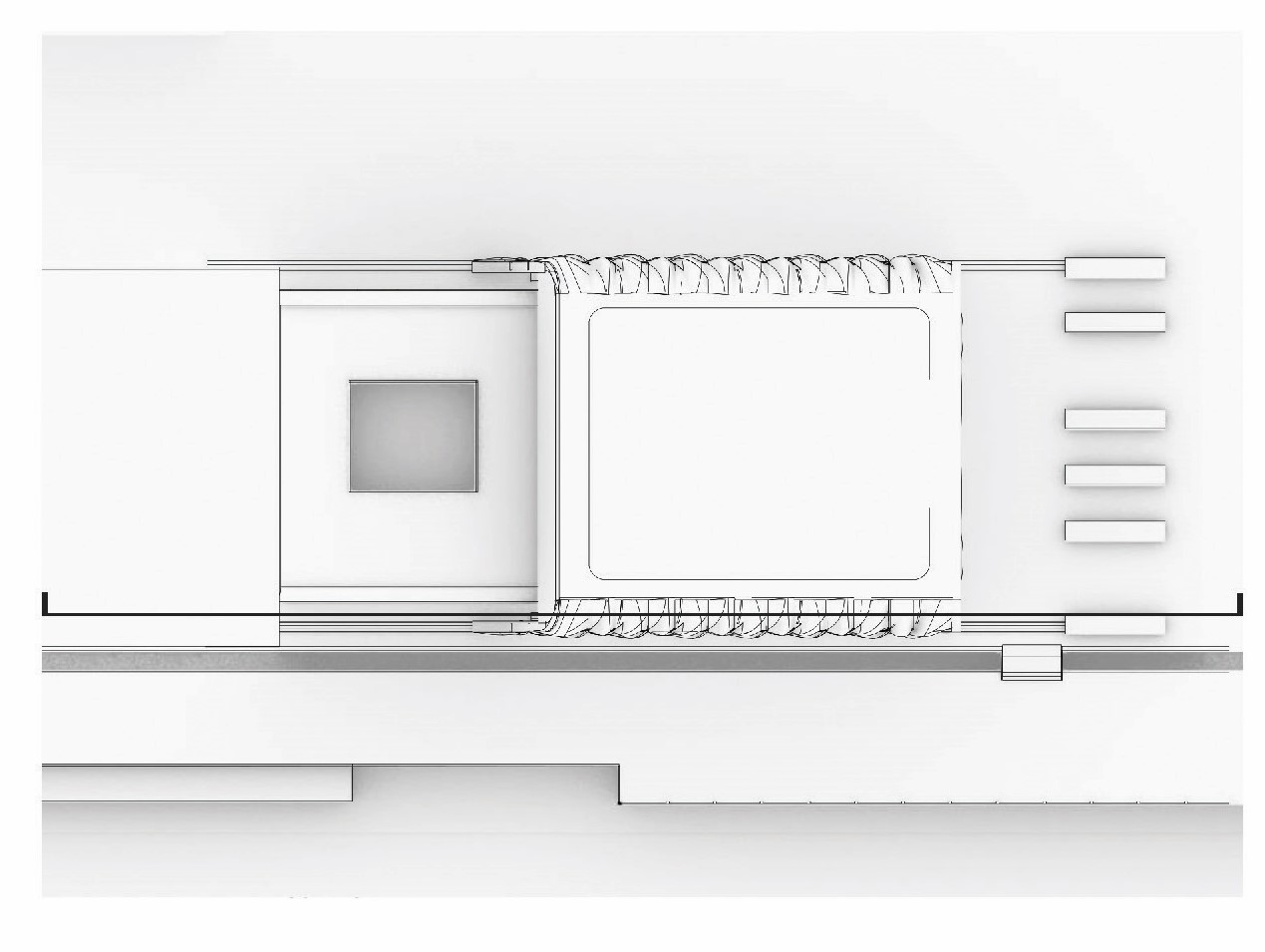
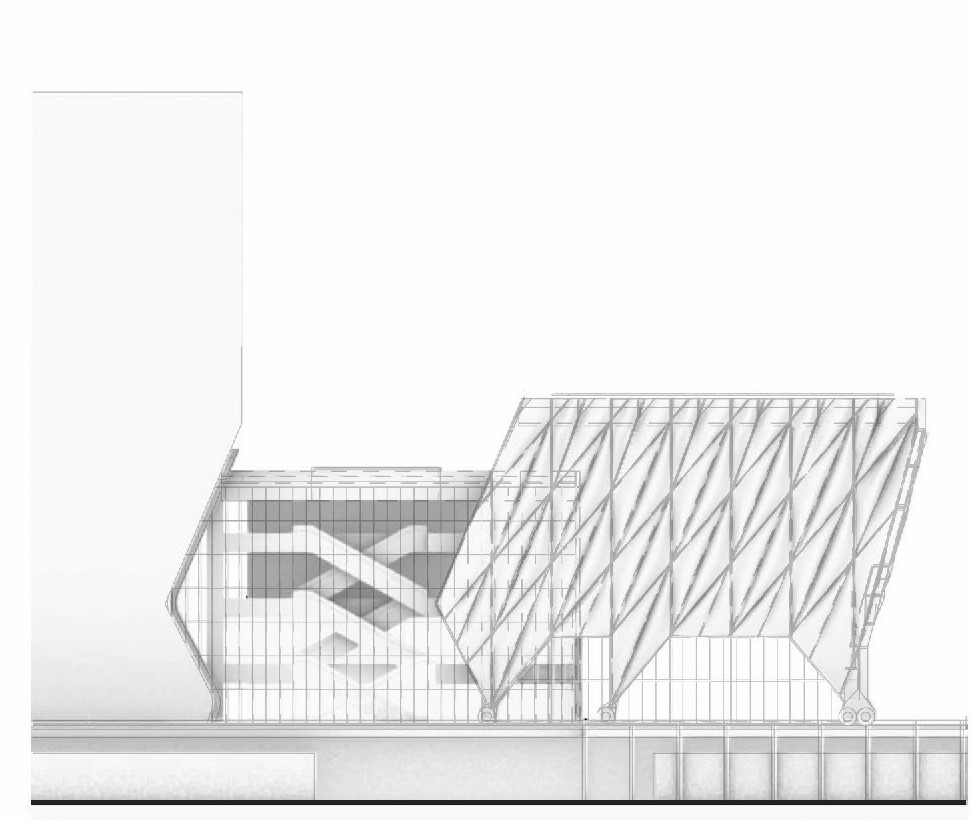
Top View · Front Elevation · Scale 1:1000
Plan and elevation at 1:1000 document the building's compact footprint, the depth of the sliding shell at full extension, and the double-height glazed facade that connects the interior hall to the surrounding plaza.
Interior Render
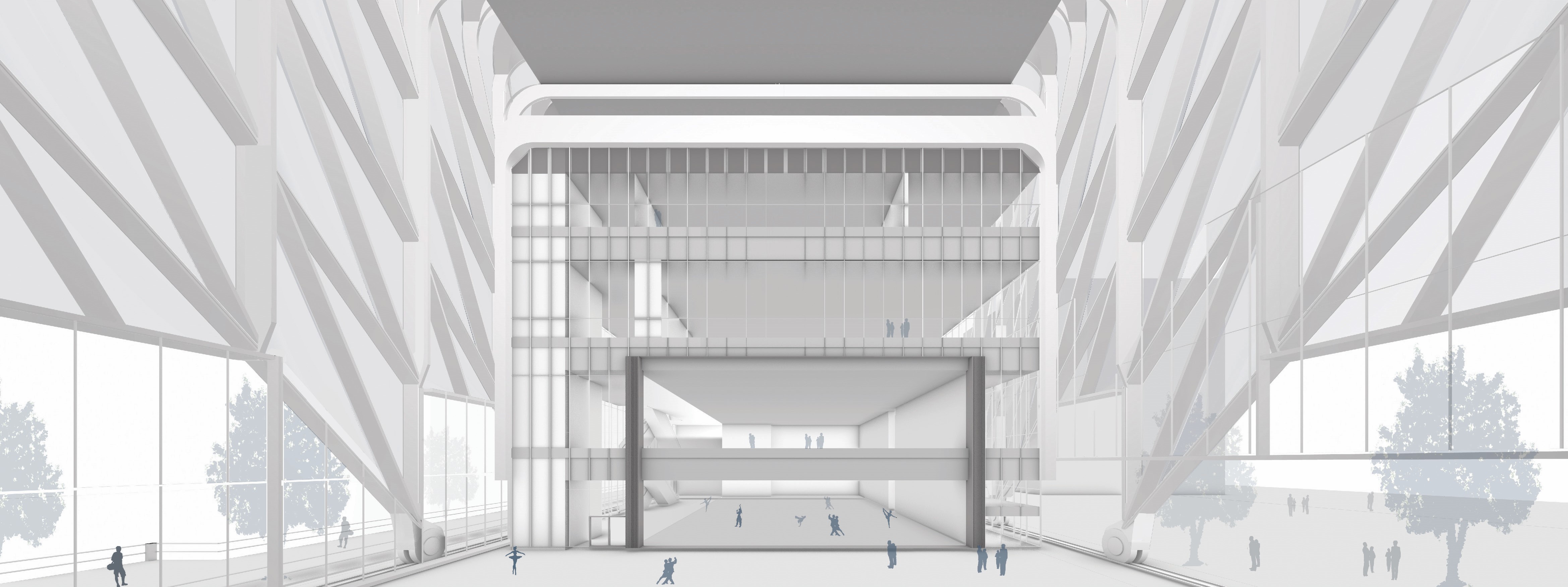
Eye Level View — The McCourt
The McCourt — the extended hall formed when the shell slides out — is defined by the exposed Vierendeel truss overhead, the double-height glazed facade, and 17,000 sq ft of uninterrupted floor plate. No columns. No fixed stage. A space that only exists when the building moves.
DDFT341 Digital Design and Fabrication · Summer 2019 · Professor Jose Carrillo · Maya Roufail
Digital FabricationAbout the Study
Digitally model and dissect The Shed by Diller Scofidio + Renfro — analysing how parametric tools translate a movable building into architectural form.
A digital design and fabrication study of The Shed — the movable performing arts centre in Hudson Yards, New York, by Diller Scofidio + Renfro. The project analyses the building's geometric operations: from the fixed brick base to the operable Vierendeel truss shell that slides on tracks to double the venue's footprint.
Modelled parametrically in Rhino, the study dissects each component — glazing, structural frame, extruded stairs, and the inflatable ETFE pillow facade — understanding how digital fabrication logic drives architectural form at every scale.