De Lijnbaan: A Symbol of Urban Renewal and Social Progress
Rotterdam's post-war pedestrian street was more than a shopping district — it was a political act, a social experiment, and a blueprint for the modern city.
7 min read
Academic WorkHistory of Contemporary Architecture · 051510 · Politecnico di Milano · January 2022 · Maya Roufail
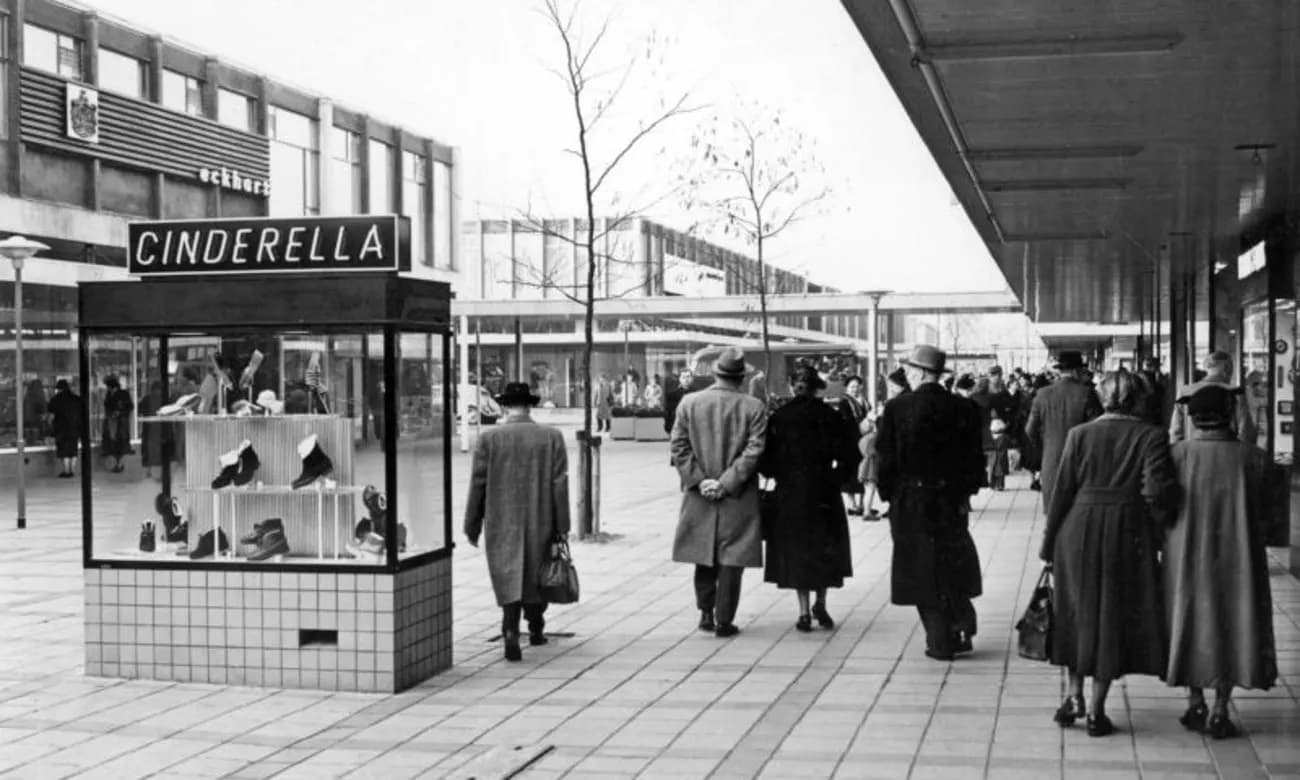
De Lijnbaan
Rotterdam, The Netherlands · 1953Analyse De Lijnbaan as a post-war urban intervention — tracing how Rotterdam's destruction became the catalyst for a pedestrian commercial district that redefined the modern city.
The Blank Slate
Rotterdam, The Netherlands · WWII · 1940
Barren landscapes left in the wake of war transformed into catalysts upon a desire for urban change and social reformation. De Lijnbaan project represents a post-war urban experiment that aimed at anticipating social progress and promoting urban renewal. It became a symbol of the transition of Rotterdam into a new post-war state representing a vision for the Dutch society of the future, promoting social reform and fostering a synergy of interests played by the different political, business, and planning sectors.
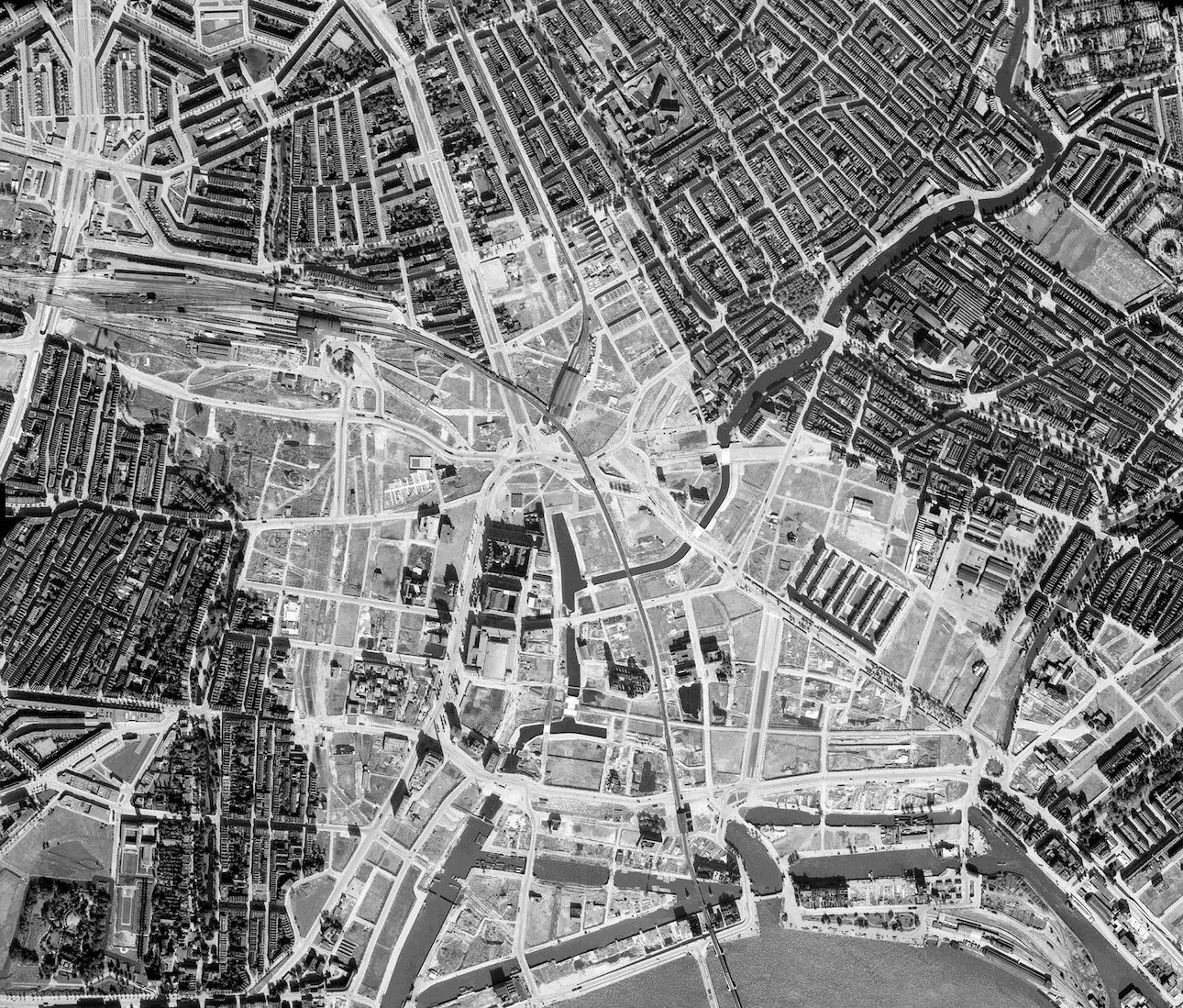
It was at a time in the Netherlands when Rotterdam's central location and massive port made the city a target of Germany and its allies' invasions during WWII. The resulting destruction and the nearly eradicated central part of the city transformed into a prospect, an opportunity that favoured a convergence of interests between city planners, architects, politicians, and the local elite business community. The collective forces planned immediate reconstruction based on the notions of the welfare state system. Responding to the principle of redistribution, free initiative, and municipal control activities, the city's modernization plans commenced with the prominence of reforming Dutch Society. At the core of these plans was to center several economic activities that would relaunch businesses in the city and give back what the previous shop owners lost. In 1953, at the heart of Rotterdam opened a manifestation of the reconstruction plan, a commercial district entirely devoted to pedestrians called De Lijnbaan.
Dutch elites helped in importing the principle of Americanization into the Netherlands introducing modern models of efficiency, functionality, and standardization; the impact became evident in decisions not only relevant to architecture or commerce but also the participation and involvement of the society. The Lijnbaan's pertinence to the context of events taking place at the time in Rotterdam was its essential role in the modernization of the city and its embodiment of the future society, characterized by a growing population of increased wealth and taste for individualism. It was designed by the Dutch architectural firm Van den Broek and Bakema who later became notable for their involvement in the reconstruction plans of the city and their avid presence within the post-war European debates discussing the future of architecture.
A New Kind of Street
Van den Broek & Bakema · Pedestrian-Only · 1953
De Lijnbaan represented a pioneering effort in introducing a novel concept of commercial urban intervention. Realising the modernist approach of zoning and separating functions, the street was planned with the primary objective of detaching vehicle traffic from pedestrian circulation.
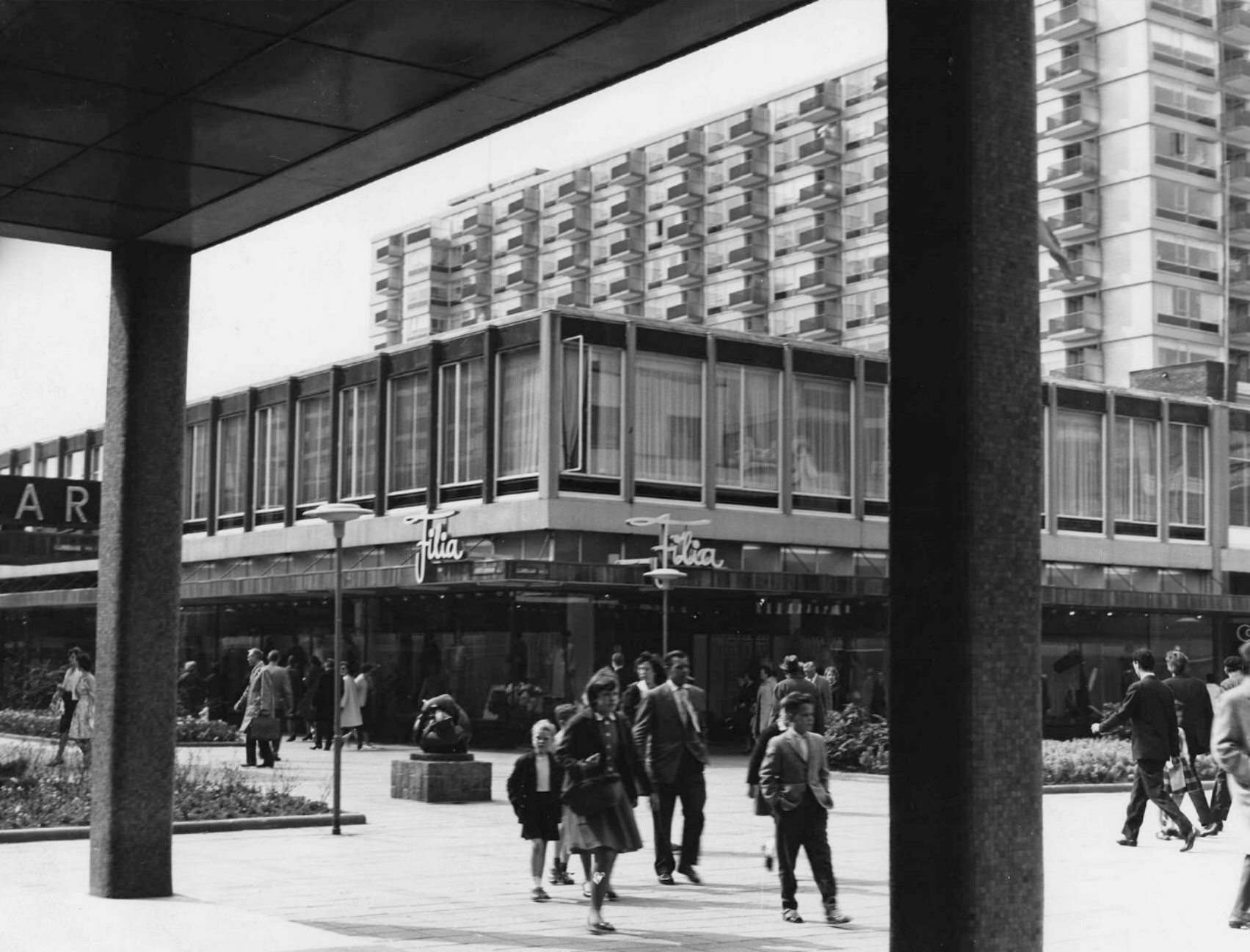
It also featured a clear distinction between residential and commercial areas, with a low-rise retail district located at the center and high-rise residential buildings positioned at the back on both sides. The street's horizontal and narrow atmosphere was not solely a deliberate architectural decision intended to foster a sense of intimacy within the public realm but was also the product of contemporaneous legislation which imposed a measure of responsibility upon landowners for both the land and any structures erected on top.
Modernist & Corbusian
Linear Layout · Glazed Facades · Shading Canopies
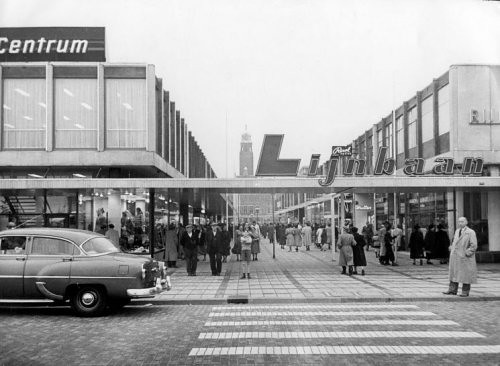
The commercial street followed the modernist and Corbusian trends of the time at which it embraced a minimalistic approach characterized by a neutral uniform ambiance.
It was composed of a flexible linear layout with high-quality shops, restaurants and cafes placed on both sides of the street. Large, glazed display windows maximized transparency on the ground floor while repetitive vertical prefabricated concrete posts and parapets created a rhythmic minimalistic effect on the top floors. Shading canopies framed the promenade and created an inviting walking space adjacent to the external shop displays.
Plastic Functionalism
Van den Broek · Bakema · Analyst vs. Idealist
Van den Broek and Bakema have been characterized in architectural historical literature as opposites, with contradicting personalities and approaches. They have been portrayed as the analyst versus the idealist, the pragmatist versus the philosopher — and that explains why Bakema referred to De Lijnbaan as an example of "plastic functionalism".
This architectural expression translates the inclusive nature of De Lijnbaan which aimed at balancing the functional and rigid aspects of modernism with the dynamic philosophies of flexibility. Bakema believed in architectural freedom and creativity within the wider context of an open egalitarian society. This orientation was reflected within the adopted plasticity of the Lijnbaan and its possibilities for future change and adaptability according to the rising needs and demands.
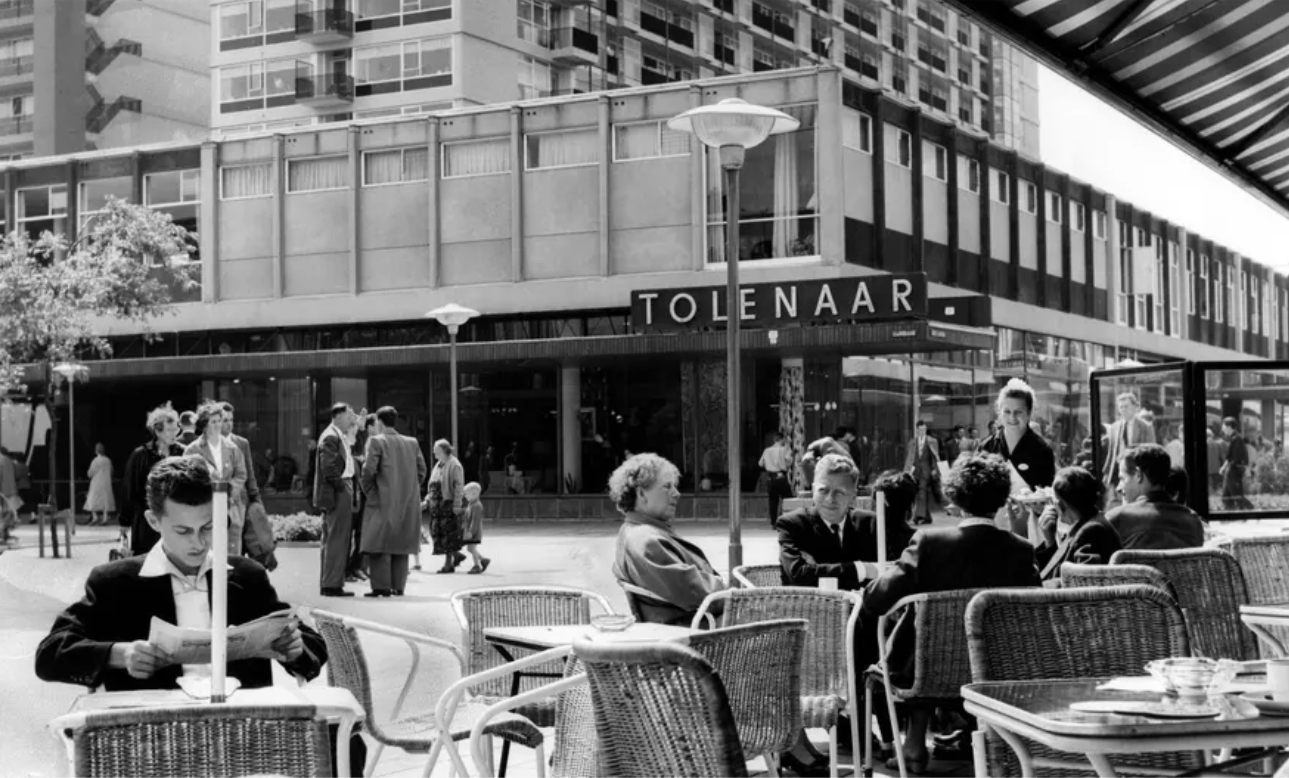
A Living Room for the City
Social Mobility · Consumer Culture · International Recognition
Pertaining to the modernist notions influenced by the post-war rising American and Soviet superpowers, De Lijnbaan was a concrete solidification of the goals associated with economic growth and consumerism. It supported the growing orientation towards mass media and a consumer-culture by providing a pedestrian-only environment where visitors could spend longer durations of time without interruption from vehicles.
"De Lijnbaan became a living room for the city." — Astrid Aarsen, architectural historian
Absence of cars allowed for a seamless flow of foot traffic, making it easier for visitors to explore the various shops and become more susceptible to the existing market. The project became the gathering place that promoted a sense of community and allowed for interaction between different social groups. The consequential social mobility played a key role in boosting the economy of Rotterdam, attracting many tourists and helping relaunch businesses. It obtained international recognition, aided in the circulation of information and became an urban prototype that inspired many projects worldwide. Consequently, Rotterdam ensured its influential presence on the global map as a leading city of progress and advancement.
Within the post-WWII context of rising media conventions that helped transmit certain messages, De Lijnbaan was also used as part of a wider political campaign intended to advertise "Rotterdam standing up again". Architecture was used as a tool along with postcards, magazines and books to emphasize a shiny image of a newly reformed society and its technological advancement.
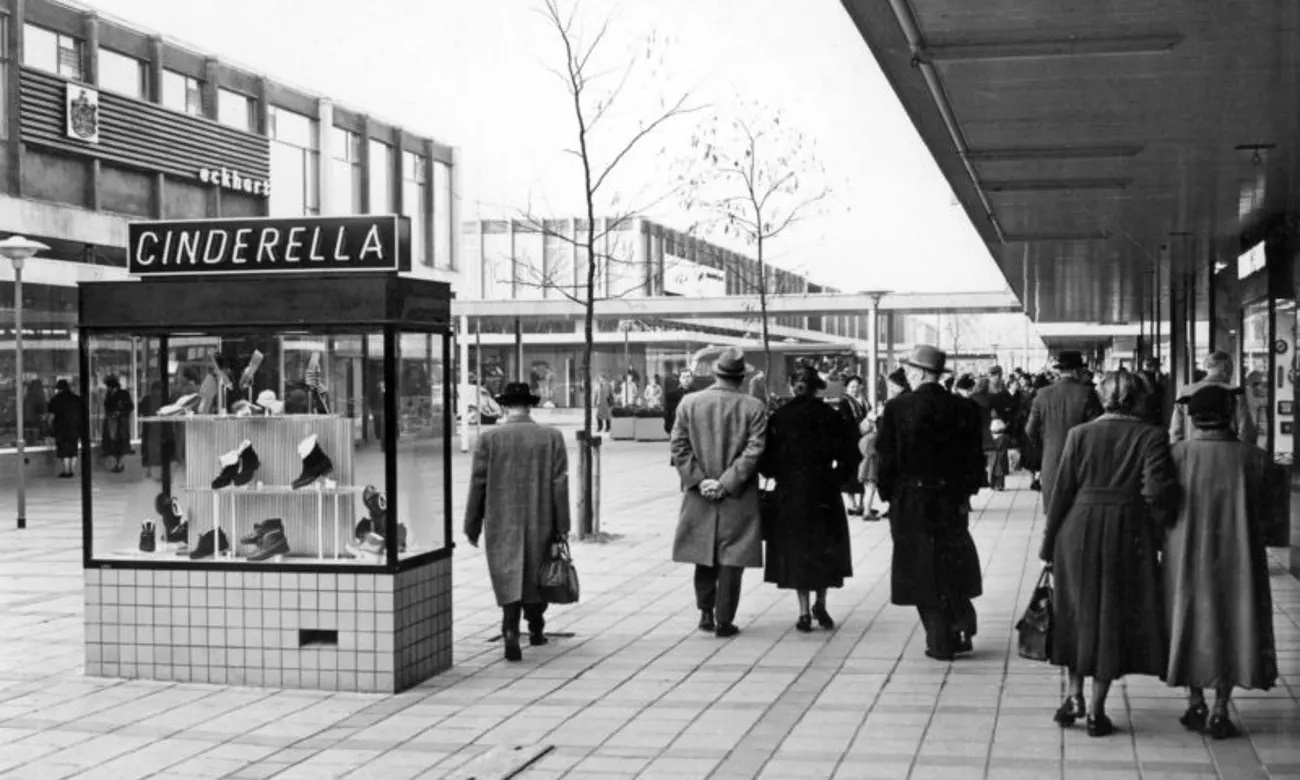
Decline & Legacy
Oil Crisis · 1980s–1990s · Rotterdam Today
The legacy of De Lijnbaan's value was never guaranteed. In the 80s and 90s, socio-economic changes and interests led to a decline in the urban dynamics of the Lijnbaan at a time when Rotterdam's port was hit by the oil crisis. This proved how the performance of architecture — its success or failure — has a direct link to the surrounding economic, social, and political context. Nevertheless, these changes cannot undermine De Lijnbaan's significance as a historic symbol. Today, it still stands proud and lively after it has recently been renovated again.
De Lijnbaan represents one of the many protagonist roles architecture could play within a historical context of events. Another evidence supporting architectural potential in representing transformation is the Baltimore Harbor in Maryland, USA, which in a similar way has played a significant role in the economic and social development of its respective city. Both, De Lijnbaan and the Baltimore Harbor, were part of the post-WWII reconstruction plan — with the Lijnbaan becoming a mark of modernization and the Baltimore Harbor becoming a major center for shipping, industry and tourism. Both projects were successful in attracting tourists, boosting the economy of their cities and reflecting the values and aspirations of the society during the time they were built. They share a common thread of urban redevelopment and economic revitalization, playing a key role in reshaping the cities and society in which they are located.
History of Contemporary Architecture · Course 051510 · January 2022 · Maya Roufail
Urban HistoryAbout the Essay
Analyse De Lijnbaan as a post-war urban intervention — tracing how Rotterdam's destruction became the catalyst for a pedestrian commercial district that redefined the modern city.
De Lijnbaan, opened in 1953 in the heart of Rotterdam, was Europe's first pedestrian-only shopping street — a direct outcome of WWII bombing that erased the city's centre and created an unprecedented opportunity for reconstruction. Designed by Van den Broek and Bakema, it brought together the ambitions of city planners, politicians, and the business elite into a single built form.
The essay traces the project from its post-war context through its architectural language, the concept of "plastic functionalism", and its role as both social gathering place and political symbol — examining how architecture can embody the aspirations and contradictions of its time.